
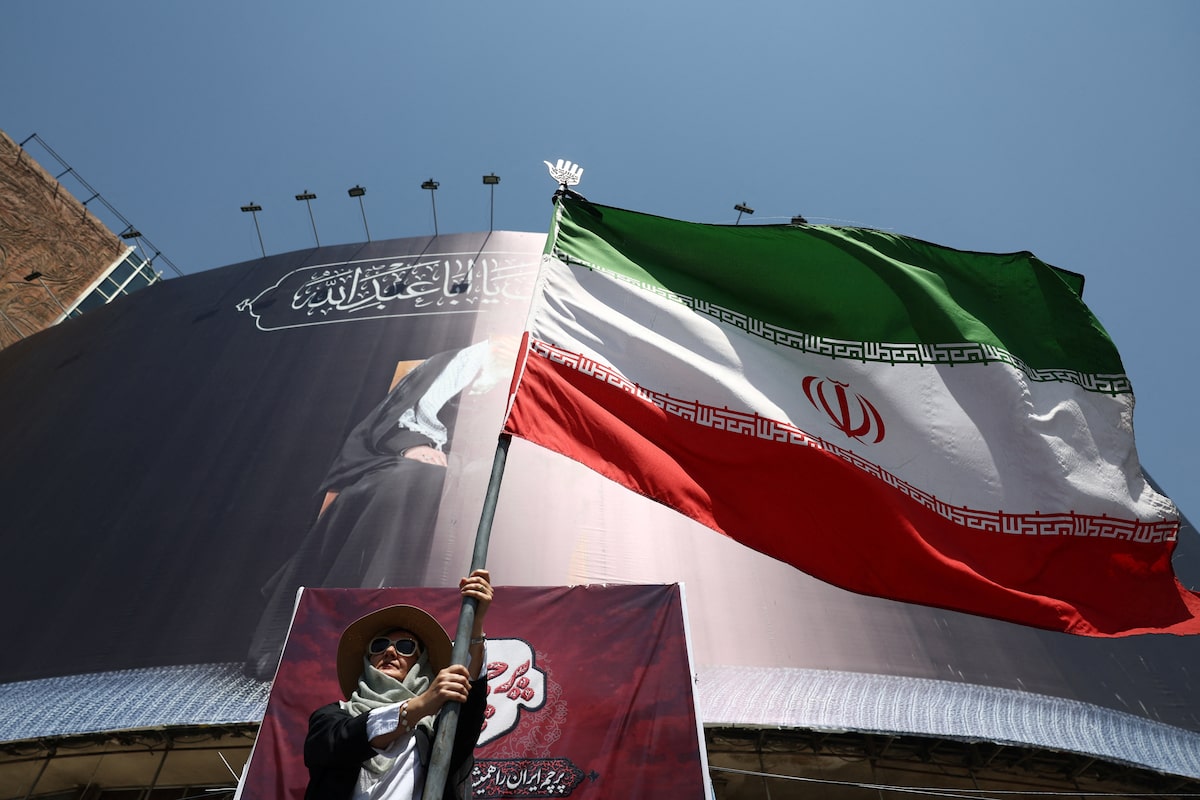
Oil surged and stocks dropped on Wednesday, after U.S. President Donald Trump said the memorandum of understanding that had provided a framework for the ceasefire with Iran “was over” after the two sides traded attacks overnight.
Trump was speaking in Ankara at a NATO summit in the Turkish capital. Oil prices rose over 5 per cent to US$78 a barrel, European stocks nosedived, dropping 1.8 per cent on the day, while the dollar jumped, and government bond yields rose, reflecting concern among investors about another flare-up in inflation. Stocks on Wall Street and Bay Street are expected to open sharply lower.
Here’s a survey of what market observers are saying. This report is being updated with fresh commentary as the day progresses.
STEPHEN INNES, MANAGING PARTNER AT SPI ASSET MANAGEMENT:
“For markets, the implication is cleaner than the diplomacy. The ceasefire has lost its innocence. What was meant to be an off-ramp now looks like a tripwire. Iran tested it. The US fired back. NATO’s top official blessed the response. That does not mean all-out war is the base case, but it does mean the market can no longer price this as a contained diplomatic wobble.”
“The risk now is escalation by inches. Not a single thunderclap that announces a new war, but a series of “necessary” responses, each one defensible on its own, each one pushing the region closer to the edge. That is how war premiums are rebuilt. Not always with a trumpet blast.”
FIONA CINCOTTA, SENIOR MARKET ANALYST, CITY INDEX, LONDON:
“This was always a very fragile peace process. The fact that oil prices had already fallen back to pre-war levels suggested that the market was a little bit ahead of itself”
“Oil prices could continue to rise if we see the Strait of Hormuz close again and the unwind of all the positivity we’ve seen over the last few weeks.”
DEREK HOLT, SCOTIABANK’S HEAD OF CAPITAL MARKETS ECONOMICS:
“US Treasury yields are about 2bps higher across most of the curve. Canada’s cash market opened cheaper by about 5bps across the curve and OIS [overnight index swaps] is moving a few points higher toward getting back to pricing a BoC hike by year-end in keeping with our Q4 tightening forecast.”
“So where to from here? Both sides are erratic and impulsive. Trump has not shut the door on negotiations, yet his deal with Iran was fatally flawed from the beginning by granting pretty much everything Iran asked for and, with it, putting US foreign policy on the back foot in the region. As argued in marketing decks and road shows, I’ve never believed this MOU would be durable and would instead mean a permanently higher geopolitical risk premium. This [bond yield] curve probably has much further to run in my view.”
ANEEKA GUPTA, DIRECTOR, MACROECONOMIC RESEARCH, WISDOMTREE, LONDON:
“It’s a big wake-up call for the markets because the expectation was that following the MOU, we were likely to start to see the flow of oil coming back into the markets. And we saw inflation expectations being dialed down.
“The way we’re looking at it now is what has changed materially is the (Iranian) oil waiver is gone. It’s removed a very key incentive for Iranian compliance.”
“Trump’s comments add that further layer of additional risk premium into the markets. But the reality is with Trump, you always have TACO (‘Trump always chickens out’) trade at play.”
“He was fast approaching the midterm election. The fact that he wanted to do this memorandum of understanding with Iran implied that he wanted to improve his ratings ahead of the winter elections, and that is going to be a critical factor for him to keep in mind.”
RYAN SWEET, CHIEF GLOBAL ECONOMIST AT OXFORD ECONOMICS:
“The cease fire between the US and Iran was always fragile and some flare-ups were inevitable, unfortunately. The question is whether this represents a bump in the road or whether we’re emerging from the eye of the storm.”
“The peace agreement between the US and Iran is the key risk in the second half of this year. It will determine whether the global economy gets an energy-driven disinflation tailwind or absorbs a second oil shock. Recent developments highlight that it’s the key domino that will determine whether other risks are amplified or dampened.”
“If the peace deal breaks, and it’s too early to tell, it won’t just raise oil prices; it would also increase pressure on AI supply chains in Asia, force central banks to be hawkish, tighten financial conditions, and could shift the outcome of the US midterms. The cascade runs fast.”
“It’s unclear how this unfolds but we’re watching whether negotiations between the US and Iran continue, number of ships passing through the Strait of Hormuz, and oil and natural gas inventories.”
ARNE PETIMEZAS, DIRECTOR RESEARCH, AFS GROUP, AMSTERDAM:
“Remember where we came from with oil prices and bond yields. Much higher levels. The market hasn’t reached levels that would panic Trump.”
“And do we take Trump literally or seriously? He says that the peace deal is over, but that U.S. negotiators can continue doing their work. We also know that Trump can turn on a dime. He could have an about-face today, tomorrow, next week, or perhaps later. I don’t see him waging war with Iran into the elections.”
DAVID ROSENBERG, FOUNDER OF ROSENBERG RESEARCH:
“The regime has clearly been playing President Trump, and there is no way he is going back to an official war before the midterms in any event, and Iran knows it. … The interim peace deal looks to be in tatters, at least for now (“it’s over,” said Mr. Trump — though we can legitimately ask whether he will pivot again before long… but what is interesting here is that unlike his recent scolding to Bibi, the President didn’t come out and say “well, at least nobody died” this time around).”
CHRIS BEAUCHAMP, CHIEF MARKET STRATEGIST, IG, LONDON:
“It’s clearly not what the market’s wanted and it really weighs heavily on sentiment.”
“I think how this will play out is that there will be maybe a bit more of a few more exchanges, and then they probably will go back to the negotiation because both sides want it. So the MOU might be over, but as it proved before that, they didn’t use MOU to have a ceasefire that allowed markets to rally.”
“Things that have come just a long way in such a short space of time, you’d be looking and thinking there’ll be a summer swoon that just weighs heavily on markets and maybe doesn’t take us all the way back to these lows of March. We are overdue a little bit of a spike (lower). We’ve had a relatively quiescent VIX. Everything has been almost too easy for investors.”
KHOON GOH, HEAD OF ASIA RESEARCH, ANZ, SINGAPORE:
“The main thing is really whether or not the Strait of Hormuz remains open and we still see traffic (and) whether or not oil can continue to flow.”
“If there’s still some traffic going through, then I think that will limit how high oil prices will go. It also depends on whether we see a return to the full-on onslaught of attacks, in particular whether or not Iran launches fresh attacks on the GCC neighbors…we haven’t really seen a much broader spillover from the risk off tone yet, because I think markets are just trying to assess what the situation is.
“A lot of the strategic reserves have already run down, so we could get back towards worrying about potential bottleneck shortages once again. But I think markets at this stage don’t want to jump immediately to that conclusion because, everyone did early on and, of course thankfully, it didn’t play out.”