
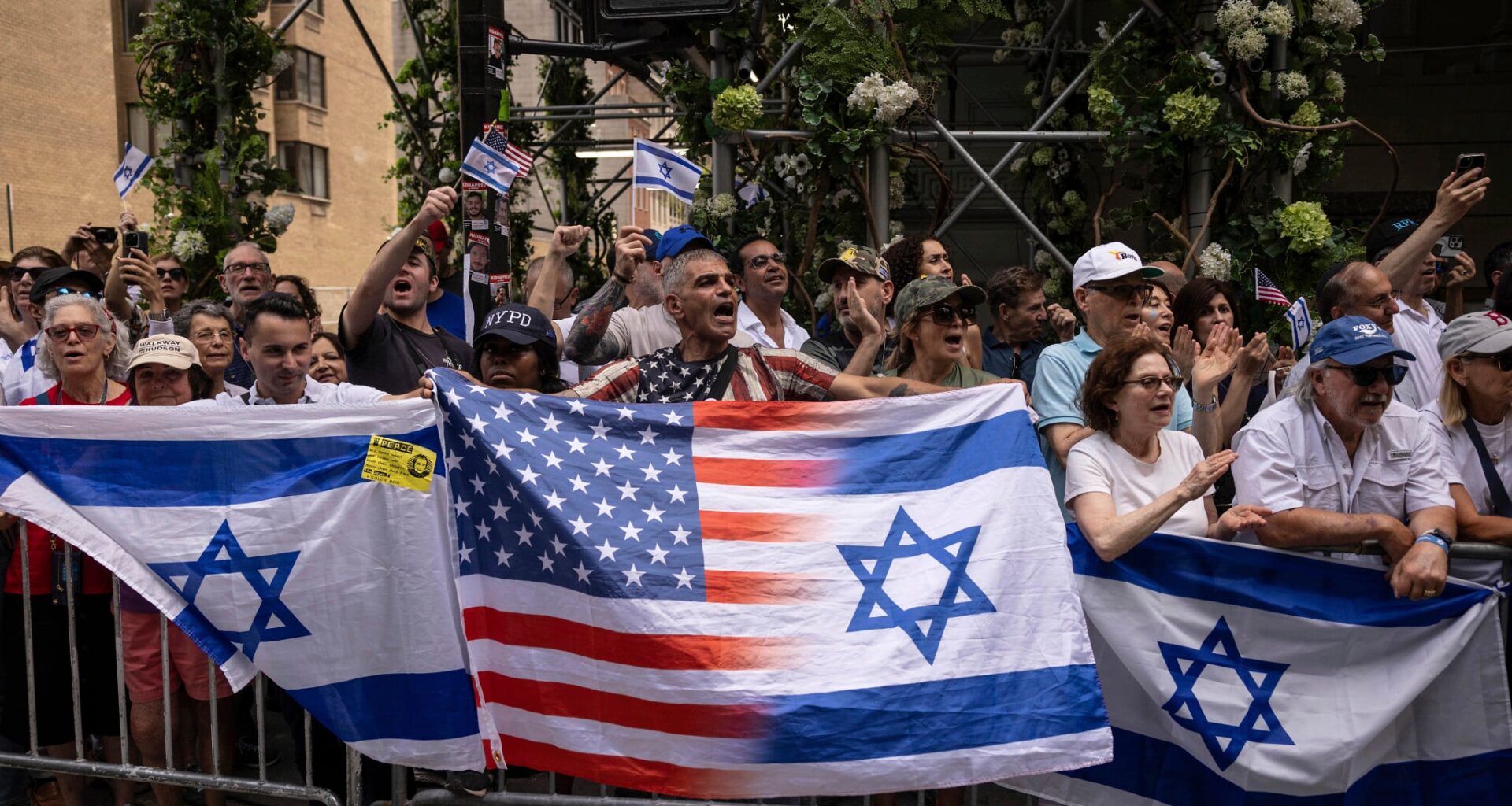
As Israel’s actions continue to divide America’s Jewish communities nearly three years into the war against Hamas in Gaza, a new AP-NORC poll reveals that some of the biggest gaps are between religious and secular Jews.
The survey from The Associated Press-NORC Center for Public Affairs Research makes clear that for many US Jews, support for Israel remains a bedrock of their religious identity, its existence a guarantee of Jewish self-determination and safety.
Yet others — particularly those who identify as Jews through ethnic, cultural or family ties, rather than religion — feel less connected to Israel and judge its actions in the ongoing conflict more harshly.
About seven in 10 Jewish adults overall identify as Jewish when asked about their religious affiliation, according to the sweeping survey that touched on everything from views on Israel to antisemitism concerns and strains on interpersonal relations. The rest, about three in 10 Jews, say they are atheists, agnostics, or have no particular religious affiliation, but still identify as Jewish in other ways.
Israel has been at the center of the turmoil in the Middle East since the October 7, 2023, Hamas-led attack that killed some 1,200 people. More than 73,000 Palestinians have died in Gaza in the ensuing war, according to the Hamas-run Gaza Health Ministry, which doesn’t distinguish between civilian and terrorist deaths. The ongoing conflict has become a wedge issue for Jewish and non-Jewish Americans, leading to protests, rising antisemitism, and questions about America’s close ties to Israel.
Get The Times of Israel’s Daily Edition
by email and never miss our top stories
By signing up, you agree to the terms
Among Jews with a religious affiliation, views on Israel’s recent military actions are far from uniform or uncritical. Only about half say Israel’s ongoing military operations in Gaza are justified.
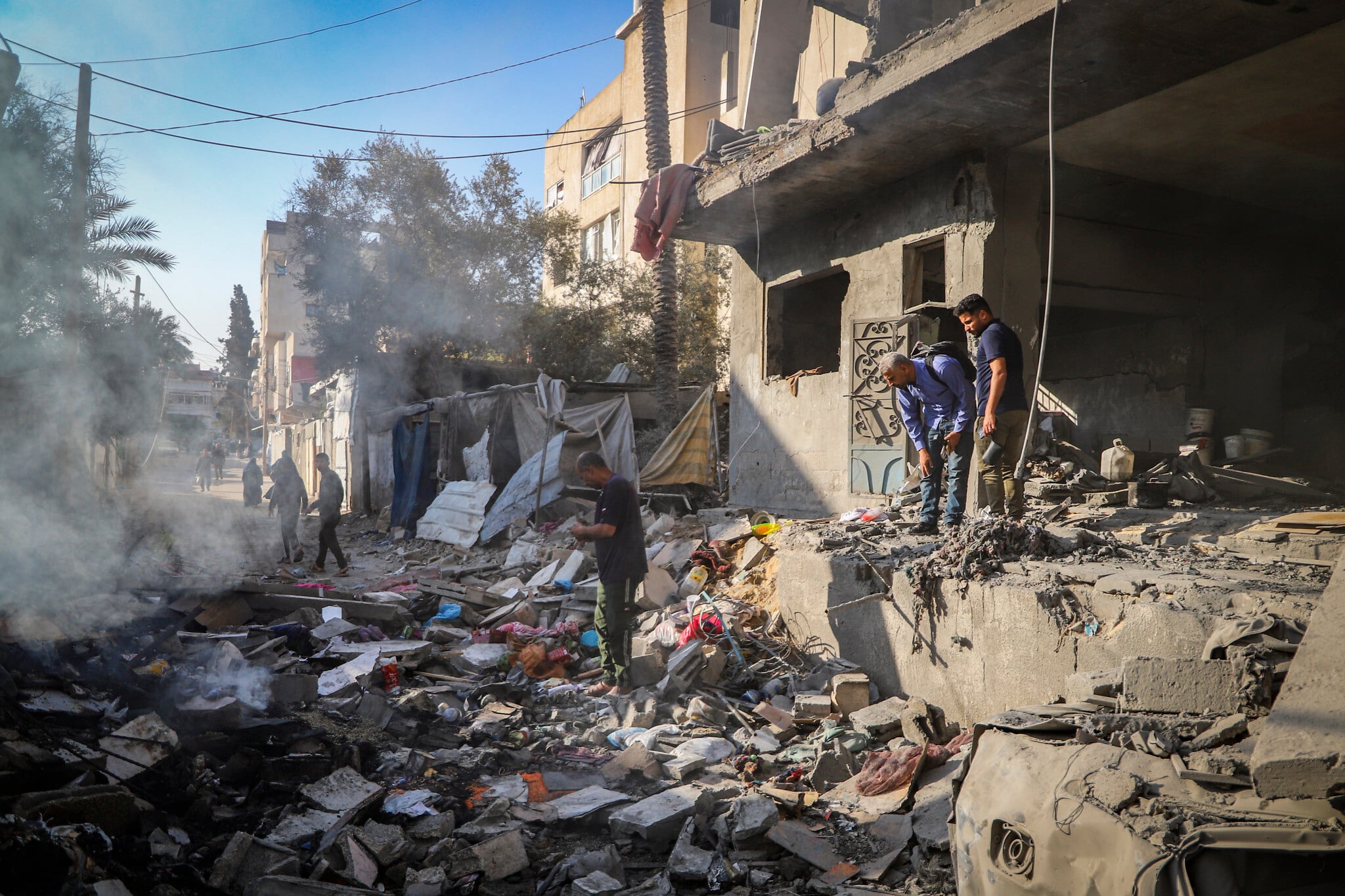
Palestinians at the site of an Israeli airstrike in Deir al-Balah, in the Gaza Strip, May 24, 2026 (Khalil Kahlout/Flash90)
About one-quarter believe Israel has committed genocide against Palestinians in Gaza, an accusation that’s been leveled by some human rights organizations and vehemently denied by Israel and the US government.
But they are more supportive of Israel’s actions than secular American Jews.
About four in 10 religiously unaffiliated Jews say Israel has committed genocide against Palestinians, and only about two in 10 see Israel’s current operations in Gaza as justified.
The vast majority, 74 percent, say they are “not too” or “not at all” emotionally attached to Israel, a sharp contrast from other Jewish adults.
Conflicting views about Israel’s military actions
Jews who regularly attend religious services are more likely than those who never attend to feel a connection to Israel and see its military actions in Gaza as justified, the survey found.
About three in 10 Jews never attend religious services, although that rises to about two-thirds among religiously unaffiliated Jews. About half of Jewish adults attend a few times a year or less often. About two in 10 attend at least once a month, including about one in 10 who attend weekly.
According to the survey, Jews mostly identify as Democrats; about three in 10 identify as Republicans. Religiously unaffiliated Jews are slightly more likely than Jewish adults overall to identify as Democrats, and less likely to call themselves Republicans.
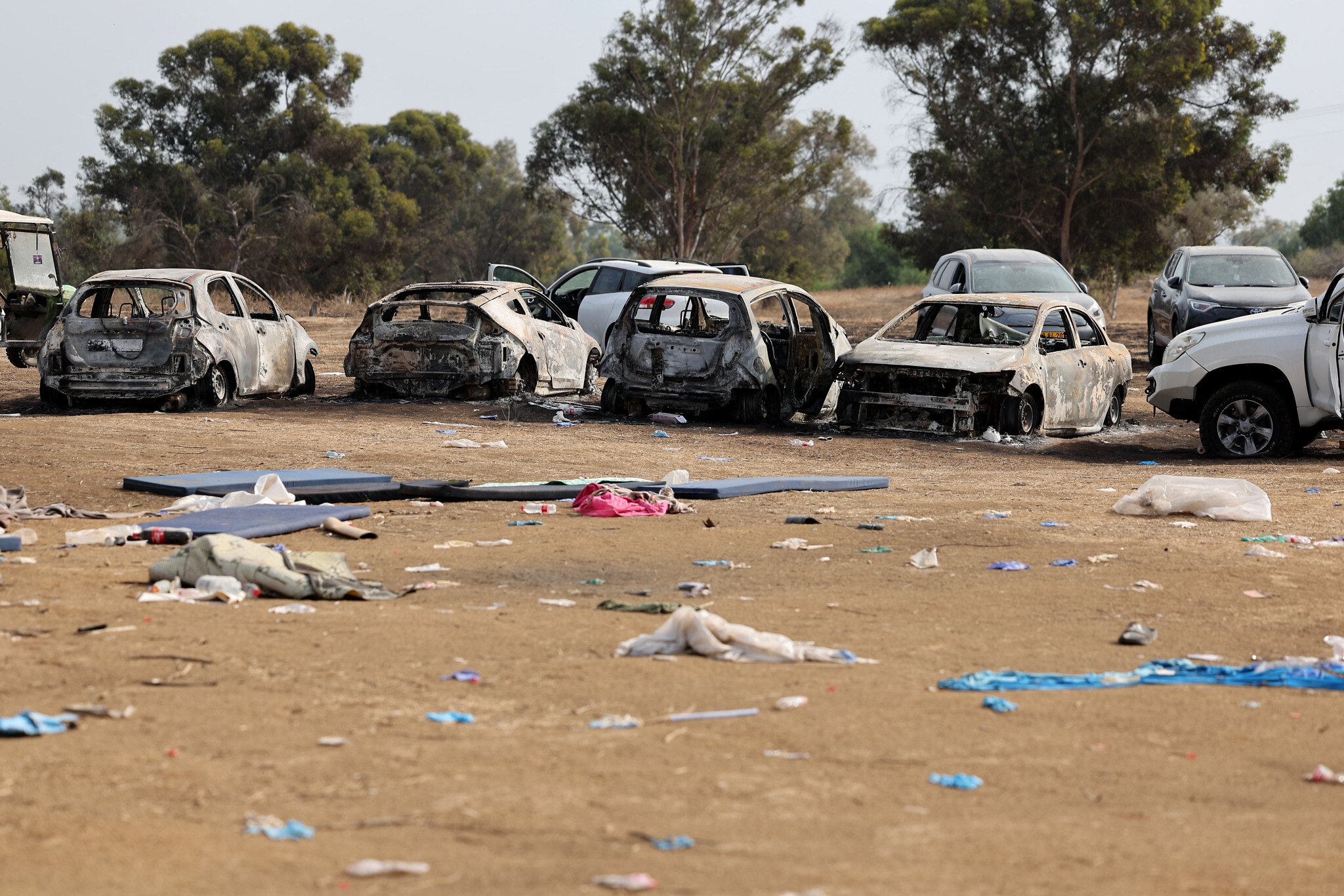
Burnt cars are left behind at the site of the massacre three days earlier by Palestinian terrorists on the Nova desert music festival near Kibbutz Re’im in the Negev desert in southern Israel, on October 10, 2023. (Jack Guez/AFP)
Jewish adults who identify as religiously Jewish are much likelier than nonreligious Jews to identify as Zionists.
About three in 10 religiously Jewish adults say “Zionist” describes them “extremely” or “very” well, compared to six percent of religiously unaffiliated Jews.
Just under half of secular Jews, 45%, say “Zionist” describes them ”not very well” or “not well at all.”
Many still see Israel as central to their Jewish identity
Supporting Israel is still fundamental to many Jewish adults’ identity, but its importance compared to other aspects of being Jewish varies.
About half of religiously affiliated Jewish adults say supporting Israel is “extremely” or “very” important to their Jewish identity, compared to about one in 10 religiously unaffiliated Jewish adults.
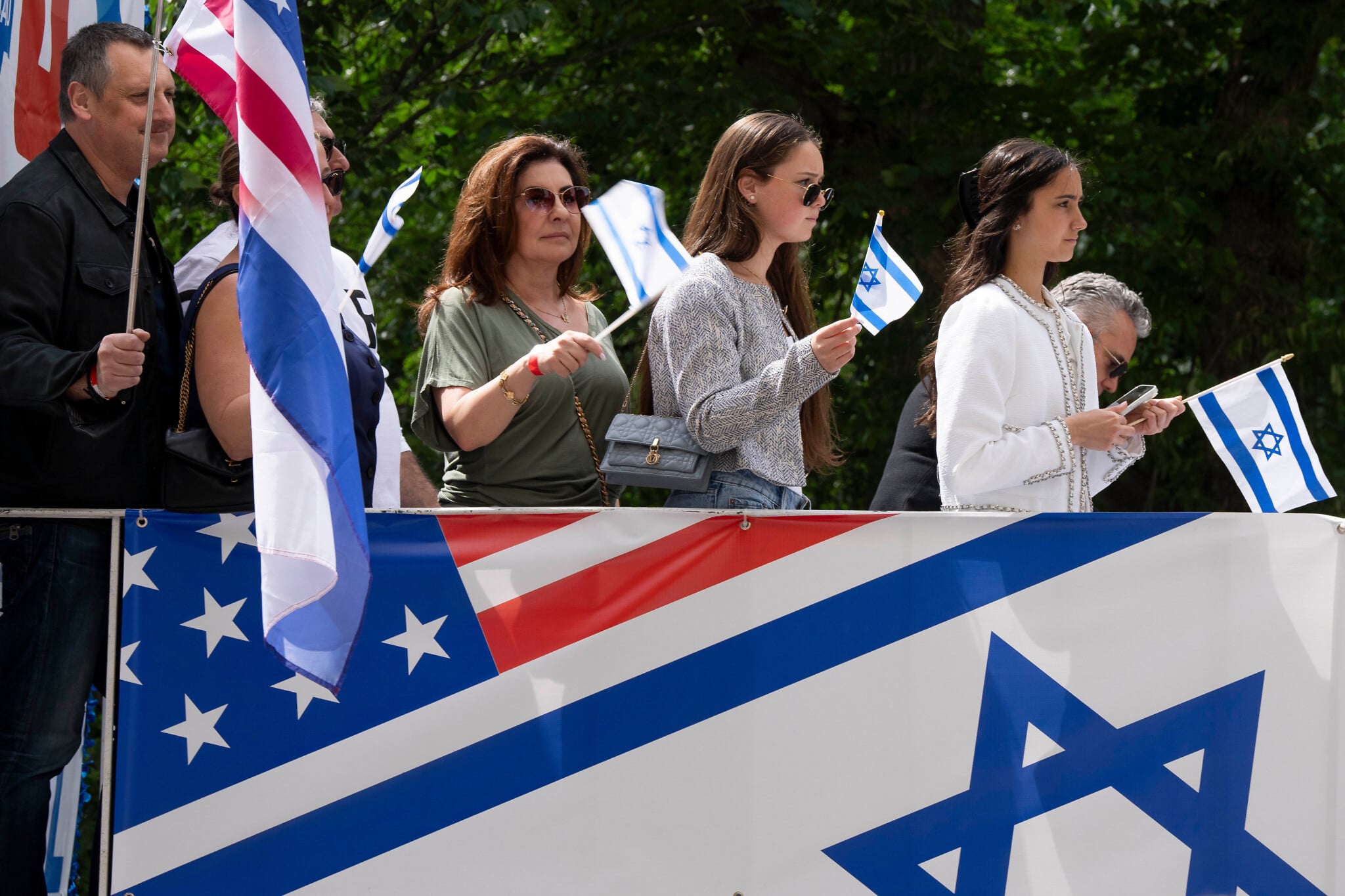
Parade participants wave flags at spectators during the Israel Day Parade, May 31, 2026, in New York. (AP/Emil T. Lippe)
Some of the divide is generational. Younger Jews — regardless of their Jewish affiliation — are less likely to see Israel as important to their Jewish identity.
But there are commonalities, too. Majorities of younger and older Jewish adults, for instance, say that remembering the Holocaust is important to their Jewish identity.
Painful conflicts over Israel are common
The survey finds that rifts are springing up within families and communities over Israel, even among religiously unaffiliated Jews.
Most Jewish adults, 55%, say they’ve felt offended by another person’s comments about Israel since the October 7 attack, while about four in 10 say they’ve disagreed with family members about something related to Israel.
About three in 10 say they’ve stopped talking to someone because of something they said about Israel.
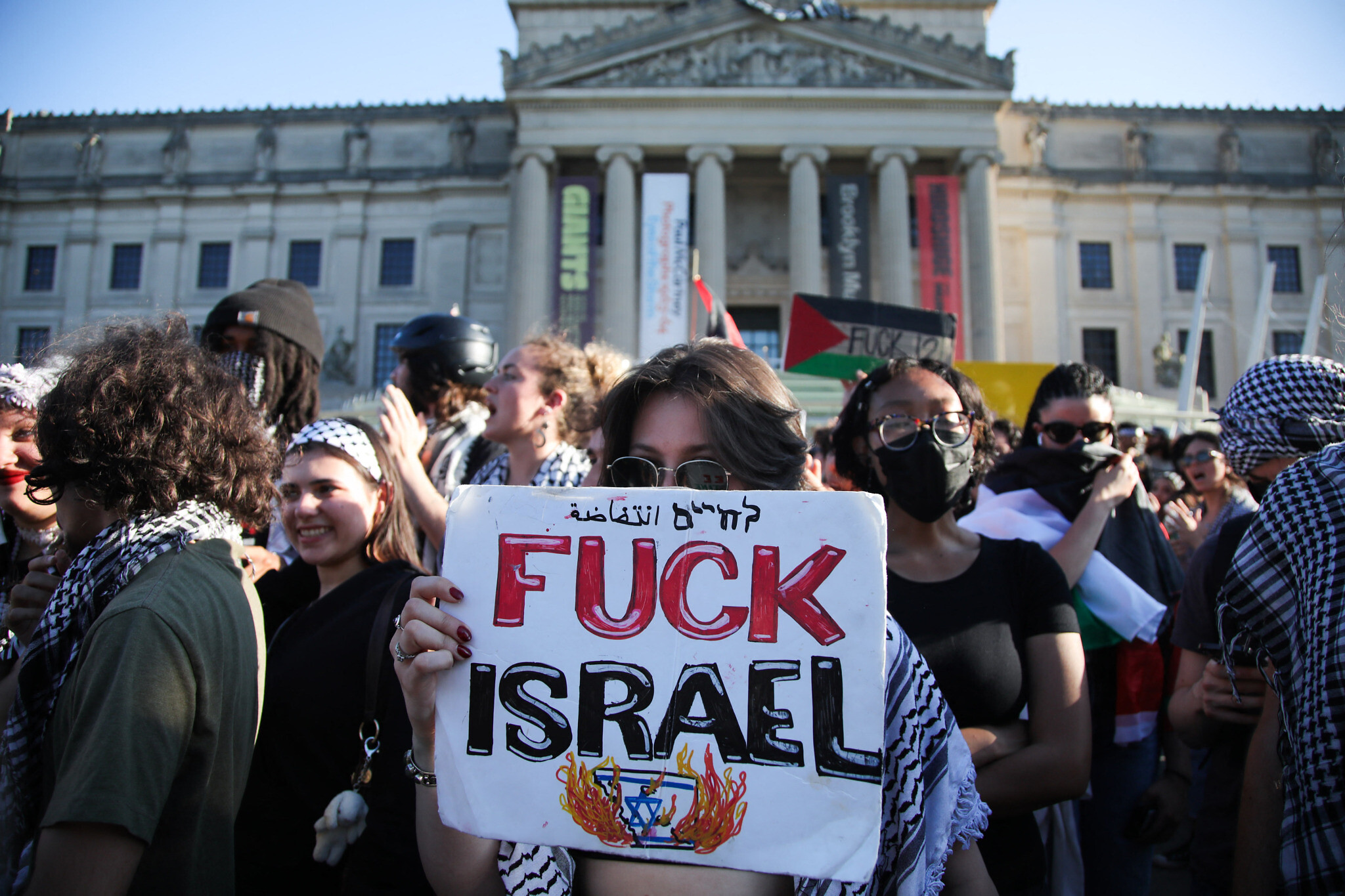
Illustrative: Anti-Israel demonstrators protest outside the Brooklyn Museum in Brooklyn, New York on May 31, 2024. (Leonardo Munoz/AFP)
The AP-NORC poll of 3,040 adults was conducted June 11-17 using a sample drawn from NORC’s probability-based AmeriSpeak Panel, which is designed to be representative of the US population. The poll included interviews with 1,022 Jewish adults. The margin of sampling error for adults overall is plus or minus 2.8 percentage points and the margin of sampling error for Jewish adults is plus or minus 5.0 percentage points.
Times of Israel staff contributed to this report.
We can’t do this work alone.

The war with Iran has been draining for all of us in Israel. But when I heard about a high casualty incident – ballistic missile impacts in Arad and Dimona that left nearly 200 people wounded – I drank a cup of coffee, packed a bag, and headed south.
There, I spoke with Shilgit, the head of an after-school program for underprivileged youth. Standing outside her destroyed center, Shilgit said it was a miracle that no children were hurt and spoke about the community coming together in the hours since.
As a Times of Israel reporter, I’m committed to telling stories of resilience like Shilgit’s. But my colleagues and I can’t do this alone. If you value work like this, please consider joining our reader support group, The Times of Israel Community. Your financial support is essential to keep real human reporting like this going.
— Stav Levaton, military reporter
Already a member? Sign in to stop seeing this
You’re a dedicated reader

That’s why we started the Times of Israel – to provide discerning readers like you with must-read coverage of Israel and the Jewish world.
So now we have a request. Unlike other news outlets, we haven’t put up a paywall. But as the journalism we do is costly, we invite readers for whom The Times of Israel has become important to help support our work by joining The Times of Israel Community.
For as little as $6 a month you can help support our quality journalism while enjoying The Times of Israel AD-FREE, as well as accessing exclusive content available only to Times of Israel Community members.
Thank you,
David Horovitz, Founding Editor of The Times of Israel