
NEED TO KNOW
Researchers identified the remains of two wolves dating back roughly 3,000 to 5,000 years on a remote Swedish island
The animals appear to have eaten marine foods, including seals and fish, suggesting they may have relied on nearby humans
Scientists say the wolves likely reached the island with human help because it has never been connected to the mainland
Two ancient wolves discovered inside a cave on a tiny Swedish island are raising new questions about how closely humans and wolves may have lived together thousands of years ago.
In a study published in the Proceedings of the National Academy of Sciences, researchers analyzed the remains of two canids found in Stora Förvar Cave on Stora Karlsö, a small island in the Baltic Sea. Genetic testing revealed the animals were wolves dating back roughly 3,000 to 5,000 years — but how they ended up on the isolated island is the mystery.
Unlike many islands, Stora Karlsö was never connected to mainland Europe, meaning wolves couldn’t simply wander there over land.
“The discovery of these wolves on a remote island is completely unexpected,” lead author Linus Girdland-Flink said in a statement reported by the study’s authors.
“Not only did they have ancestry indistinguishable from other Eurasian wolves, but they seemed to be living alongside humans, eating their food, and in a place they could have only have reached by boat,” he added. “This paints a complex picture of the relationship between humans and wolves in the past.”

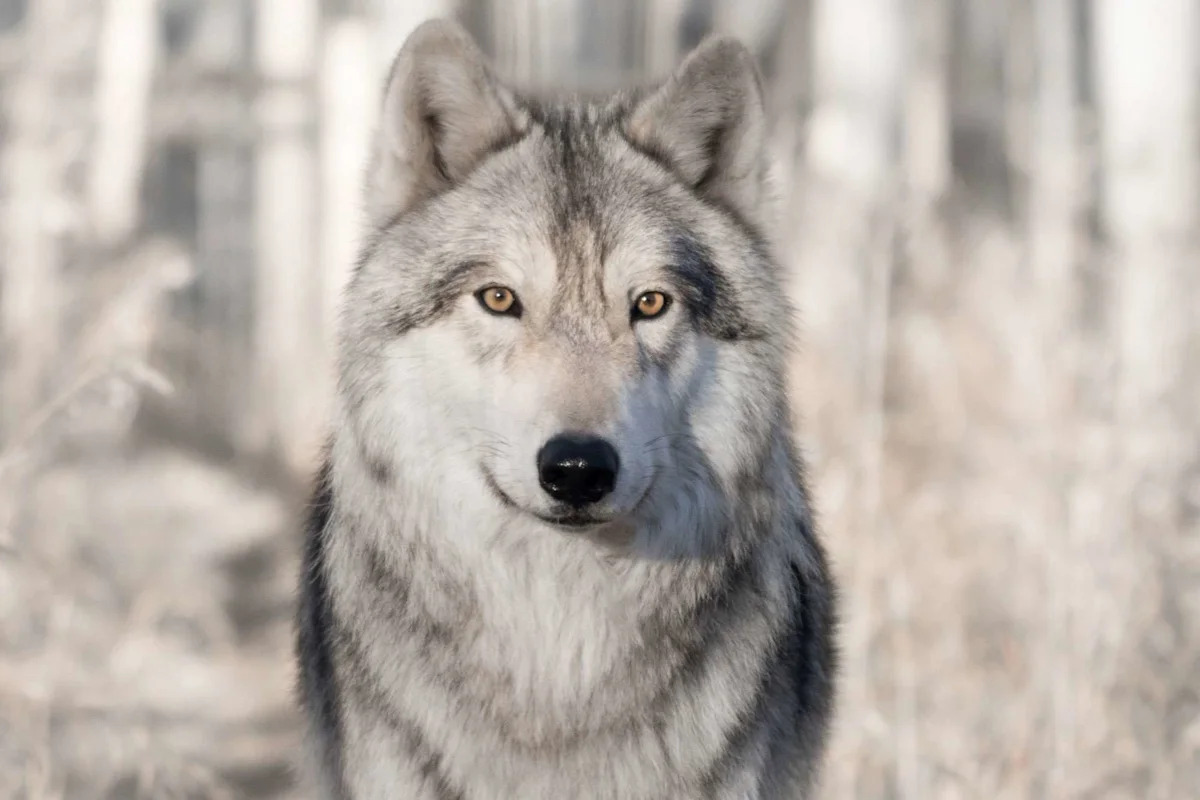
Stock photo of a large gray wolf
Credit: Getty
The cave where the remains were uncovered has long been known as a site used by seal hunters and fishers during the Neolithic and Bronze Ages. Archaeologists have previously recovered scattered human remains and the bones of a domestic dog there.
To determine whether the newly discovered animals were wolves or early dogs, researchers turned to DNA rather than bone shape alone, since the two species can be difficult to distinguish in prehistoric remains.
The analysis showed both animals were genetically wolves, though they were somewhat smaller than many modern Scandinavian wolves.
Researchers also uncovered another clue: the wolves had been eating a diet rich in marine protein, including seals and fish.
That stood out because a domestic dog previously found in the same cave appeared to eat a more typical human-associated diet based largely on terrestrial foods. Marine diets have been documented in modern wolves living in coastal Alaska and British Columbia, but researchers say there is no previous evidence of wolves in prehistoric Scandinavia relying so heavily on seafood.
Never miss a story — sign up for PEOPLE’s free daily newsletter to stay up-to-date on the best of what PEOPLE has to offer, from celebrity news to compelling human interest stories.
One of the wolves also showed unusually low genetic diversity, something often associated with small, isolated populations or animals that may have been selectively bred.
Taken together, the evidence suggests the wolves may have depended on humans in some way, perhaps receiving food from nearby communities or even traveling to the island with them by boat.
The researchers caution that other explanations remain possible, including the unlikely chance that wolves reached the island naturally. Still, they say the findings open a new window into the complicated relationship between prehistoric humans and wolves — one that may have unfolded alongside, but separately from, the story of how dogs were eventually domesticated.
Read the original article on People