
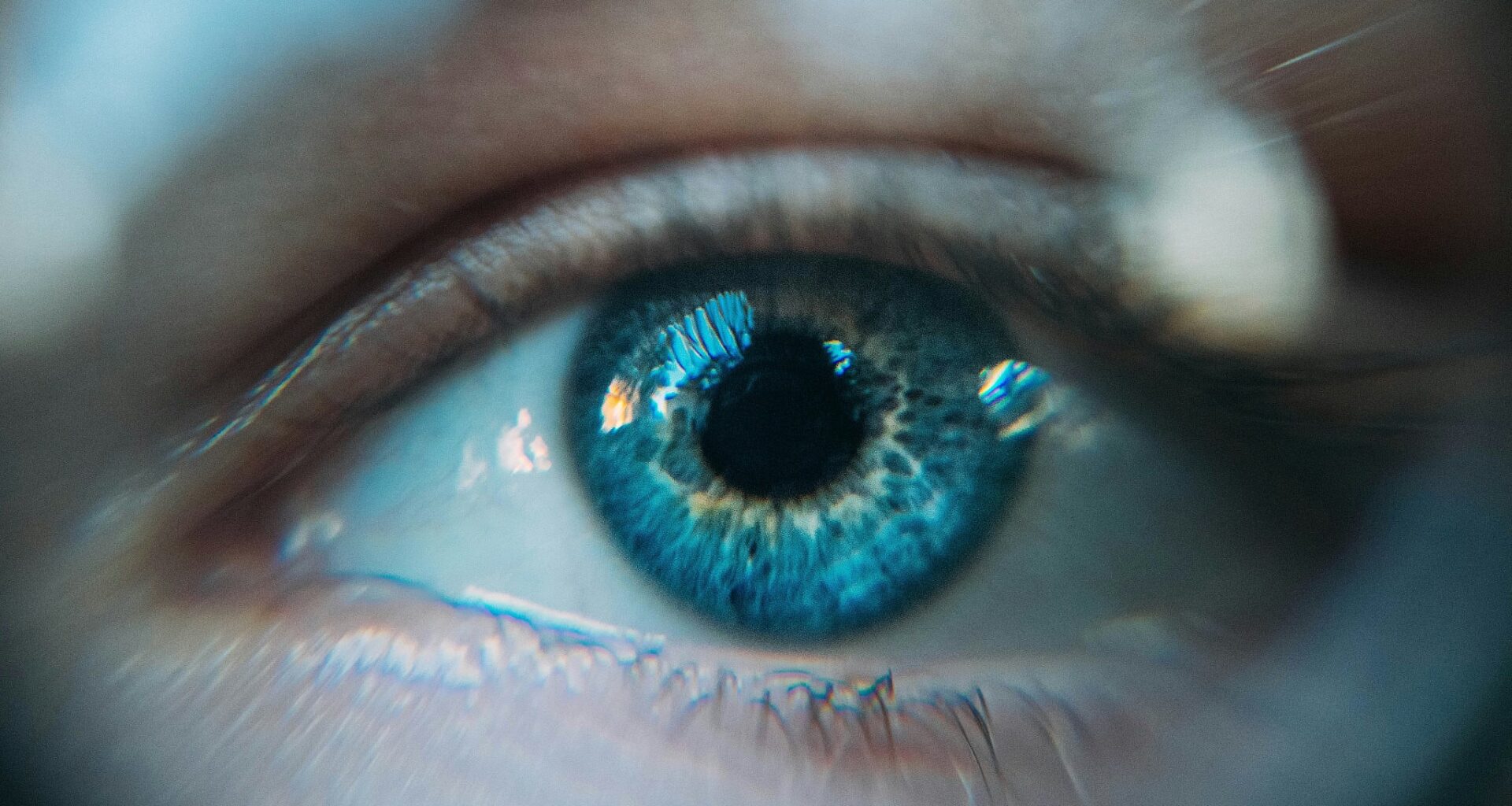
Computer vision has ushered in a revolution across many aspects of daily life, enabling autonomous vehicles to navigate roads, enhancing border security systems, and powering automated retail stores, and it is now on the brink of fusing AI perception directly with human biology. To better understand its implications and where it may lead next, three experts in the field shared their perspectives: Ohad Hever, Co-Founder of UVeye, Daniel Gabay, CEO and Co-Founder of Trigo, and Professor Ofer Hadar of Ben-Gurion University. This is the story of this ecosystem, its close relationship with the startup nation, and an in-depth look at what comes next.
Close your eyes for a moment and try to cross the street. Is it difficult, almost impossible? Not really. You can hear the traffic, feel the ground beneath your feet, and sense the wind from a passing car. But without sight, the geometry of the world, the shape of objects, the distance, the speed, the gap between you and everything moving around collapses into the mere hope of not being hit until you reach the other side of the street. This is not a thought experiment. It is the oldest truth in human movement. When we drive a car, ride a bicycle, or simply walk through a crowded street, vision is not one sense among many. It is the system that everything depends on.
Amnon Shashua understood this in a way that most engineers in 1999 did not. A computer science Professor at Hebrew University in Jerusalem, he kept arriving at a simple observation: when a person drives a car, he does not use radar. He uses his eyes, his brain, and a lifetime of learned pattern recognition. If you want to teach a machine to drive safely, the most natural approach is not to replicate the instruments of a submarine, but to replicate the human eye.
Amnon Shashua founded Mobileye on that single idea: one camera, the right algorithms, the discipline to make it work in the real world. The automotive industry told him radar was the answer. He disagreed and kept building. By 2014, when Mobileye went public in what was then the largest Israeli IPO in history, the radical idea had become the global standard. Vision had won. I worked at Mobileye, and I saw firsthand how every car equipped with this technology is also gathering data from the road, information that is quietly fueling a growing B2B business, with insights sold to utility companies and cities alongside the hardware itself.
But the more important chapter came next. Shashua’s aunt was losing her sight. She asked her nephew, the man who had spent fifteen years teaching machines to navigate the visual world, whether the same technology could help her. In 2010, he and co-founder Ziv Aviram founded OrCam, took the computer vision breakthroughs powering Mobileye, and pointed them at a completely different problem. Not the highway but the human. The algorithms reading road signs now read restaurant menus. The system tracking pedestrians now recognizes familiar faces. The name combined the Hebrew word for light — “Or” — with “Camera.” The mission: bring clarity back.
This is the move that explains everything about Israel’s position in computer vision today. The knowledge transfers. The same discipline, the same engineering culture, the same fundamental insight moves across fields in ways that do not happen anywhere else. Mobileye becomes OrCam. The checkpoint scanner becomes the dealership inspection system. The algorithm built for defense becomes the one that helps a child with dyslexia read.
In Israel, vision technology does not stay in its lane. UVeye, an AI vehicle inspection company, began not in automotive showrooms but at security checkpoints, scanning for threats hidden beneath vehicles. Today, trusted by General Motors, Amazon, and Volvo, it analyzes over five billion vehicle images a year, scanning a full vehicle in seconds with 96% accuracy against 24% for manual inspection. Its COO and Co-Founder, Ohad Hever, told me something that reframes the entire Israeli advantage.
“Israel’s edge in computer vision didn’t start in automotive. It started in security, where a missed detection costs lives, not warranty claims. Israel’s talent comes out of an environment where false negatives are unacceptable, so engineers learn reliability before they learn growth. The harder thing to copy is not the algorithm — it’s the habit of building for high-consequence, real-world conditions and deploying at scale.”
And that discipline, transferred from checkpoint to dealership lot, may be about to change the whole industry.
“When computer vision earns trust,” Hever said, “it becomes the intelligence layer the whole industry runs on.”
The same transfer of discipline is happening in retail. Trigo, a Tel Aviv-based Physical AI company, takes the same computer vision capabilities and turns them on the physical store — using the camera infrastructure that already exists in supermarkets to autonomously identify shoplifting, monitor inventory, and ultimately transform the shopping experience entirely. Daniel Gabay, CEO and Co-Founder, is clear about what computer vision has become.
“Today, computer vision is no longer just about teaching a machine to see — it’s about Physical AI, the ability to understand, interact with, and optimize physical environments. By translating visual data into actionable intelligence, we are solving tangible, real-world problems. The nearly $100 billion global shrink and shoplifting problem will be massively mitigated. For the consumer, this means an end to the frustrating modern trend of locked display cases and intrusive receipt scanners. Honest shoppers will regain a completely frictionless, dignified experience.”
On Israel’s advantage, Gabay points to the same origin Hever identified, but is more specific.
“Israel’s disproportionate success in computer vision stems from a very specific crucible: the intelligence technological units. Here, engineers are trained to apply computer vision to high-stakes, real-world physical environments under extreme constraints. This builds an unmatched national muscle for Physical AI and edge computing. We don’t just know how to write algorithms; we know how to make them operate reliably in the messy, unpredictable physical world.”
And on where this leads: “Once computer vision AI masters the context of human behavior and interactions within a complex environment, the store becomes an intelligent, automated ecosystem. In five years, physical stores will operate with the speed, personalization, and efficiency of e-commerce.”
Prof. Ofer Hadar, Full Professor of Communication Systems Engineering at Ben-Gurion University and one of Israel’s leading researchers in visual AI, sees the field at an inflection point.
“Computer vision is entering a new phase. The challenge is no longer simply to recognize objects in clean, controlled images — it’s to build AI perception systems that understand complex environments, operate in real time, and remain reliable under uncertainty and adversarial conditions. Israel has developed a particularly strong ecosystem in this area, where academic research and entrepreneurial innovation reinforce one another. The next major advances will emerge from combining robust visual perception with contextual understanding and reliable decision-making under real-world conditions.”
Where does this story go next? The car has a computer vision layer. The dealership, the retail store, the checkpoint, the hospital, all the infrastructure of modern life is being quietly re-equipped with the ability to see. But there is one interface that remains largely unchanged. The human eye.
Two hundred and fifty million people live with significant vision impairment. The best tools most of them have today are reactive: devices that answer questions they already know to ask, cameras that read a sign when they point at it. Tools to operate, not senses to rely on. OrCam was the first serious answer to that problem, but this is not the last word.
The same discipline that gave machines the ability to see roads, detect threats, and read retail environments, built and refined over twenty-five years in Israel, is now being turned toward something more fundamental. Not the world a machine navigates, but the world a human being is losing the ability to see.
Close your eyes again. Now imagine opening them, and the world is already there, described before you even had to ask. A world where edge AI, augmented reality, and always-on connectivity collapse the distance between what we see and what we understand.
Where that takes us, nobody can say with certainty. But the people building it are here.
Growing up in Portugal, my love affair with the English language started early. I binge-watched American TV shows (thanks, ‘Friends’) and sang along to The Beatles until my family probably wanted to “Let It Be.” Our summer road trips across Europe were always set to the Fab Four’s greatest hits, and I’m proud to say I’ve actually read all 367 pages of their 2000 Anthology book. Twice. After earning my master’s at USC in Los Angeles (where I learned to love traffic and In-N-Out burgers), I made the leap to Israel, thinking, “What could be more interesting than the Middle East?” Spoiler alert: Nothing is. I’ve since worked in marketing for several high-tech companies, dabbled in PR, and even collaborated with the Jerusalem Post. I’m a bit of a polyglot, speaking five languages, and I’ve published two books. One is a children’s book in Hebrew called “Yara and her Grandfathers,” which focuses on the LGBT community. The other is my latest novel about the creation of Tel Aviv, titled “The White City.” (Yes, I’m already thinking about the movie rights.) These days, you can find me living in Tel Aviv, working as marketing manager for a cyber security company, and founding Vision+, a startup developing edge AI to augment and restore human vision. I came to it the way a filmmaker does: vision is not just a sense, it is the only thing that makes the world feel real. I stopped writing about the future and started trying to build it. Life’s good, and I still find time to occasionally belt out “Hey Jude” in the shower.