
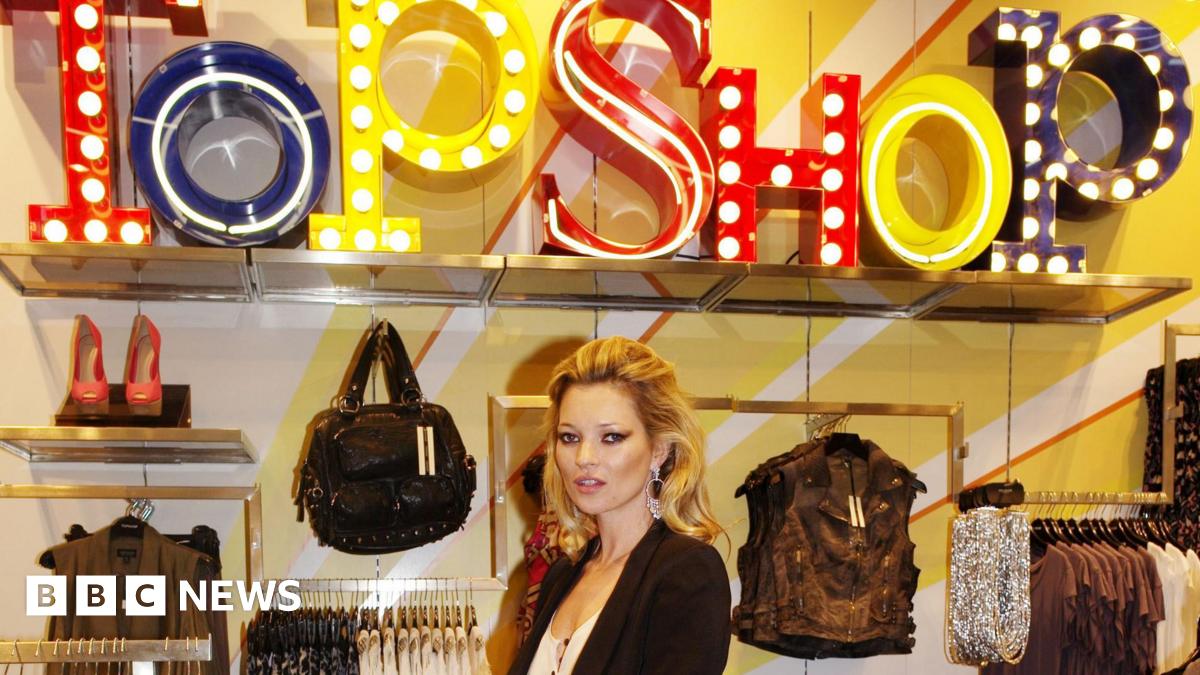
In the 90s and 00s, designers “used to laugh at High Street fashion”, said Wayne Hemingway, a designer and co-founder of Red or Dead.
“They couldn’t keep up with the trends. Topshop was the only one that did.”
Hemingway, who worked with Topshop through its heyday, said a large part of its success was down to the team behind it, including Jane Shepherdson, its hugely influential brand director.
“They brought in second hand clothes for example, that’s normal now, but back then it was seen as absolutely radical to have a shopping department store doing that,” he said.
“You had the collaborations, the London Fashion Walk catwalk, all this design and excitement at High Street prices. It was so fresh, everyone wanted to be part of it.”
But over time, what people were looking for changed – and Topshop didn’t always keep up, said Graafland.
“They offered that unique London look. Then the girls who shopped there grew up, and they didn’t want that look anymore,” she said.
“You cannot afford to take your finger off pulse for one minute in fashion.”
She added that Topshop 2.0 would benefit from the fact its core aesthetic – the London girl look – is back in style, and that not many other retailers are offering it.
“If you look at the High Street now, there’s a strong Spanish presence, with the likes of Zara, and also a Swedish presence with H&M. When Arcadia collapsed, we lost that Britishness,” she said.
She added that a lot of the High Street is “playing it safe right now”, and that could also work in Topshop’s favour if can “get that cool edge back”.
Topshop’s team is confident that it can still win over shoppers with its trademark London-based swagger.
“We still think there’s a huge gap in the market for that,” Wilson said.
“The most important thing that we won’t forget, and maybe got forgotten about towards the end of the previous era, is that product is everything.
“It has to be the best quality product, the most fashionable product for our customer base, and bringing that at good value.”