
Traffic Lab is a Seattle Times project that digs into the region’s transportation issues to explore the policies and politics that determine how we get around and how billions of dollars in public money are spent.
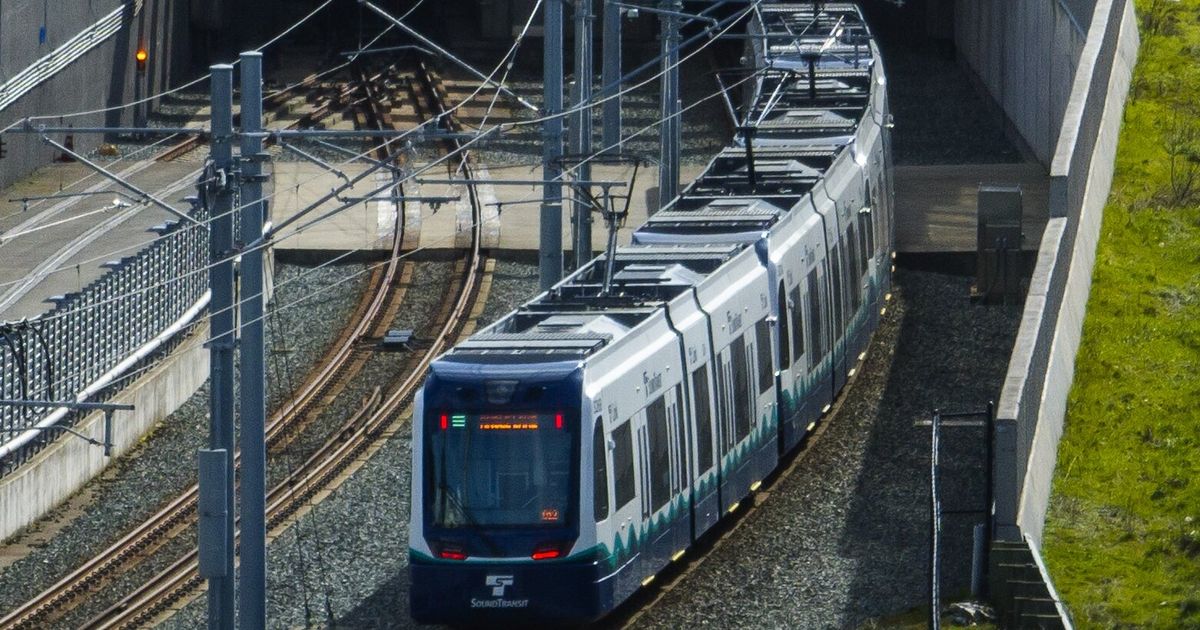
For the second time this month, a ventilation-fan glitch caused Sound Transit to close a light rail tunnel, delaying and aggravating Friday morning commuters.
The early morning disruption between Capitol Hill and Northgate stations lasted until nearly 8:30 a.m., forcing riders to get out at those two stations and look for a shuttle bus or other means around the North Seattle blockage.
Sound Transit’s 1 Line proved unreliable just when it was needed most for travelers seeking to bypass a two-lane construction closure that has been clogging the I-5 Ship Canal Bridge. Ridership has grown to 100,000 daily passengers on the 33-mile route, while I-5 buses have been slashed this decade, which has increased dependence on trains.
During the morning incident, as many as 10 shuttle buses circulated mostly full between Capitol Hill, University of Washington, U District, Roosevelt and Northgate stations, said spokesperson Rachelle Cunningham.
An initial investigation showed an information-technology flaw that caused a tripped circuit breaker next to the Maple Leaf tunnel portal just south of Northgate Station, she said.
Such a malfunction isn’t a direct threat to tunnel users, but Sound Transit and Seattle Fire Department regulations mandate a shutdown whenever any of the fire-life safety systems, including fans and alarms, aren’t 100% operable. On rare occasions, fires have broken out in U.S. transit tunnels.
Friday’s mess follows an incident on Aug. 6 that closed the Beacon Hill tunnel for most of that day after one emergency fan didn’t properly restart from a brief outage. Sound Transit hasn’t yet published a full explanation or forensic report about what caused that incident.
Sound Transit is still determining the “root cause” of Friday’s mishap, Cunningham said. The tunnel is only 5 years old, having opened in 2021 along with three stations.
Passengers south of downtown seemed annoyed but not furious aboard slower-arriving trains during the disruption, which caused ripple effects down the line.
“It’s pretty frustrating because, in order to get to UW Medical Center, I can’t tell you how many times there’s been service disruptions and I’ve had to take an Uber from downtown to UW,” said Patty Sponseller of West Seattle, aboard a mostly full northbound train.
She had already taken a Route 50 bus to Sodo Station and said she waited 20 minutes there. Sponseller avoids driving because of the Highway 99 tunnel tolls and the cost of parking at the UW.
As she and fellow commuters braced for delays, that train’s operator announced at 8:24 a.m. the North Seattle tunnel had reopened and he would proceed to Lynnwood, instead of requiring people to exit at Capitol Hill.
Moments later, a couple of hundred people poured onto a down escalator at Capitol Hill, some grumbling on their way from the street-level bus stop back to the train platform. An energetic security guard below shouted, “Trains are normal!” “North is north and south is south,” instead of trains reversing course there.
On his way southbound from the Lynnwood City Center park-and-ride hub, Phong Tang, a Seattle city worker, said he had to walk off a train at Northgate Station. Tang didn’t see a shuttle bus there, and balked at the crowd of people waiting, so he rode two regular Metro buses to Capitol Hill, which ate up 60 minutes.
“This is probably the most inconvenient one [disruption] I’ve had in a year,” he said. “This one, I didn’t prepare for. I didn’t know I would have to take two buses.”
Eddie Esparza started riding the 1 Line this summer specifically to miss “Revive I-5,” the Washington State Department of Transportation’s repaving project on the Ship Canal Bridge, which has blocked two northbound lanes for the past four weeks, causing related southbound traffic jams because the express lanes were pointing north.
He left Shoreline North/185th Station at 7:05 a.m. and was rolling out of International District/Chinatown Station at 8:37 a.m., toward his job at a Sodo automobile business.
“I’m doing it every day, which I enjoy with the exception of today,” Esparza said.
Esparza said next time, he’ll subscribe online to Sound Transit alerts to get better prepared. And if trains are blocked, he’ll drive south until he reaches the first unblocked station.
Sound Transit has acknowledged the need to improve, and some tasks have started, such as replacing broken rails.
As of May, only 78% of light rail trains arrived on time, compared with a 90% goal; and only 90% of the scheduled 1 Line trains operated at all, compared with a 98.5% goal. That’s despite a 99% on-time record of transit workers completing maintenance of the power system, according to Sound Transit. Besides the two ventilation incidents, a track switch control failed inside the downtown Seattle tunnel on July 28, causing half-hour delays all morning.
In January, now-retired CEO Goran Sparrman declared frequent stoppages an emergency. A subsequent investigation by HNTB Engineering found many weaknesses, such as aging components downtown, a lack of redundant power sources if one cable fails, and vulnerabilities in the train-control network. This spring, the agency’s board hired new CEO Dow Constantine, the former King County executive.
Sound Transit revised its maintenance schedules, but has yet to publish a menu of long-term equipment projects to boost resilience. An update is due in September.
Next up, there will be a scheduled closure of the downtown Seattle light rail tunnel on Saturday, Aug. 23, from the start of morning service until 1:30 p.m., as workers prepare for the Eastside’s 2 Line to cross Lake Washington and connect with the 1 Line at International District/Chinatown Station in spring 2026.