
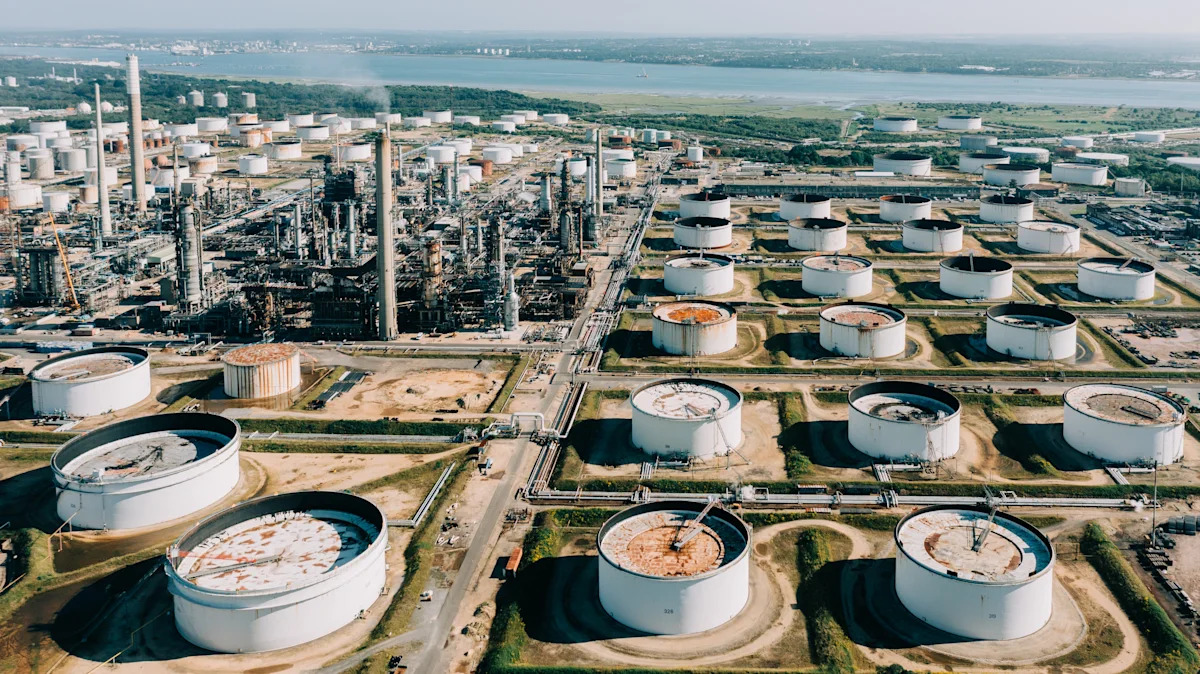
Oil prices raced upward on Monday as President Trump said the US would reimpose its blockade of the Strait of Hormuz and begin charging a 20% fee on any cargo shipped through the vital waterway, further complicating an already volatile situation in the Middle East.
Futures on Brent crude (BZ=F), the international benchmark, jumped roughly 4.7% to trade at nearly $80 per barrel. The US benchmark WTI crude (CL=F) rose a similar 4.6% to trade near $75.
“The Hormuz Strait is OPEN, and will remain OPEN, with or without Iran,” President Trump said on Monday. “We are reinstating the THE IRANIAN BLOCKADE, so named because it is only stopping Iran’s ships or customers from entering or leaving.”
The president also said the US would, going forward, be the “GUARDIAN OF THE STRAIT OF HORMUZ,” and that the country would be “reimbursed” for those services at a rate of 20% on “all cargo shipped, for any and all costs necessary to do the job of providing safety and security to this very volatile section of the World.”
In an interview with Fox News earlier Monday morning, Trump said the US “can’t be expected to do that for nothing,” in comments about US efforts to keep the Strait of Hormuz open for use by other “very wealthy” nations.
The president’s comments come as the newest wave of post-agreement escalation has proven more serious and long-lasting. Over the weekend, the US military carried out strikes on roughly 140 targets, US Central Command said.
Iran retaliated through Monday morning, aiming for US military bases and infrastructure inside other Gulf nations, per state media reporting. The nation also intercepted two vessels in the Strait of Hormuz that had been using an “illegal” route, Iran’s Revolutionary Guard Corps said.
As the conflict has reignited, all eyes have swung back toward the Strait of Hormuz, where a fifth of the world’s crude oil shipping used to pass through. While Iran’s leadership has declared it closed, Washington insists the critical waterway is open.
Iran said Monday the peace agreement has “undoubtedly entered a crisis phase” and that it won’t abide by the required terms if the US continues its military campaign. The Persian Gulf Strait Authority, which the Iranian government set up as a regulatory body of the strait, said Monday, “Due to recent hostile actions by the US forces, passage through the #Strait_of_Hormuz is currently unfeasible.”
President Trump has called the agreement dead.
Voyages through the waterway, the key metric for oil markets, fell 52% week on week over the weekend, according to data from intelligence firm Kpler. Kpler also noted a shift toward “defensive” techniques by vessels in the region, such as attempting “dark” crossings with location beacons turned off to avoid tracking.
Read more: How oil price shocks ripple through your wallet, from gas to groceries
That said, the new round of escalation hasn’t sent oil prices into the same spike as in March, shortly after the war initially kicked off on Feb. 28. Both Brent and WTI remain far below their wartime highs of well over $100 per barrel.
Futures also continue to indicate that markets expect Brent to trade near $80 per barrel in December, remaining far off the March highs. Yet strategists have increasingly warned that a serious escalation could apply major upward pressure to prices. Coming into the first wave of war, the global economy was well oversupplied with oil. Additionally, China — the world’s largest crude importer — drastically slowed its purchases.
 Mourners gather at a ceremony honoring Iran’s former supreme leader Ayatollah Ali Khamenei in the capital city on July 3, 2026. (John Moore/Getty Images) · John Moore via Getty Images
After five months of conflict, governments’ and private industry’s oil inventories have largely been drawn down. Data also shows an uptick in crude imports by Chinese refineries, signaling that the country may be properly reentering the market.
Jake Conley is a breaking news reporter covering US equities for Yahoo Finance. Follow him on X at @byjakeconley or email him at jake.conley@yahooinc.com.
Click here for in-depth analysis of the latest stock market news and events moving stock prices
Read the latest financial and business news from Yahoo Finance