
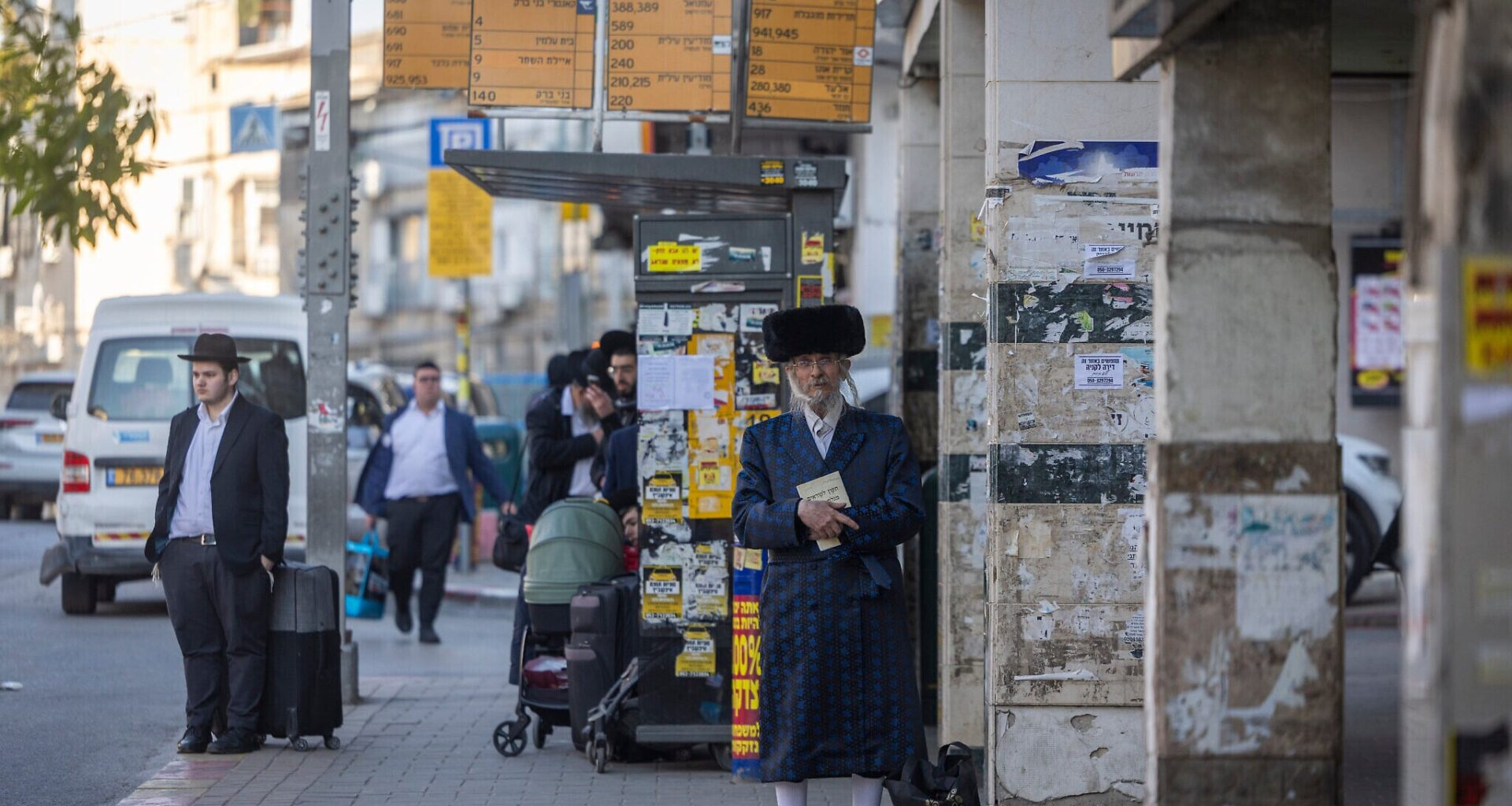
The Bnei Brak municipality is working to establish gender-segregated sidewalks inside the largely ultra-Orthodox city, according to a report on Monday.
In accordance with a decision by the city’s rabbis, Bnei Brak plans to segregate the bustling Shlomo Hamelech and Ezra streets with barriers and signage to prevent men and women from crossing each other’s paths, Channel 13 reported.
The plan has been in development for several years and is likely to be expanded to other busy streets in the city, municipal officials told the channel.
An official message by the city instructed residents of all ages to abide by the new guidelines, the report said.
The municipality told Channel 13 that rabbis’ instructions are “very clear and speak for themselves. The city’s public, which is committed to obeying the great Torah leaders and heeding their words, will comply with their request.”
Get The Times of Israel’s Daily Edition
by email and never miss our top stories
By signing up, you agree to the terms
Yael Yechieli, the director of the 5050 initiative, which works for gender equality in Israel, decried the move, saying that “religious leaders want to exclude women from everywhere, and if we don’t stop them, it will continue.”
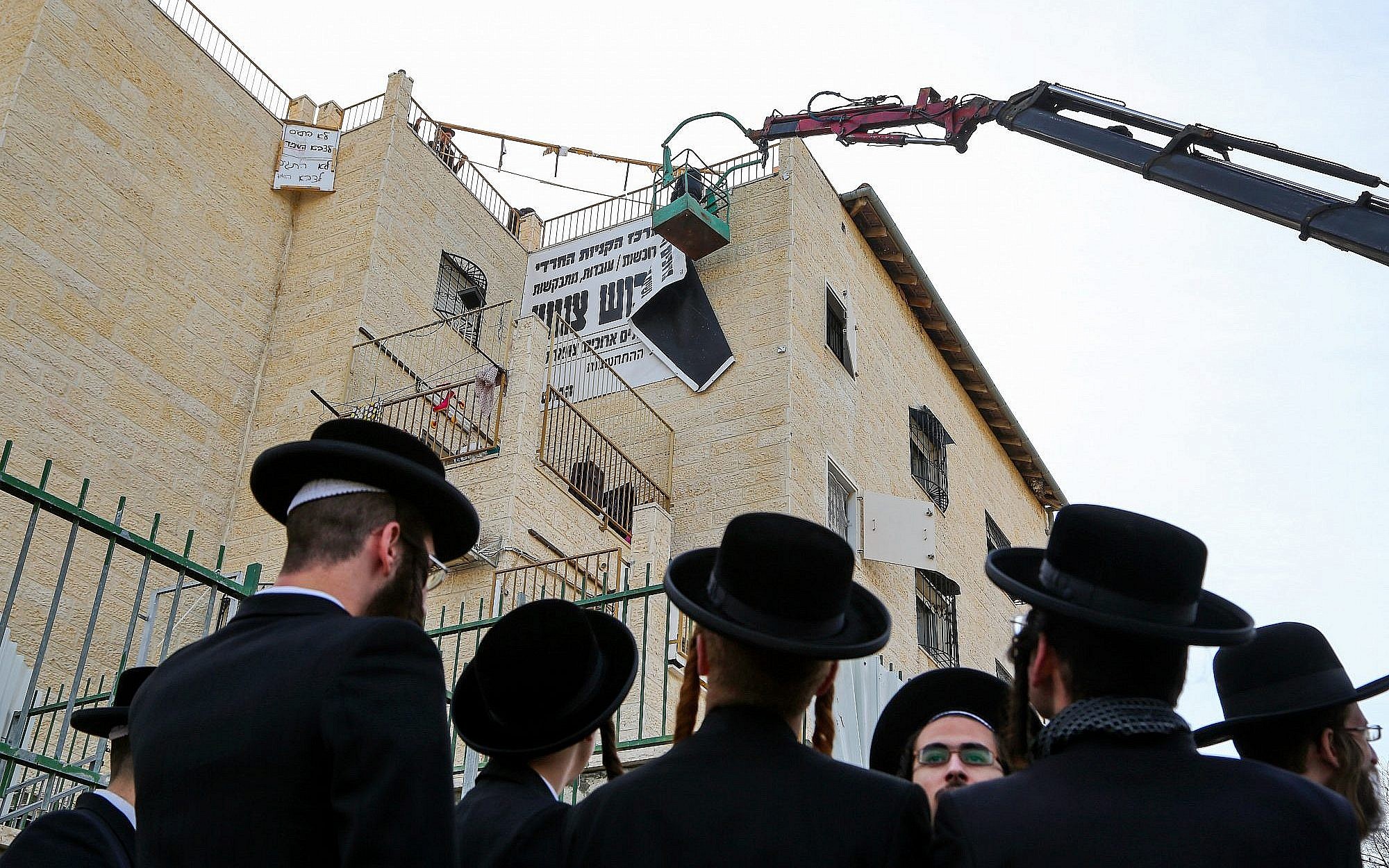
Beit Shemesh municipal workers take down “modesty” signs in the city on December 11, 2017. (Yaakov Lederman/Flash90)
“The monster of segregation is insatiable,” she said, noting that it was only men who made the decision at the Bnei Brak Municipality. “The disaster of segregation must end and the public needs to fight for it.”
In 2017, the Supreme Court ordered the Beit Shemesh municipality to remove “modesty” signs instructing men and women to walk on opposite sides of streets in an ultra-Orthodox neighborhood.
In contrast to Beit Shemesh’s mix of ultra-Orthodox, modern Orthodox, and secular residents over restrictions on women’s dress and gender-segregation, Bnei Brak’s roughly 231,000 residents are mainly ultra-Orthodox.
We can’t do this work alone.

The war with Iran has been draining for all of us in Israel. But when I heard about a high casualty incident – ballistic missile impacts in Arad and Dimona that left nearly 200 people wounded – I drank a cup of coffee, packed a bag, and headed south.
There, I spoke with Shilgit, the head of an after-school program for underprivileged youth. Standing outside her destroyed center, Shilgit said it was a miracle that no children were hurt and spoke about the community coming together in the hours since.
As a Times of Israel reporter, I’m committed to telling stories of resilience like Shilgit’s. But my colleagues and I can’t do this alone. If you value work like this, please consider joining our reader support group, The Times of Israel Community. Your financial support is essential to keep real human reporting like this going.
— Stav Levaton, military reporter
Already a member? Sign in to stop seeing this
You’re a dedicated reader

That’s why we started the Times of Israel – to provide discerning readers like you with must-read coverage of Israel and the Jewish world.
So now we have a request. Unlike other news outlets, we haven’t put up a paywall. But as the journalism we do is costly, we invite readers for whom The Times of Israel has become important to help support our work by joining The Times of Israel Community.
For as little as $6 a month you can help support our quality journalism while enjoying The Times of Israel AD-FREE, as well as accessing exclusive content available only to Times of Israel Community members.
Thank you,
David Horovitz, Founding Editor of The Times of Israel