
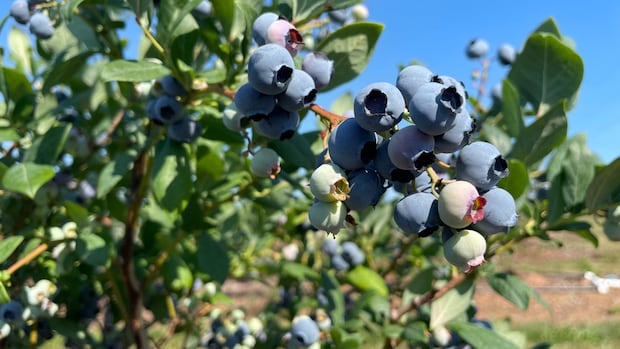
Nova Scotia blueberries will be harder to find on store shelves this year due to dry conditions around the province.
David Percival, director of the Wild Blueberry Research Centre in Debert, N.S., said the outlook for blueberry crops is dire across the Maritimes and some regions of Quebec.
“It’s really serious and it’s quite disheartening to a lot of producers,” Percival told CBC’s Mainstreet.
Percival said the dryness has also contributed to some farmers suspending operations because they’re worried about their equipment sparking fires. He said this is the first time he’s seen that happen.
“I’ve been here for 30 years working as a researcher in wild blueberries and I don’t recall there being any other year where we’ve run into this array of problems,” said Percival.
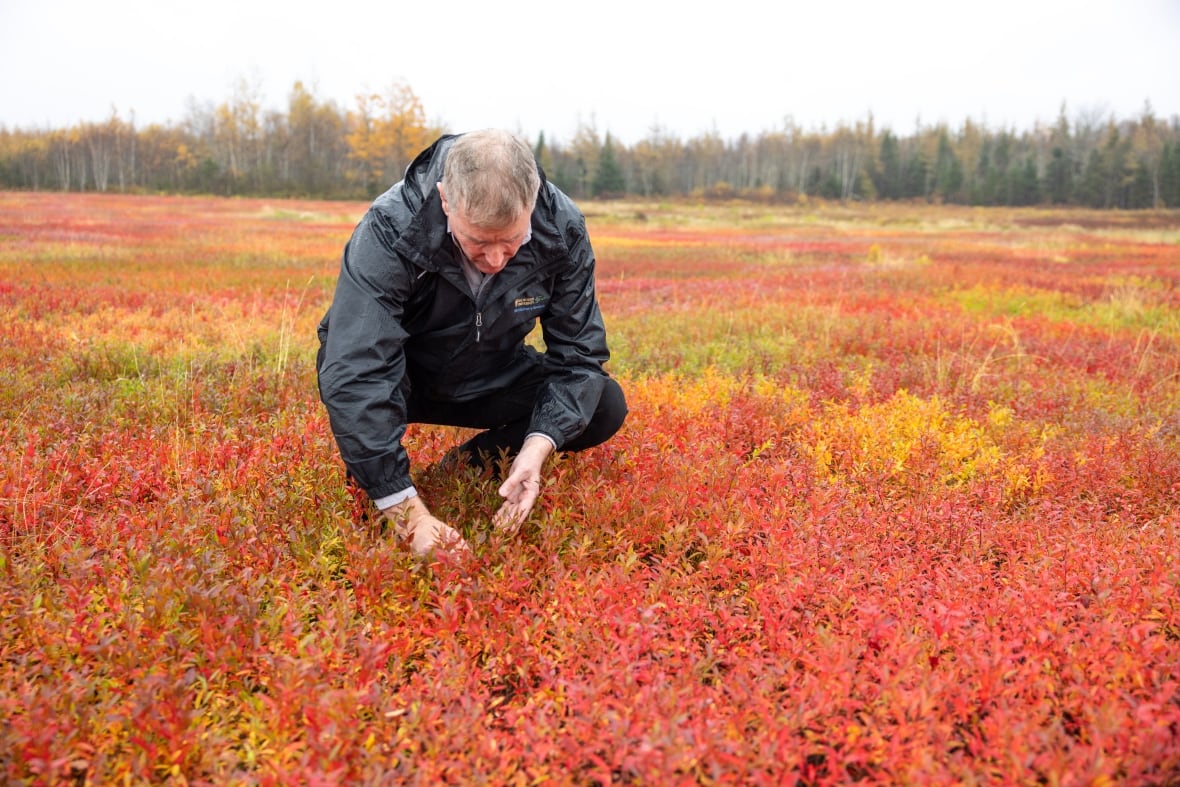 David Percival, director of the Wild Blueberry Research Centre in Debert, N.S., crouches in a blueberry field at the centre in October 2023. (Robert Short/CBC)
As of July 31 — the latest period for which data was available from Agriculture and Agri-Food Canada — all of the province was registering drought conditions, ranging from the least severe category to the third highest.
Wild blueberries are Nova Scotia’s largest agricultural product, generating more than $121 million in annual exports, according to the provincial government.
Percival said blueberries are about 85 per cent water. If the plants aren’t getting enough water, the berries will shrivel up. This means they are too small to be picked by robotic harvesting machines, as they slip between the teeth of the combs.
Percival said the blueberry supply will “definitely take a dip” because of these conditions.
Crop insurance program
The province has a crop insurance program that includes blueberries. Once enrolled, this ensures farmers receive some compensation if their harvest is affected by issues beyond their control, including droughts.
Farmers must pay to enrol, and Percival said some farmers don’t sign up.
Tawny Stowe, a farmer at Nourishing Circles Farmstead in Oxford, N.S., said her crop was completely lost in the drought.
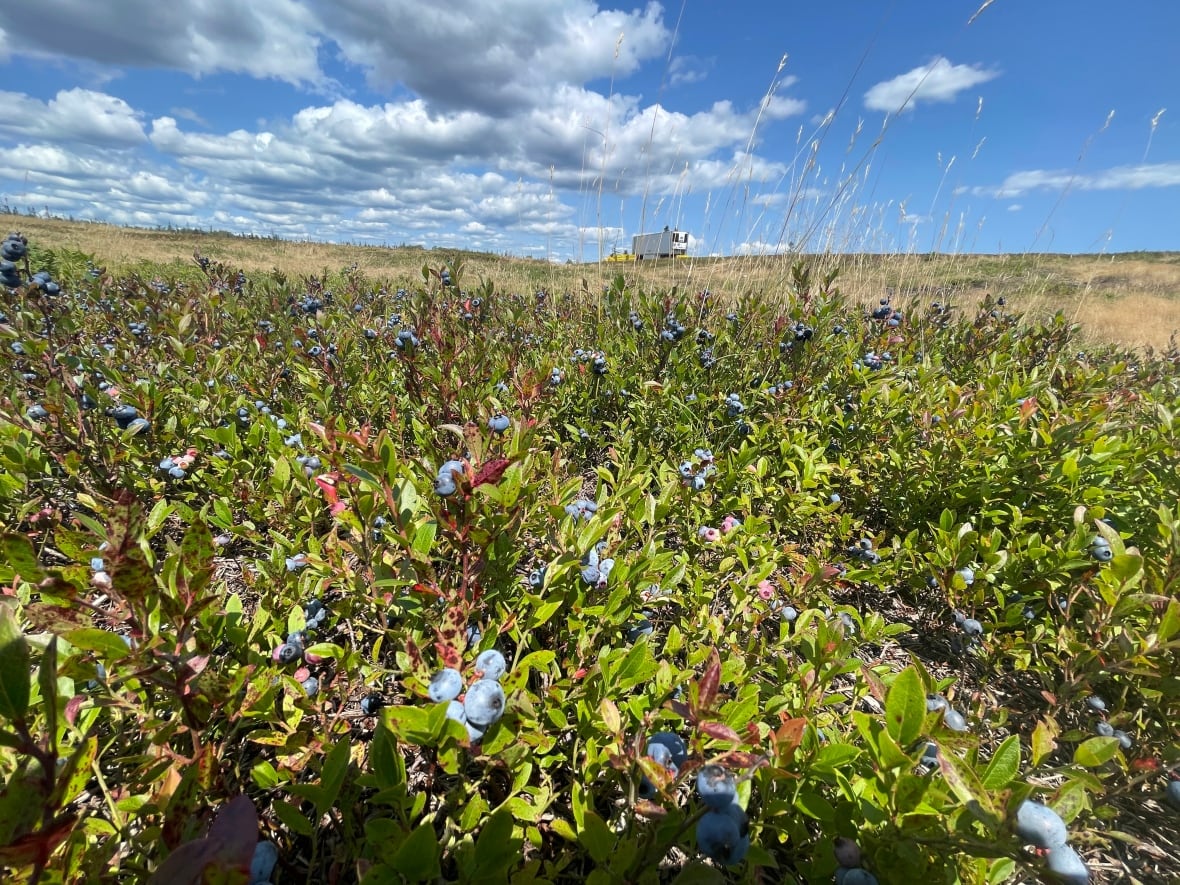 Percival says some farmers aren’t using machinery to harvest their crops over a fear of sparking a fire in the hot, dry weather. (Kayla Hounsell/CBC)
“At the end of the day, farmers, we rely on Mother Nature and we’re constantly humbled by it,” she said.
Being a small, family-run farm, Stowe said it’s been hard on everyone, with many tears shed. She said they’re left wondering what this will mean for the family and how they will recover from the loss.
“Imagine going to work yourself [and] doing your job and suddenly, three months into your hard work, your boss says, ‘By the way, you’re not getting paid,'” she said. “It’s really difficult.”
Farmer encourages people to buy local
Stowe said she needs to update some infrastructure for her blueberry field to make it more resilient to future droughts. She said she’s considering a number of strategies, including an irrigation system for the five-hectare farm.
Stowe said she encourages people to support local farmers by buying other goods they have for sale.
“Maybe you buy a bag of tea because you just want that blueberry farm to be there next year,” she said.