
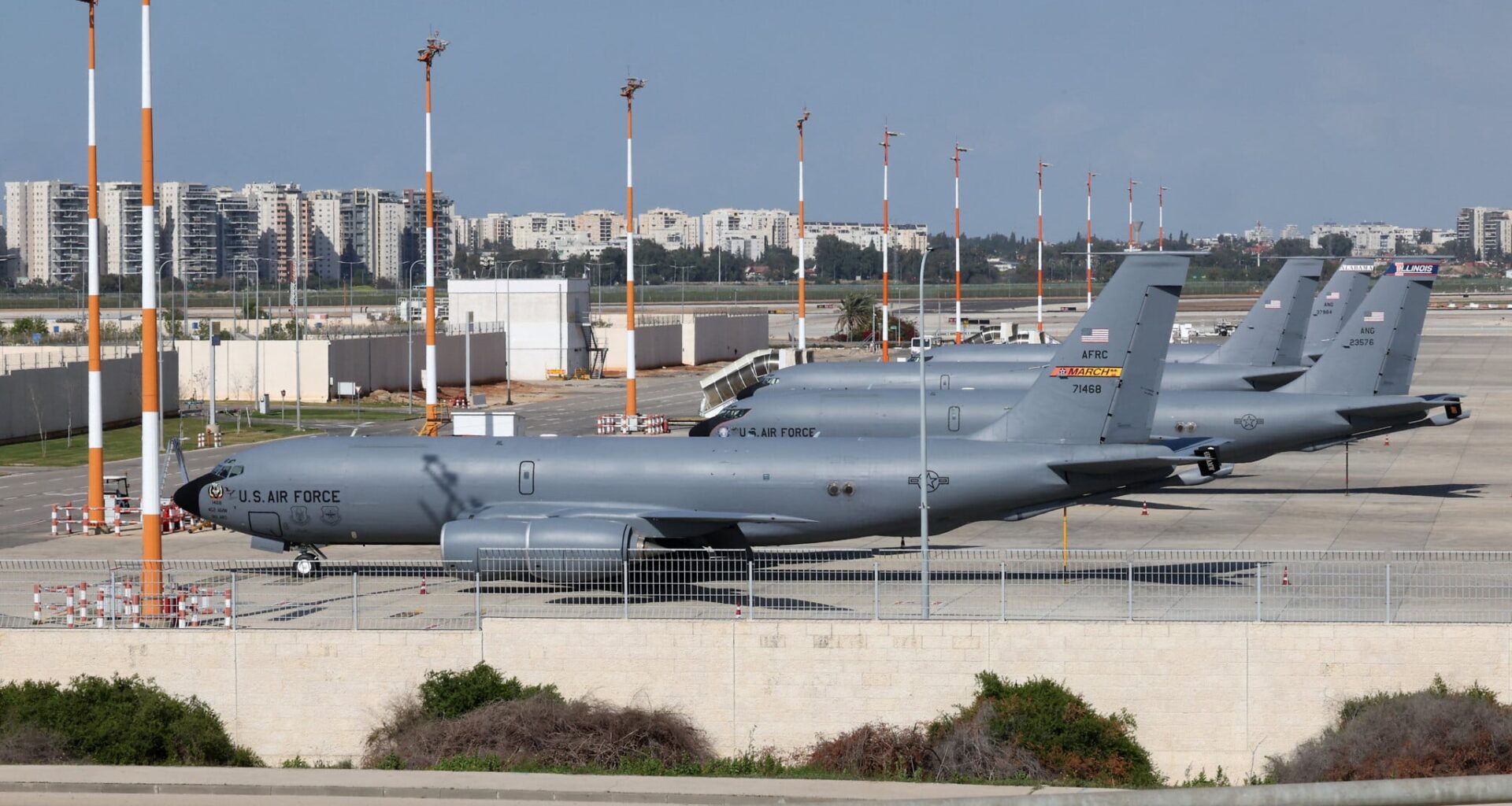
The US said Tuesday that it was halting the planned removal of its aerial refueling tankers from Ben Gurion Airport amid the mounting escalation with Iran, prompting Israel to warn that it would cap the number of such planes allowed to stay there in order to avert disruptions of commercial flight operations.
“Hundreds of thousands of tickets were bought by Israelis to fly and enjoy their summer vacation,” said Transportation Minister Miri Regev. “We promised that we will enable commercial flights and we will not cancel a single ticket because of American refueling planes.”
“Therefore, I have given instructions that we will not allow any US refueling tankers to land at Ben Gurion Airport beyond the agreed number of 20 planes, and the remaining planes can land at Israeli Air Force bases,” Regev added.
It is feared that the US move, leaving refuelers at the airport to take up space that would otherwise be occupied by civilian planes, will lead to flight cancellations for tens of thousands of passengers during the peak summer travel season of July and August.
Early Tuesday morning, the US launched fresh strikes on Iran, hours after President Donald Trump said Washington was “reinstating” a blockade on Iran in the Strait of Hormuz. Iran responded with attacks targeting Bahrain, Jordan and two tankers associated with the United Arab Emirates traveling through the strait, killing one mariner and wounding eight.
Get The Times of Israel’s Daily Edition
by email and never miss our top stories
By signing up, you agree to the terms
The latest hostilities come after Iran said over the weekend that it was closing the Strait of Hormuz, casting further doubt on an interim deal to halt the war.
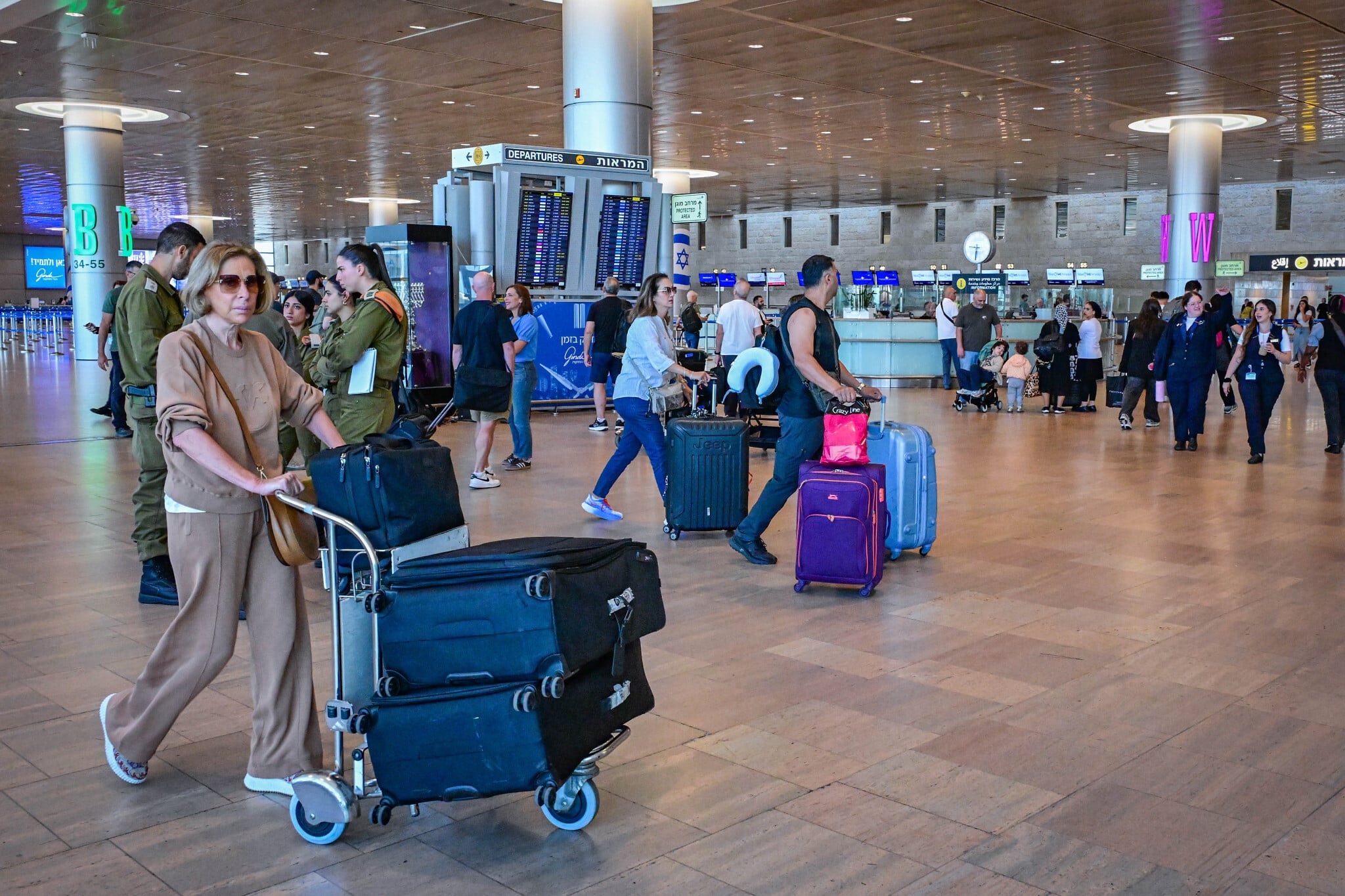
Passengers at Ben Gurion Airport near Tel Aviv on June 8, 2026. (Avshalom Sassoni/Flash90)
The Israel Airports Authority has warned that unless US aircraft continue to be removed from Ben Gurion Airport during the busy summer months, as many as 50,000 flight tickets could be at risk of cancellation.
Earlier this month, the US began returning home some of its military refueling planes parked at Ben Gurion Airport as tensions seemed to diminish upon the signing of a memorandum of understanding to end the US-Israeli war against Iran.
A fleet of about 75 US refuelers and cargo planes had parked at Ben Gurion Airport for many months, as part of the US military buildup in the region prior to the war, which erupted on February 28 and led to the closure of Israel’s airspace.
Following the partial removal of the tankers in recent weeks, more than 30 US refueling planes are estimated to be stationed at Ben Gurion Airport, crowding out civilian aircraft and creating a shortage of parking spaces.
The presence of US military aircraft at Ben Gurion Airport has been preventing a full return to normal commercial flight operations at Israel’s main international gateway, while also driving up operational costs for local airlines — expenses that industry officials have warned will ultimately be passed on to travelers.
Times of Israel staff contributed to this report.
We can’t do this work alone.

The war with Iran has been draining for all of us in Israel. But when I heard about a high casualty incident – ballistic missile impacts in Arad and Dimona that left nearly 200 people wounded – I drank a cup of coffee, packed a bag, and headed south.
There, I spoke with Shilgit, the head of an after-school program for underprivileged youth. Standing outside her destroyed center, Shilgit said it was a miracle that no children were hurt and spoke about the community coming together in the hours since.
As a Times of Israel reporter, I’m committed to telling stories of resilience like Shilgit’s. But my colleagues and I can’t do this alone. If you value work like this, please consider joining our reader support group, The Times of Israel Community. Your financial support is essential to keep real human reporting like this going.
— Stav Levaton, military reporter
Already a member? Sign in to stop seeing this
You’re a dedicated reader

That’s why we started the Times of Israel – to provide discerning readers like you with must-read coverage of Israel and the Jewish world.
So now we have a request. Unlike other news outlets, we haven’t put up a paywall. But as the journalism we do is costly, we invite readers for whom The Times of Israel has become important to help support our work by joining The Times of Israel Community.
For as little as $6 a month you can help support our quality journalism while enjoying The Times of Israel AD-FREE, as well as accessing exclusive content available only to Times of Israel Community members.
Thank you,
David Horovitz, Founding Editor of The Times of Israel