
Quick Read
Iran declared SpaceX’s Starlink infrastructure and a Middle East ground station military targets over alleged support for U.S. and Israeli military operations.
SpaceX’s $1.8 trillion valuation now carries defense-contractor-level geopolitical risk, reshaping how investors should classify the company beyond a pure tech play.
Even if Iran’s threats never materialize, higher insurance costs, added security spending, and regional operational delays still impose real financial drag.
This lithium producer surpassed a $1B private valuation, joining some of America’s most powerful startups. Now you can invest in EnergyX alongside global giants like General Motors, but only through July 16. (sponsor)
Global conflicts have a way of reshaping investment stories overnight. Companies once viewed as pure technology or growth plays can suddenly find themselves caught between governments, militaries, and international diplomacy. That doesn’t necessarily change their long-term prospects, but it does change the risks investors need to price in.
 Pedjoni / Shutterstock.com
SpaceX (NASDAQ:SPCX) has spent years building one of the world’s most valuable businesses through launch services and Starlink satellite internet. Now, the company is facing a challenge that has little to do with engineering and everything to do with geopolitics.
Iran’s Threat Changes The Conversation
According to CNBC, citing Iran’s state-affiliated Fars News Agency, Tehran now considers all of Elon Musk’s companies operating in the Middle East to be military targets as retaliation against the U.S. The statement specifically identified SpaceX’s Starlink infrastructure, including a regional ground station, because of its alleged support for U.S. and Israeli military operations.
To put that into perspective, SpaceX is no longer just a commercial launch provider. Through Starlink, it has become a critical communications platform for governments, militaries, businesses, and emergency responders around the world. That dual-use nature — serving both civilian and defense customers — increasingly places the company alongside traditional defense contractors whenever geopolitical tensions rise.
Ironically, that’s also one reason investors have been so enthusiastic about SpaceX. Government demand tends to be durable.
24/7 Wall St.
July 16 is the Final Day to Tap Into the Lithium Boom (sponsor)
General Motors, POSCO, and 50,000+ everyday investors have already backed lithium producer EnergyX.
Here’s why you should do the same before their July 16 investment deadline: lithium prices are up 75% this year, with demand projected to grow a staggering 5X by 2040.
Story Continues
With tech that can recover up to 3X more lithium than traditional methods, EnergyX is preparing to unlock up to 15M+ tons. Become a private-stage EnergyX investor before the July 16 deadline.
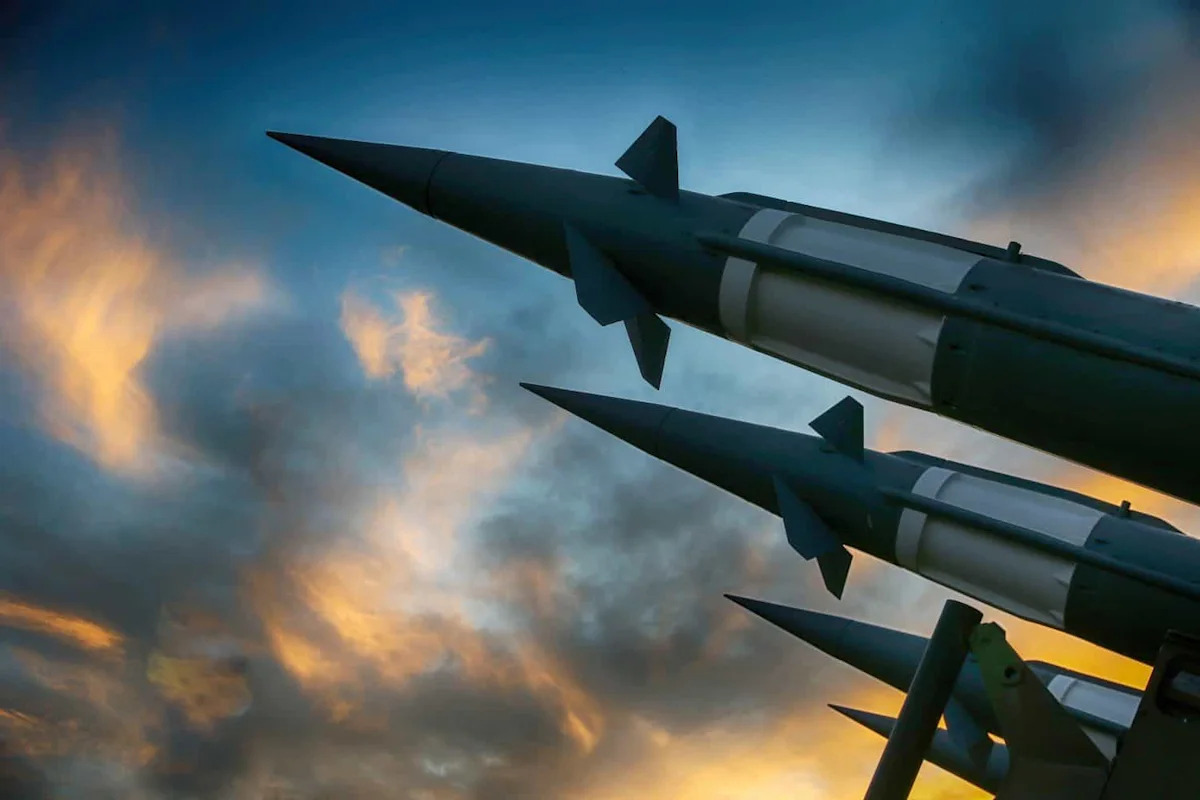
From satellite internet to the front lines of global conflict: Why SpaceX’s $1.8 trillion valuation now comes with a geopolitical bullseye. © 24/7 Wall St.
The Business Is Growing, But So Is The Risk Profile
The company entered the public markets with an estimated valuation approaching $1.8 trillion, reflecting investors’ expectations for continued leadership in launch services, satellite broadband, and national security contracts. SpaceX also maintains a commanding lead in orbital launches through its Falcon 9 rocket while Starlink has deployed thousands of satellites, giving it a scale competitors have yet to match.
Here’s how the competitive landscape looks:
Company
Primary Business
Key Competitive Strength
SpaceX
Launch services, Starlink broadband
Lowest launch costs and largest satellite network
Rocket Lab (NASDAQ:RKLB)
Small satellite launches
Dedicated launch services for smaller payloads
Amazon (NASDAQ:AMZN) Project Kuiper
Satellite broadband
Backed by Amazon’s financial resources
Viasat (NASDAQ:VSAT)
Satellite communications
Established commercial and government customers
Granted, Iran’s announcement does not mean attacks will occur, nor does it suggest SpaceX’s global operations face an immediate disruption. Most of the company’s critical manufacturing and launch facilities remain in the U.S.
That said, geopolitical threats create costs even when nothing happens. Companies may face higher insurance expenses, additional security investments, operational contingencies, or delays expanding infrastructure in sensitive regions. Those are risks investors rarely model until they become unavoidable.
The Investment Thesis Hasn’t Broken
Surprisingly, the same factors drawing geopolitical attention are also reinforcing SpaceX’s competitive advantages.
Governments increasingly rely on commercial space companies rather than building every capability internally. That trend has expanded SpaceX’s addressable market across defense launches, satellite communications, and intelligence services. In many respects, becoming strategically important strengthens long-term demand even as it introduces new political risks.
The key difference for investors is that SpaceX should no longer be viewed solely as a high-growth technology company. It increasingly resembles a hybrid of a technology platform, aerospace leader, and defense contractor.
Key Takeaway
In short, Iran’s threat adds another layer of uncertainty, but it doesn’t fundamentally alter SpaceX’s long-term investment case. Investors should recognize that geopolitical exposure is now part of the company’s business model, just as it is for many major defense firms.
Regardless, SpaceX’s dominant launch position, Starlink’s expanding customer base, and growing government relationships remain the primary drivers of its long-term value. The headlines may grow more unsettling, but unless those risks begin affecting revenue, contracts, or operations, they are unlikely to outweigh the company’s powerful competitive advantages.
Meet America’s Newest $1b Unicorn (Sponsor)
A US startup just passed a $1 billion private valuation, joining billion-dollar private companies like OpenAI and ByteDance. Unlike those other unicorns, you can invest in EnergyX right now; but only until July 16.
Over 50,000 people already have, along with global giants like General Motors and POSCO.
Here’s why there’s so much interest: EnergyX’s patented tech can recover up to 3X more lithium than traditional methods. That’s a big deal, as demand for lithium is expected to 5X current production levels by 2040. Become an early-stage EnergyX shareholder before the 7/16 investment deadline.
Contact editorial@247wallst.com for any questions or corrections.