
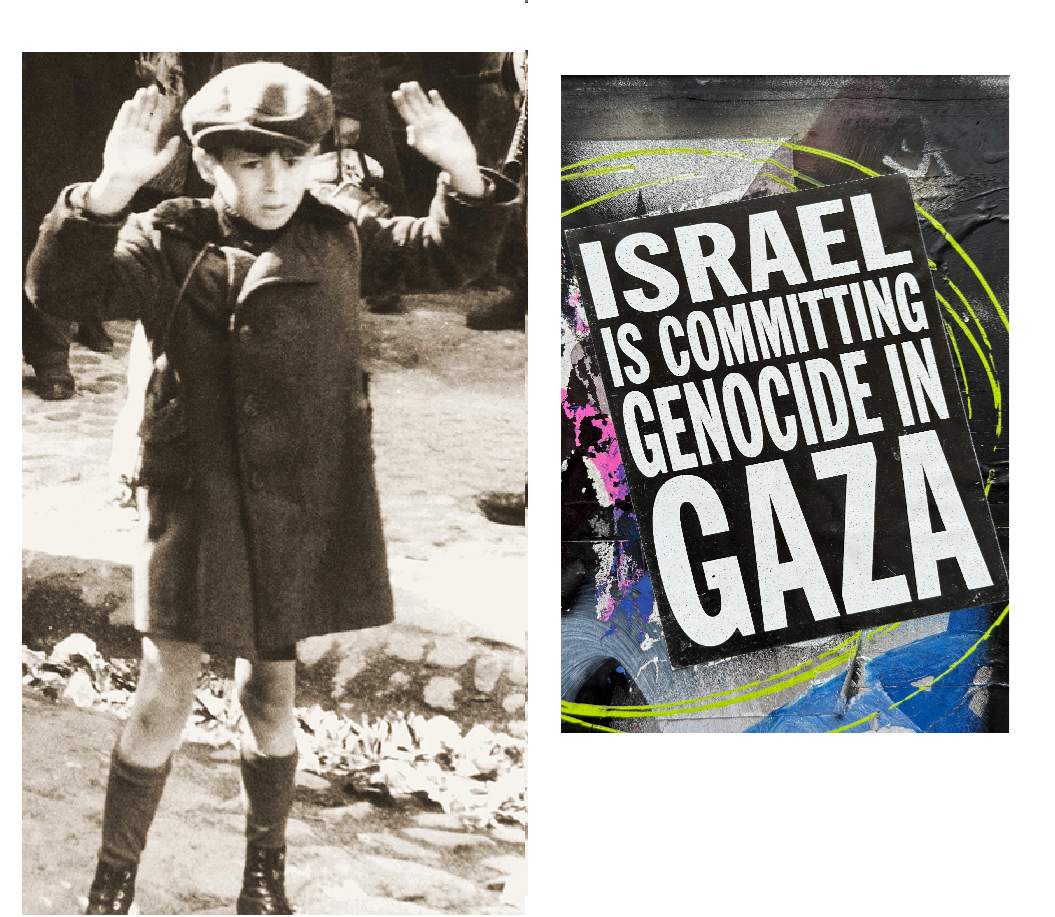
War is always a human tragedy and the suffering in Gaza has been terrible. Innocent civilians have been killed, families have lost their homes, and many children have suffered. No decent person can witness such horror without feeling deep sorrow. But it is important to acknowledge there has never been a war in which innocent people did not suffer.
Consider Yemen, where hundreds of thousands of people have died directly or indirectly from years of fighting, hunger, and disease. Yet despite the enormous humanitarian catastrophe, accusations of genocide have never become the defining way the world understands that conflict.
What makes one war a humanitarian disaster and another genocide?
I found myself asking that question again after reading widely differing accounts of Congressman Ro Khanna’s recent visit to the West Bank. I was reluctant to accept his description of the incident at face value—not because I knew it to be false, but because I had repeatedly heard him characterize Israel’s conduct in Gaza as genocide while giving far less attention to Hamas’s responsibility for starting the war and its strategy of embedding fighters and weapons among civilians. I therefore sought out additional accounts from Israeli journalists, military spokespeople, and others, and found a far more complicated picture than the initial headlines suggested.
What struck me, however, was something broader. Much of the public discussion about Israel’s conduct in Gaza proceeds with surprisingly little engagement with the work of leading military historians and urban warfare experts who have carefully studied the conflict. One need not agree with every conclusion reached by scholars such as John Spencer, Andrew Fox, David Deptula, or former Chairman of the Joint Chiefs of Staff Mark Milley. But when one of the gravest accusations in international law is being made, it is remarkable how rarely their assessments are part of the public conversation
The more serious the accusation, the greater our obligation to examine all the relevant evidence—including evidence that challenges our initial assumptions.
Unfortunately, that standard is not always met. In recent months, some widely read opinion pieces have advanced extremely serious accusations against Israel while relying, in the view of many, on sources that were insufficiently vetted or on evidence that remained highly contested. Given the rise in antisemitism around the world, journalists and editors have an especially important responsibility to distinguish between verified facts, disputed allegations, and conclusions that go well beyond the available evidence.
Whether Congressman Khanna’s interpretation ultimately proves correct is almost beside the point. The episode illustrated how quickly competing narratives can harden into moral certainty before all the evidence has been carefully weighed. It also reminded me how difficult it has become to distinguish facts from narratives in the Israeli-Palestinian conflict.
So I therefore ask:
How should we evaluate the gravest accusations made against Israel?
Part of the answer, I believe, requires understanding the long history of antisemitism. Rabbi Jonathan Sacks observed that antisemitism has repeatedly reinvented itself throughout history. Jews were first hated because of their religion, later because of their race, and today hostility is often directed toward the collective Jew—the State of Israel. As he famously wrote, anti-Zionism has become the contemporary form through which antisemitism often expresses itself. That does not mean every criticism of Israel is antisemitic. Democracies invite criticism, and Israel should be no exception. But it does mean that we should not ignore the possibility that some accusations against Israel are shaped by one of history’s oldest prejudices expressed in modern language.
Long before October 7, Israel was widely described as a settler-colonial state, an apartheid state, and by some even a genocidal state. These accusations did not arise from the current war. They reflect broader narratives that deny the Jewish people’s indigenous connection to the land at the heart of Jewish history, faith, and identity, and portray Jewish self-determination as uniquely illegitimate. They also reflect the latest mutation of a much older phenomenon. Antisemitism has repeatedly reinvented itself across the centuries. The object of hostility has changed—from the Jew as a member of a rejected religion, to the Jew as a member of an inferior race, and today often to the Jew as a member of a demonic nation—but the impulse to portray Jews as uniquely illegitimate has proved remarkably persistent.
We were accused of poisoning wells, murdering Christian children for ritual purposes, conspiring to control governments, finance, and the media. These accusations bore little resemblance to reality. They led to expulsions, massacres, and persecution, but Jews did not have to wonder whether they had actually committed the crimes of which they were accused–the allegations were too absurd. The Holocaust culminated centuries of demonization. Nazi propaganda portrayed Jews as uniquely evil, dangerous, and deserving of destruction.
Today the Jewish condition is profoundly different. For the first time in nearly two thousand years, Jews possess sovereignty and can defend themselves, which transformed not only the Jewish condition but also the Jewish conscience.
Unlike medieval blood libels, today’s accusations often begin with genuine tragedies. Innocent civilians have died in Gaza due to Israeli attacks. Some Israeli soldiers have committed crimes. Some settlers have attacked Palestinians. Reports of mistreatment of Palestinian detainees, including allegations of abuse in Israeli prisons, also deserve careful investigation and accountability. Israel’s own President Isaac Herzog has warned that such abuses damage Israel’s moral standing, and Israel’s courts and watchdog organizations have also raised concerns. Democracies have an obligation to investigate such wrongdoing, and Israel is no exception.
However, unlike our ancestors, Jews can no longer dismiss every criticism of Israel as absurd.
Israel is a sovereign democratic state exercising real power under extraordinarily difficult circumstances. Like every democracy, it has imperfect leaders, flawed policies, and citizens who sometimes commit serious crimes. The existence of politicians whose views many Israelis reject, or criminal acts committed by some Israeli citizens, no more establishes that Israel is committing genocide than the existence of racist politicians or violent extremists establishes that another democracy is committing genocide.
There is an irony here. For most of Jewish history we could not have been accused of genocide because we lacked the power to wage war. We also lacked the power to prevent genocides inflicted upon us. Jewish sovereignty has changed both realities. It has exposed Jews to accusations that would once have been impossible. But those accusations became possible only because Jewish sovereignty transformed the Jewish condition, and restored the burdens as well as the responsibilities of national self-defense. For centuries, Jewish leaders bore the heavy responsibility of trying to protect their communities without possessing the sovereign power to do so. During the Holocaust, they faced impossible choices. Some organized escapes, others negotiated with hostile governments, and many made decisions whose consequences proved tragic. But none possessed the one thing that might have fundamentally changed the Jewish condition: a sovereign state with the power to defend its people and provide them refuge. One of modern Zionism’s greatest achievements was that, against extraordinary odds, it restored to the Jewish people not only a homeland but also the ability—and the obligation—to defend Jewish life. That obligation does not relieve Israel of the duty to minimize harm to innocent enemy civilians, but neither can it be ignored when judging Israel’s actions. Sovereignty, however, carries burdens that centuries of exile did not. It means sending young men and women into combat. It means guarding prisoners humanely, even those accused of unspeakable crimes. It means confronting violence committed by one’s own citizens and holding them accountable. These are heavy moral responsibilities, and no democracy fulfills them perfectly. Yet if forced to choose between exile without the means of self-defense and sovereignty with all of its moral burdens, I choose, without question, sovereignty.
The Jewish response to such an achievement should be one of הכרת הטוב—recognizing and expressing gratitude for the good we have received. Gratitude does not require blindness. It does not require pretending that Israel is perfect or that its leaders never make mistakes. Rather, it requires remembering what previous generations of Jews could only pray for: that after nearly two thousand years of exile, the Jewish people once again possess a homeland, an army, and a government capable of defending Jewish life.
That gratitude extends to the early Zionists who, against extraordinary odds, challenged empires and transformed what many regarded as an impossible dream into a sovereign Jewish state. It also extends to the many non-Jews, including Christian Zionists, who supported the Jewish return to Zion and stood with the Jewish people during one of the darkest periods in their history. It extends to the generations of Israelis who built and defended that state, often at enormous personal sacrifice. Like all human beings, they were imperfect. But without them, the Jewish people would still face the dangers of exile without the means to defend themselves.
There is another temptation that I believe shapes much of today’s moral discourse.
Many people understandably sympathize with those who appear weaker or whose suffering is more visible. The Torah asks something more difficult than choosing between the powerful and the powerless. It asks us to judge justly.
The Torah commands us repeatedly to care for society’s most vulnerable:
“וְגֵר לֹא תִלְחָץ… כִּי גֵרִים הֱיִיתֶם בְּאֶרֶץ מִצְרָיִם.”
“You shall not oppress the stranger… for you were strangers in the land of Egypt.”
(Exodus 22:20)
Yet when the Torah turns from compassion to justice, it teaches something equally striking:
“לֹא תִשָּׂא פְנֵי דָל וְלֹא תֶהְדַּר פְּנֵי גָדוֹל; בְּצֶדֶק תִּשְׁפֹּט עֲמִיתֶךָ.”
“You shall not show favoritism to the poor, nor defer to the great; with justice shall you judge your fellow.”
(Leviticus 19:15)
The Torah reinforces the point elsewhere:
“וְדָל לֹא תֶהְדַּר בְּרִיבוֹ.”
“Nor shall you favor the poor in his dispute.”
(Exodus 23:3)
The Torah does not instruct us to side automatically with either the weak or the strong–it commands us to pursue justice. That means weighing evidence, intentions, history, and actions—not merely identifying who appears most vulnerable.
I found myself reflecting on these verses while reading Rahm Emanuel’s recent speech at Tel Aviv University. I admired his compassion for Palestinian suffering, just as I appreciated his recognition of October 7, his acknowledgment of Israel’s repeated efforts to reach peace agreements, and his condemnation of antisemitism. Yet I also found myself wondering whether compassion, unless accompanied by a full appreciation of history and the other forces shaping this conflict, can sometimes lead us to place too much weight on the policies of Israel’s current government and too little on the persistence of antisemitism, the longstanding rejection of Jewish sovereignty by many of Israel’s adversaries, and an international movement that increasingly questions the legitimacy of the Jewish state itself. Rahm Emanuel is hardly alone in this view. Other prominent centrist Democrats, including Gavin Newsom and Josh Shapiro, have also argued that Benjamin Netanyahu’s government bears primary responsibility for Israel’s growing international isolation. I agree that some of this government’s policies have harmed Israel. But I believe that explanation is incomplete. The hostility directed toward Israel did not begin with Benjamin Netanyahu, nor will it end with his departure.
Compassion is indispensable. But justice requires more than compassion. It requires that we weigh history, evidence, and context before reaching moral conclusions. Otherwise, we risk mistaking one important part of the story for the whole story.
Not every criticism of Israel is antisemitic. Democracies invite criticism, and Israel should be no exception. But neither should we ignore the likelihood that some criticisms are shaped by one of history’s oldest hatreds. That does not mean everyone who uses these terms is motivated by antisemitism. But neither should we pretend that antisemitism plays no role in shaping how the world’s only Jewish state is judged.
To ignore that possibility is to ignore one of history’s oldest and most persistent hatreds.