
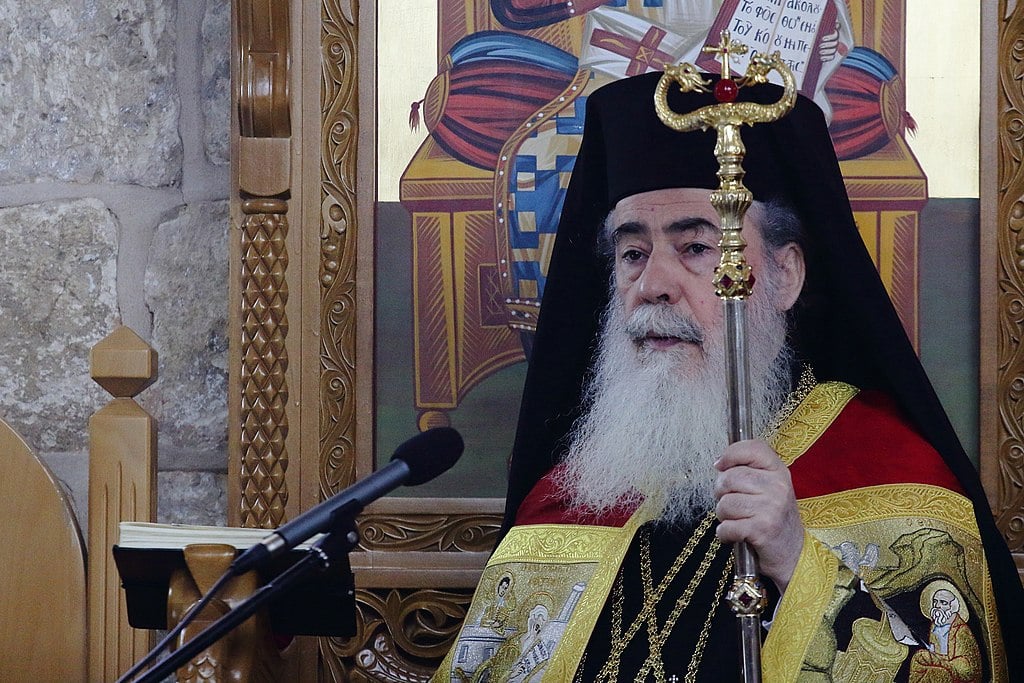
Patriarch of Jerusalem Theofilos III. Credit: Wikimedia Commons Lizzy Shaanan CC BY 2-5
The bank accounts of the Greek Orthodox Patriarchate of Jerusalem were frozen on Wednesday, August 6, according to The Times of Israel, which cited a Patriarchate statement.
“The Jerusalem Municipality has unilaterally decided to freeze the bank account of the Greek Orthodox Patriarchate of Jerusalem. In our view, the reasoning behind this decision is linked to property tax,” the statement said.
With its funds blocked, the Patriarchate is unable to pay salaries to clergy, teachers, and other staff.
Israel’s long-running dispute with Greek Orthodox Patriarchate, Christian institutions over property taxes
For decades, an agreement between the churches and the State of Israel exempted Christian institutions from paying municipal property taxes.
In 2018, however, the city ruled that this exemption applied only to properties used for prayer, religious education, or direct religious purposes—excluding facilities serving pilgrims, such as guesthouses and cafes. It subsequently sought to collect tens of millions of shekels in taxes.
The mayor of Jerusalem at the time, Nir Barkat, froze the bank accounts of several churches, prompting them to close the Church of the Holy Sepulchre for three days in protest. The municipality backed down only after the intervention of Prime Minister Benjamin Netanyahu. Since then, tensions between city officials and church authorities have periodically resurfaced over specific properties and activities.
Statement from the campaign Protecting Holy Land Christians
Protecting Holy Land Christians, an ecumenical campaign assembled by the Patriarch of Jerusalem Theophilos III and the Council of Patriarchs and Heads of Churches in Jerusalem—the body convening the Christian denominations in the Holy Land—issued a statement defending the churches’ role in society and their long-standing tax-exempt status.
“As religious institutions, the churches play a vital role in maintaining educational, social, and charitable services for the local population—Christian and non-Christian alike,” the statement said.
“Because of this, churches have historically never paid municipal or governmental taxes on church properties, whether under Ottoman, British, Jordanian, or Israeli rule,” it was added.