
Khalil al-Hayya has been elected to be the new leader of Hamas, the terror group announced Monday.
Al-Hayya, who previously served as the head of the group’s political bureau in Gaza, defeated former Hamas chief and veteran leader Khaled Mashaal in the leadership contest. Al-Hayya, unlike Mashaal, is close to the regime in Iran, and his election underlines the ongoing close ties between Iran and Hamas, both of which are avowedly committed to the destruction of Israel.
The top official was the chief negotiator for the terror group during ceasefire-hostage release talks to end the war in Gaza, which began after the October 7 Hamas-led onslaught and massacre in 2023.
He has also served on the five-member leadership council that has led Hamas since the 2024 killing of former leader Yahya Sinwar, the chief architect of the October 7 attack.
Al-Hayya is closely tied to the Gaza Strip, where Hamas controls part of the territory and much of the population. Born in Gaza City in 1960 and raised there, he spent his entire life in the territory until the October 7, 2023, Hamas-led invasion and massacre in southern Israel.
Get The Times of Israel’s Daily Edition
by email and never miss our top stories
By signing up, you agree to the terms
Just days before the attack, he left the Strip along with other senior figures in Hamas’s Gaza-based political bureau and relocated to Qatar, where he has remained since.
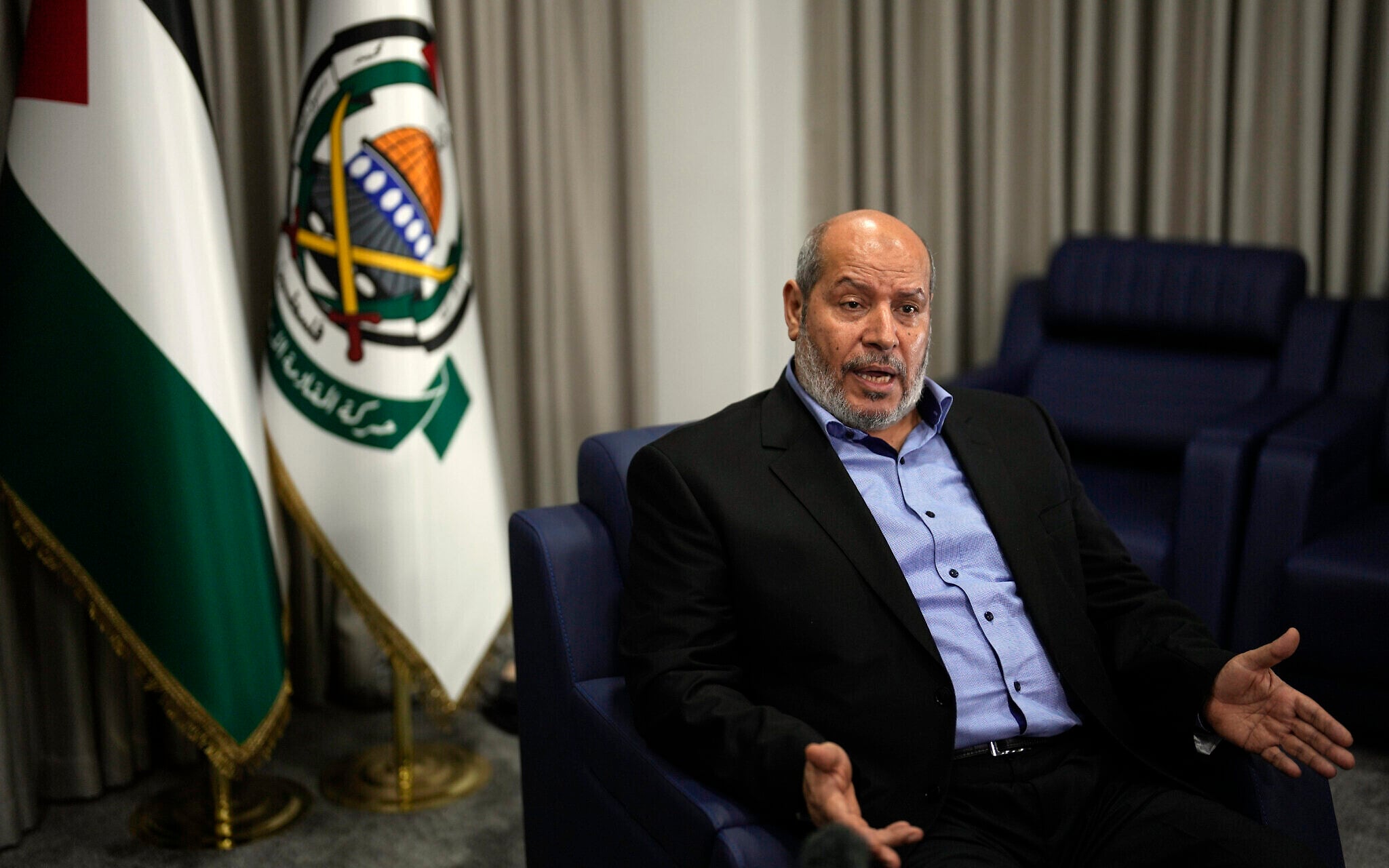
Hamas’s Khalil al-Hayya speaks during an interview with The Associated Press, in Istanbul, Turkey, April 24, 2024. (AP Photo/Khalil Hamra, File)
He survived a controversial Israeli assassination attempt in Doha last year, though one of his sons was killed in the strike. Another son of his was killed earlier this year in an Israeli strike in Gaza.
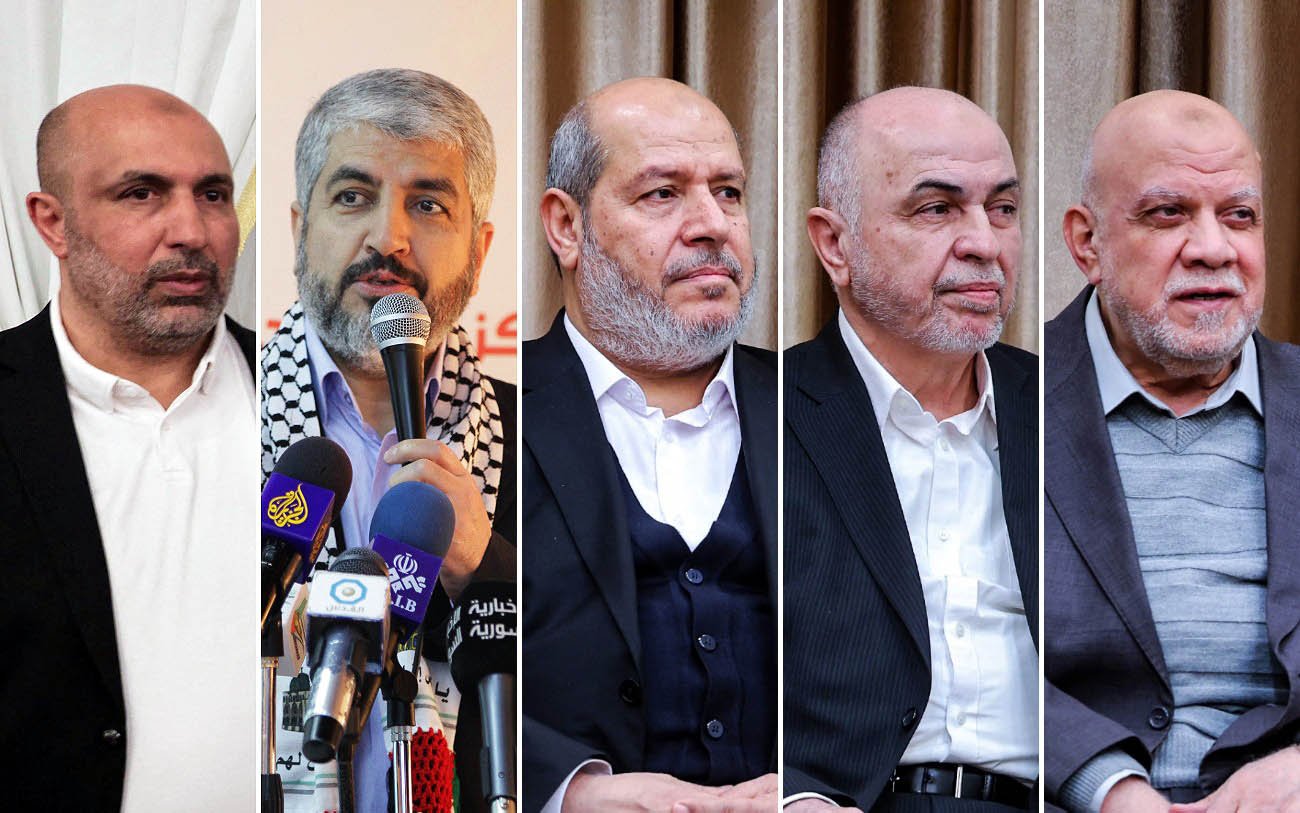
A composite image of five members of Hamas’s leadership targeted by Israel in Qatar on September 9, 2025, L-R: Zaher Jabarin, Khaled Mashaal, Khalil al-Hayya, Muhammad Ismail Darwish, Nizar Awadallah. (Mahmud Hams/Louai Beshara/KHAMENEI.IR/AFP)
“Khalil al-Hayya was elected by an overwhelming majority,” a senior Hamas official told AFP, adding that he is expected to formally assume the role next week.
“The political bureau will meet in Istanbul within days to form committees and begin restructuring Hamas’s leadership bodies,” the official added.
The official said the current five-member leadership council will be dissolved, with its members submitting their resignations to the group’s senior Shura Council.
The election was not transparent.
“The election process was conducted through a highly complex and secretive mechanism because of the difficult security situation and the occupation’s assassination of several political and military leaders,” a source in Hamas said, referring to Israel. The group likewise did not publish any details of the margin of al-Hayya’s election victory over Mashaal.
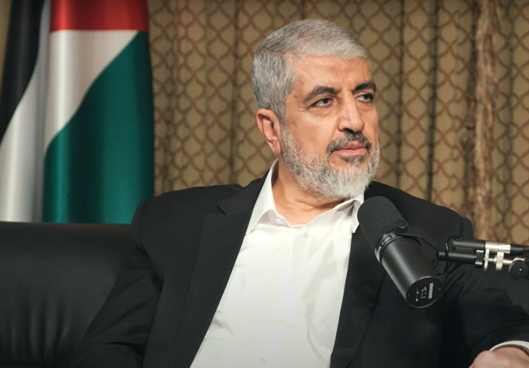
Khaled Mashal, member of Hamas’s political bureau, speaks to Kuwaiti podcaster Ammar Taqi on January 16, 2024 (Video screenshot)
Representatives of Hamas’s armed wing, the Izz ad-Din Al-Qassam Brigades, also declared their “full support” for al-Hayya.
Until Sinwar’s killing, al-Hayya served as his deputy — effectively making him deputy head of Hamas’s political bureau in Gaza. After Sinwar’s death, Hamas referred to al-Hayya as the group’s leader in Gaza, even though al-Hayya is not in Gaza and no formal internal elections were held for that position.
During the war, al-Hayya became one of Hamas’s more recognizable public faces, appearing before cameras to deliver key speeches on behalf of the terror group at major moments.
He also led negotiations for a ceasefire, building something of a rapport with Trump envoys Steve Witkoff and Jared Kushner, reflecting his senior standing and international cachet.
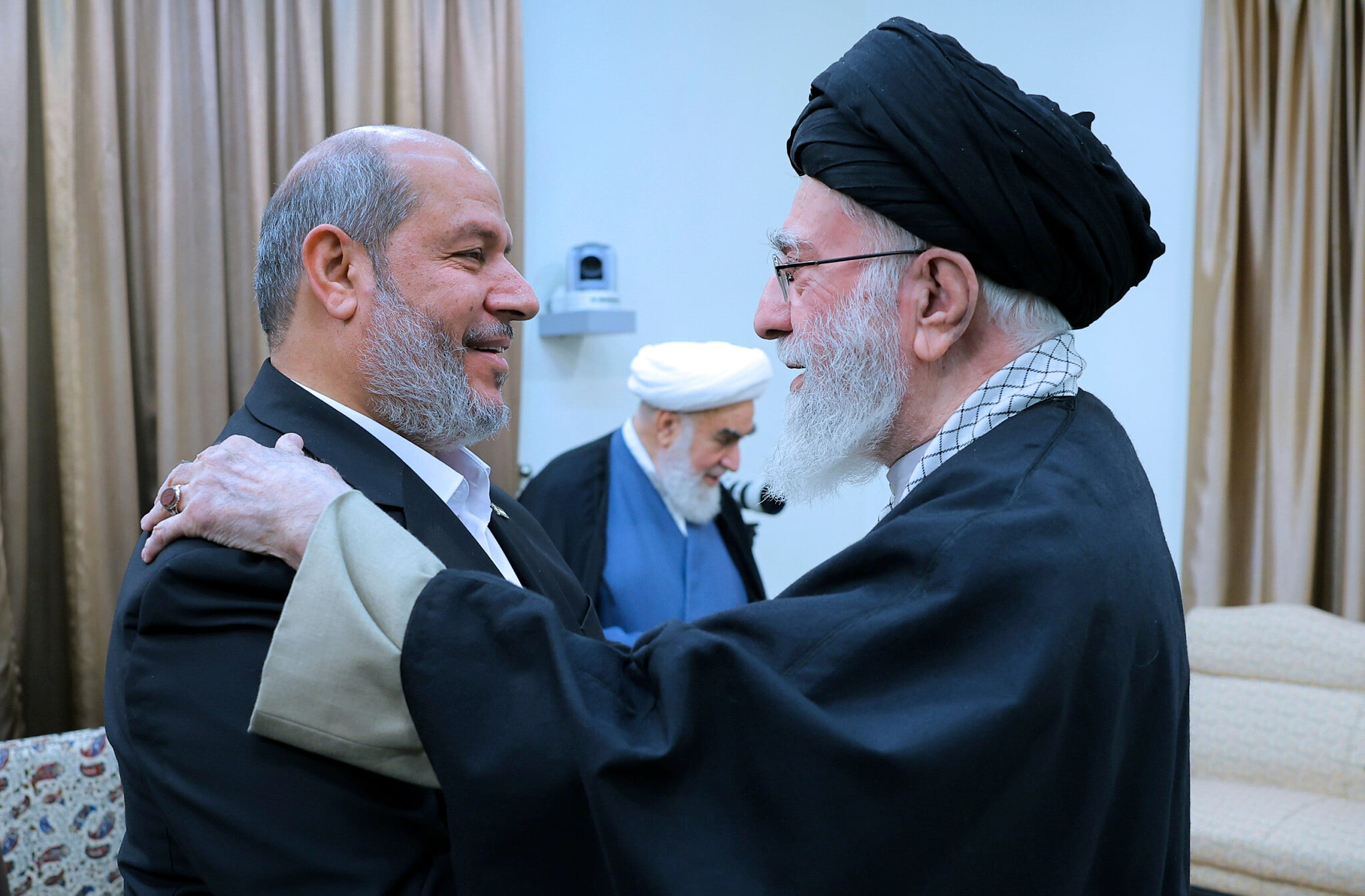
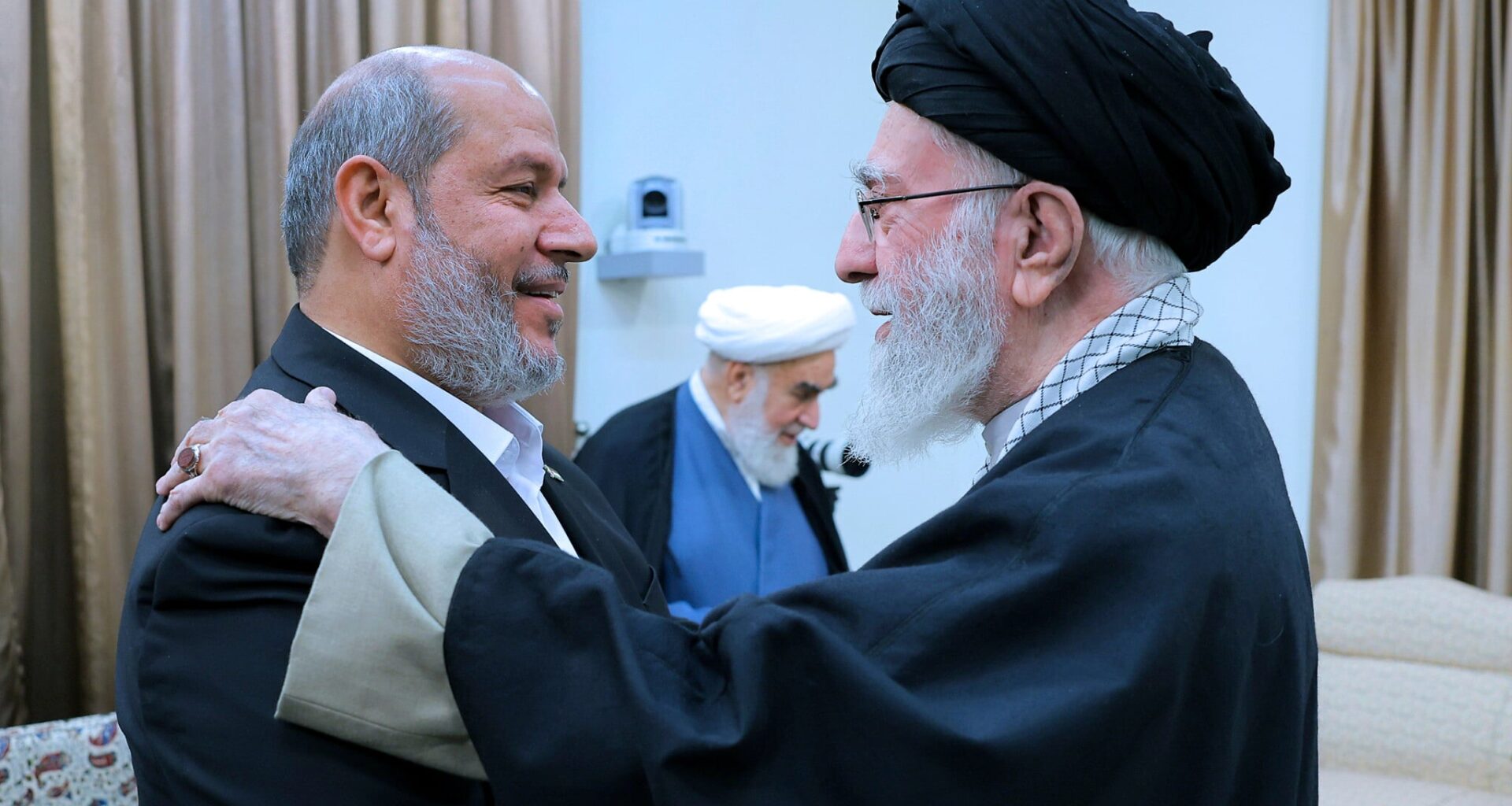
In this photo released by an official website of the office of the Iranian supreme leader, Supreme Leader Ayatollah Ali Khamenei, right, greets Khalil al-Hayya, a member of Hamas leadership council during their meeting in Tehran, Iran, Saturday, Feb. 8, 2025. (Office of the Iranian Supreme Leader via AP)
Regarding his policy direction, al-Hayya is seen as continuing that approach within Hamas and maintaining ties with Tehran, unlike his chief election rival Mashaal, who has fallen out with Iran and favors ties to Gulf Arab states and improved relations with the Palestinian Authority.
Hamas at a crossroads
Stepping into the top role, al-Hayya finds the terror group at a crossroads, with Gaza in ruins and amid negotiations with mediators over the implementation of the second phase of the Gaza ceasefire, which has all but completely stalled due to the group’s refusal to disarm and Israel’s desire to hold off on major decisions in, or withdrawals from, the Strip until after the Israeli election in October.
The first phase of the US-backed deal reached last October involved the release of the last Israeli hostages held by Hamas in exchange for Palestinians security prisoners held by Israel. The second phase called for Hamas’s disarmament and a gradual withdrawal of Israeli forces from Gaza, to be replaced with an international security force.
Hamas is demanding the establishment of a Palestinian administration there before it will consider handing over any part of its arsenal.
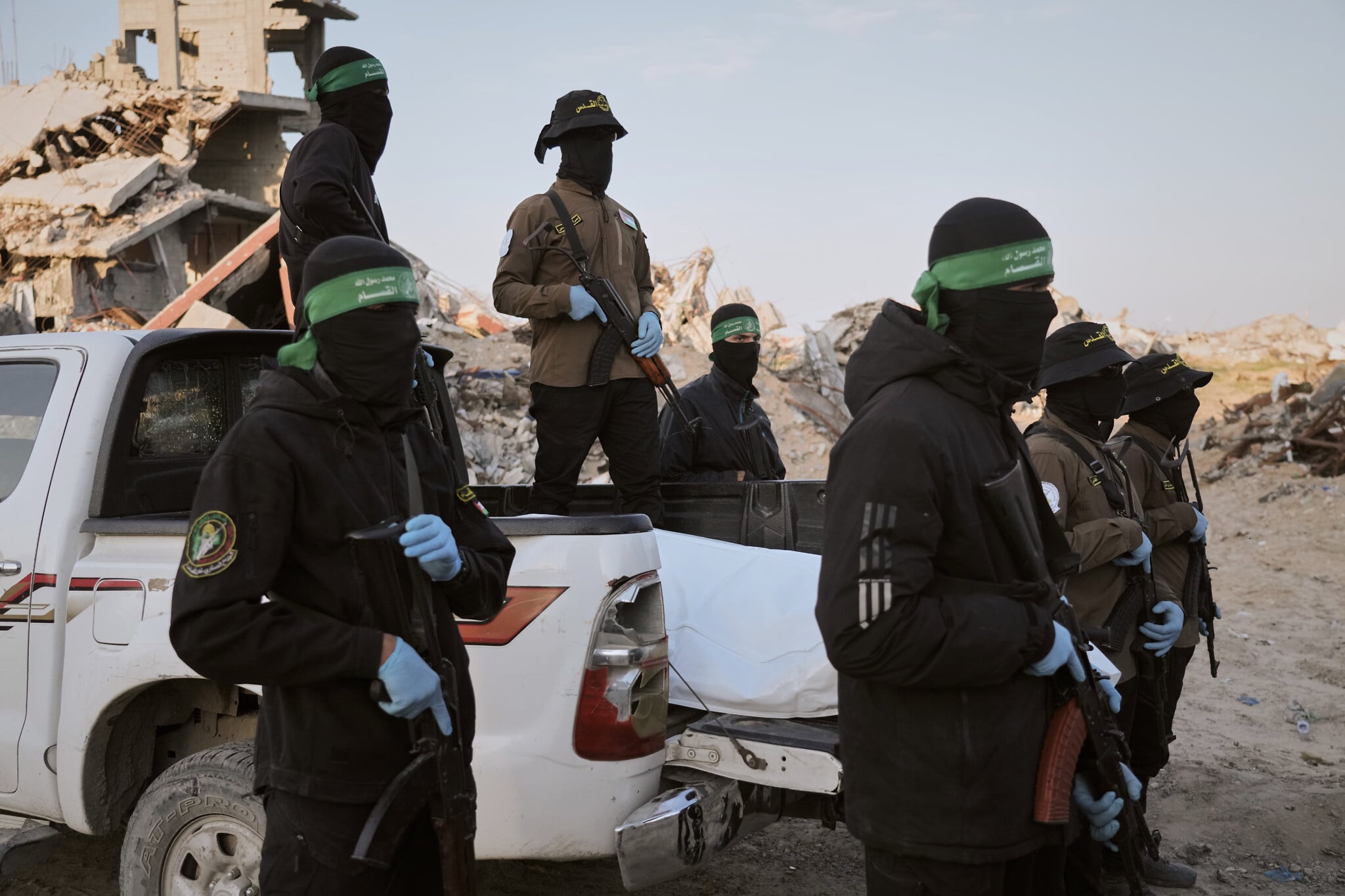
Masked Islamic Jihad and Hamas gunmen hand over a body bag believed to contain the remains of a deceased hostage to the Red Cross for transfer to Israeli authorities, in Beit Lahiya, in the northern Gaza Strip, December 3, 2025. (AP/ Jehad Alshrafi)
The question of Gaza’s postwar governance remains one of the main sticking points in negotiations over implementing phase two. Israel rejects any Hamas return to power, but also rejects a direct takeover by the Ramallah-based Palestinian Authority, which it accuses of supporting terrorism.
Last month, Hamas officially ceded its governmental control of Gaza to the technocratic National Committee for the Administration of Gaza, a Palestinian committee set up through the US President Donald Trump’s Board of Peace. The NCAG is headed by Palestinian technocrat Ali Shaath.
The NCAG has remained based outside Gaza for months, reportedly due to Israeli objections to its entering the war-devastated territory.
The move appeared intended to demonstrate that the terror group is willing to hand over the administration of the Gaza Strip to the technocrats, and marked a significant political shift by Hamas, which has run Gaza since it violently seized control from rival Palestinian movement Fatah, which dominates the PA, in 2007.
However, an Israeli official appeared to downplay the significance of the move, calling it “spin without any meaning.”
We can’t do this work alone.

The war with Iran has been draining for all of us in Israel. But when I heard about a high casualty incident – ballistic missile impacts in Arad and Dimona that left nearly 200 people wounded – I drank a cup of coffee, packed a bag, and headed south.
There, I spoke with Shilgit, the head of an after-school program for underprivileged youth. Standing outside her destroyed center, Shilgit said it was a miracle that no children were hurt and spoke about the community coming together in the hours since.
As a Times of Israel reporter, I’m committed to telling stories of resilience like Shilgit’s. But my colleagues and I can’t do this alone. If you value work like this, please consider joining our reader support group, The Times of Israel Community. Your financial support is essential to keep real human reporting like this going.
— Stav Levaton, military reporter
Already a member? Sign in to stop seeing this
You’re a dedicated reader

That’s why we started the Times of Israel – to provide discerning readers like you with must-read coverage of Israel and the Jewish world.
So now we have a request. Unlike other news outlets, we haven’t put up a paywall. But as the journalism we do is costly, we invite readers for whom The Times of Israel has become important to help support our work by joining The Times of Israel Community.
For as little as $6 a month you can help support our quality journalism while enjoying The Times of Israel AD-FREE, as well as accessing exclusive content available only to Times of Israel Community members.
Thank you,
David Horovitz, Founding Editor of The Times of Israel