
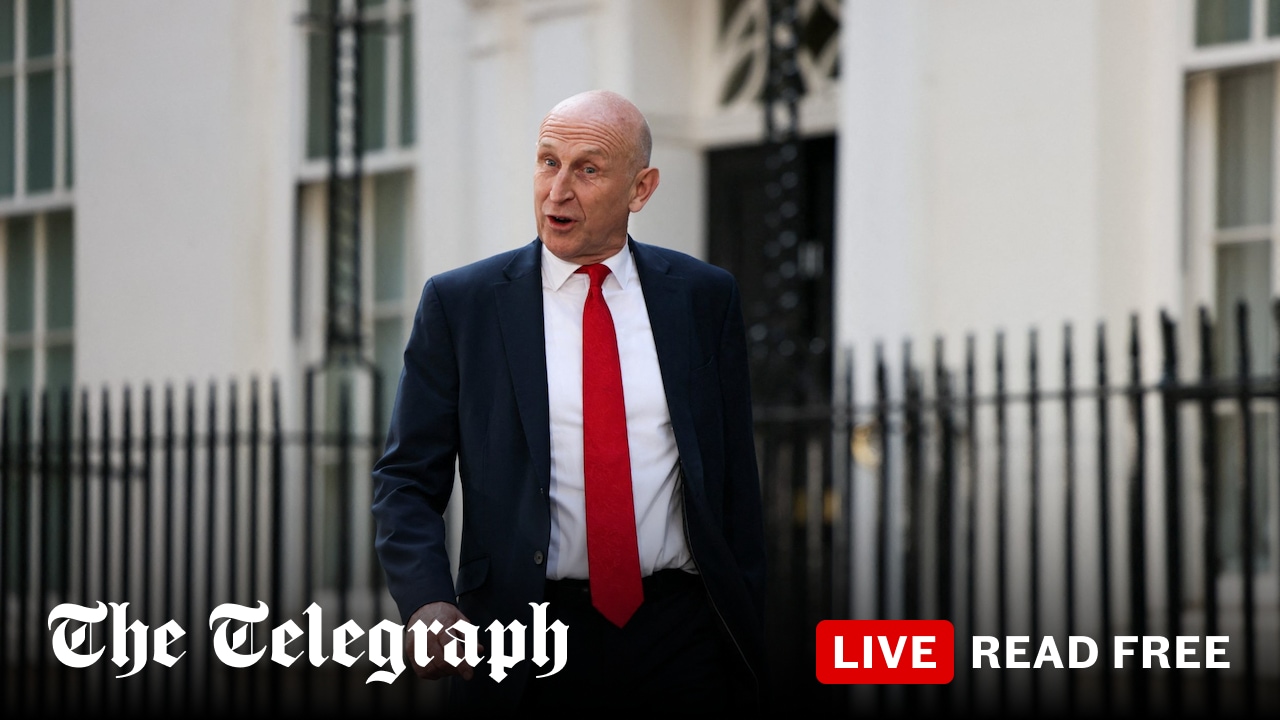
Borrowing costs rose at the fastest pace in the G7 after Andy Burnham suggested he would take a “flexible” approach to Britain’s fiscal rules.
The yield on 10-year UK gilts – a benchmark for how much the Government pays on its debt – edged up 0.08 percentage points to an eight-week high of 5.03pc.
Markets took fright after Rachel Reeves resigned as chancellor and Mr Burnham told reporters he would look to stretch the fiscal rules by using the “flexibility” within them.
He said: “I’ve said we’ll stick to the fiscal rules, and by that I mean the existing fiscal rules, and use obviously any flexibility within them.”
The comment suggests the new Prime Minister will use accounting tricks to raise borrowing. The Resolution Foundation think tank has, for example, said he could do so by expanding the remit of institutions like the National Wealth Fund.
The rise in the UK’s borrowing costs is the fastest in the G7, excluding Japan, whose markets are closed for a national holiday.
In his first speech as Prime Minister, Mr Burnham said he would announce a set of measures on Tuesday to give households “breathing space” to help with the cost of living.
Speaking outside No 10, he said: “I will set out some of those measures starting tomorrow, including how we pay for them.
“We will help more young people into education… and we will build more council homes. That is the fair and sustainable way to bring the welfare bill down, to meet our fiscal rules and to honour our commitments on defence to our international partners.”
Investors will have a close eye on who Mr Burnham appoints as his chancellor – a first indicator of the direction of fiscal policy he intends to pursue.
Mr Burnham, who has become the UK’s seventh prime minister in just a decade, has inherited a troubled economy as businesses grapple with low confidence and strained public finances.
Helen Miller, director at the Institute for Fiscal Studies, warned that challenging public finances will mean Mr Burnham is forced to prioritise his main agendas.
She said: “While chancellors come and go, the underlying fiscal constraints remain the same. Public debt, borrowing and debt-interest costs are all high. One in every £12 the government spends currently goes on debt interest.”
The yield on 10-year UK gilts had already hit 5pc on Monday morning as oil prices climbed following continued strikes across the Middle East, before edging lower.
Meanwhile, the yield on 30-year gilts also surged to a two-month high of 5.75pc, up 0.09 percentage points on the day
Higher borrowing costs threaten to increase the Government’s debt interest bill, which is already forecast to hit £111.2bn for the financial year. That is the equivalent of 8.3pc of public spending.