
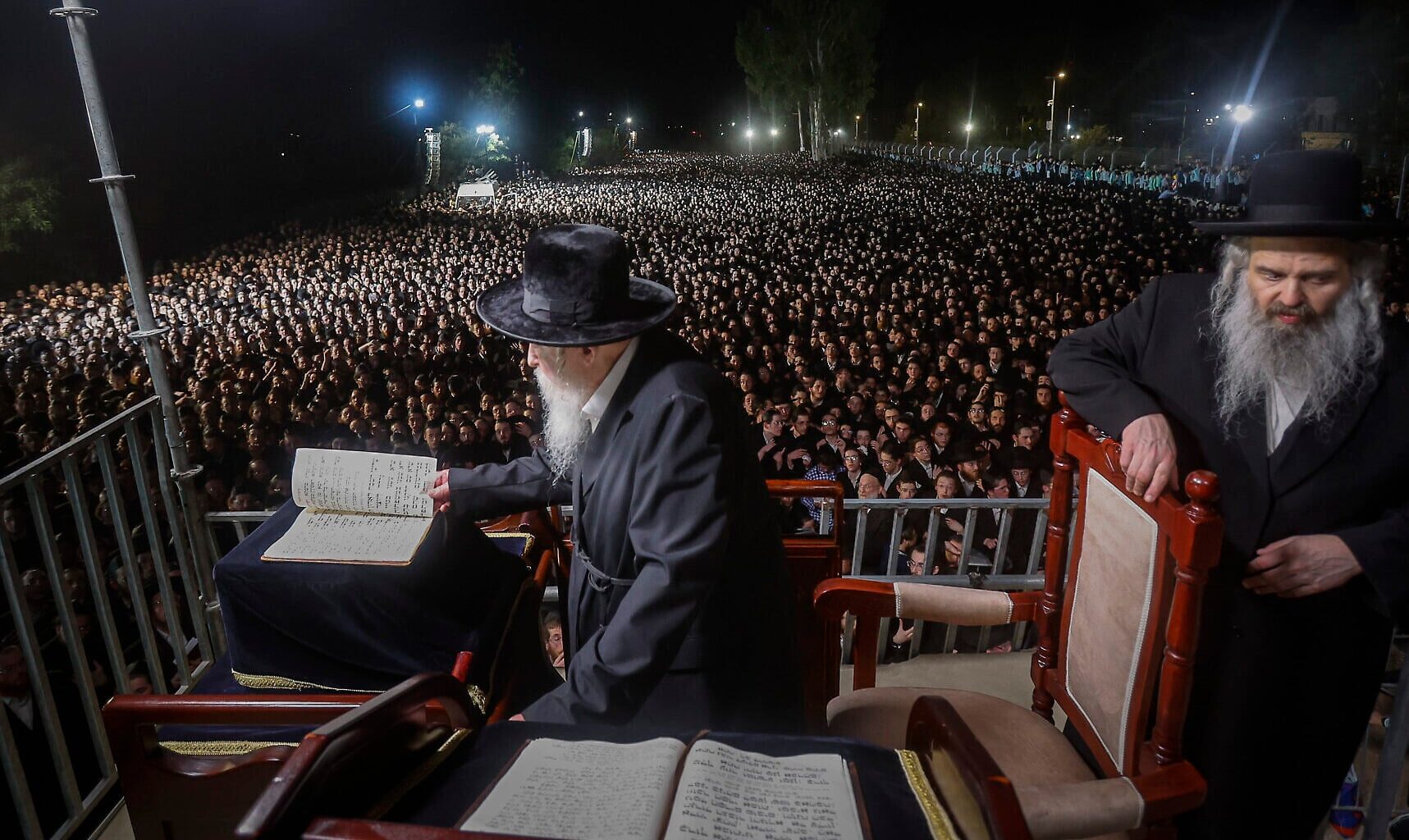
Thousands of ultra-Orthodox protesters gathered outside both a military prison in central Israel and the home of the attorney general in Tel Aviv on Monday night, angrily protesting against the recent arrest of a yeshiva student for draft dodging.
According to Hebrew media reports, thousands took part in the protest at the Beit Lid military prison, at one point breaching the fence surrounding the army base where the prison is housed and clashing with military police at the scene.
United Torah Judaism party chief MK Yitzhak Goldknopf attended the rally, which was comprised largely of youth from the Gur Hasidic community. In an usual move, the Gur Hasidic leader, Rabbi Yaakov Aryeh Alter, was also in attendance at the protest.
As the protest escalated, the two leaders reportedly called for calm at the scene and for the protesters to disperse. Haredi news sites reported that around 25,000 ultra-Orthodox protesters took part in the gathering after being bused in from around the country.
The Haaretz daily reported that a large gathering was also planned for Monday night outside the home of Attorney General Gali Baharav-Miara, but was called off following the clashes outside Beit Lid. Nevertheless, a few hundred Gur protesters showed up outside the attorney general’s home, with some clashing with local passersby.
Ultimately both protests dispersed without any major violence or mass arrests.
ברייקינג: בשעת חצות – מאות חסידי גור הגיעו לביתה של היועצת המשפטית לממשלה בתל השומר “וכל קרני רשעים נגדע” pic.twitter.com/ibAqBQwkZD
— יואלי ברים yoeli brim (@yoeli_brim) July 20, 2026
The protests — which were reportedly organized following the arrest of a Gur Hasidic youth who had showed up at an enlistment center seeking a military exemption — came after the High Court last week froze the implementation of highly contentious legislation passed by the coalition freezing the arrests of Haredi draft dodgers.
The Haredi political parties had demanded passage of the law before the Knesset dispersed last week ahead of the October 27 election, amid the ongoing debate over ultra-Orthodox military service that has sharply divided Israelis and become a key political sticking point. But just a day after it passed, the High Court of Justice froze implementation of the law in a temporary order ahead of a hearing on the legislation scheduled for July 28.
תיעוד: מהומה בכניסה לכלא 10 – שם התקבצו המוני חסידי גור במחאה על מעצר עריק@daniel_grovais pic.twitter.com/PL33YeWmvm
— כאן חדשות (@kann_news) July 20, 2026
According to the Kan public broadcaster, the 87-year-old Alter took part in the protest despite infrequently attending public events, in order to send a message to both the movement’s disciples as well as the political leadership.
The Ynet news site reported that as the crowds pressed closer to the IDF base’s fence and some began to shove at it, Goldknopf called on protesters to step back “to avoid a disaster,” adding that ralliers should stop pushing and shoving in order “to save lives.”
At the same time as the protests at the IDF base and in Tel Aviv, a number of smaller rallies were held in Jerusalem, where several streets were blocked and protesters clashed with police. A smaller protest was also held in Beit Shemesh.
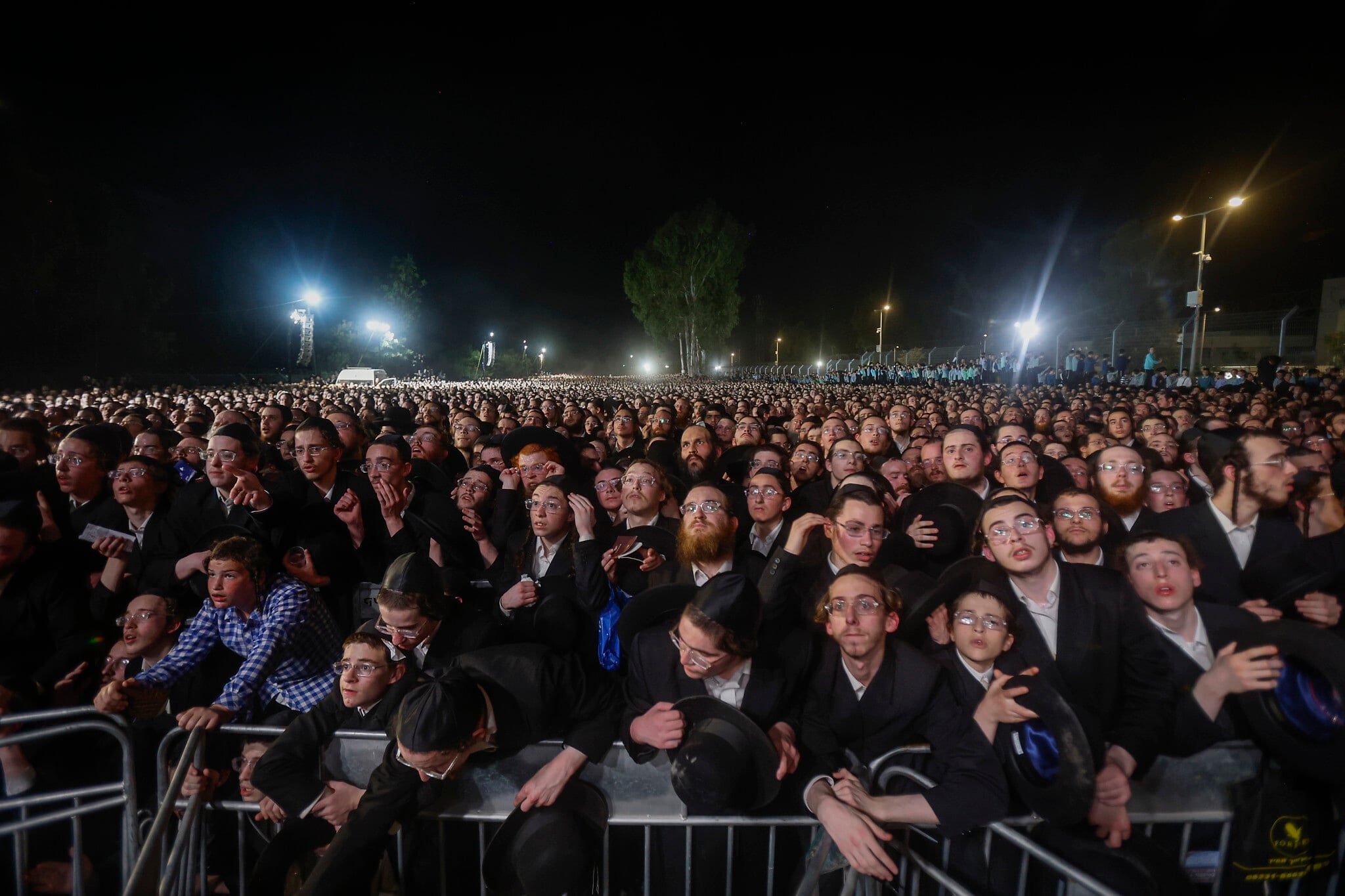
Thousands of ultra-Orthodox Jewish men from the Gur Hasidic dynasty protest outside the Beit Lid Military in central Israel, July 20, 2026. (Tal Gal/Flash90)
Haredi officials have been pushing for continued blanket exemptions from the draft for their communities after the High Court of Justice ruled in 2024 that the government must draft ultra-Orthodox yeshiva students into the military absent a legal framework to continue the decades-long exemptions.
After a months-long fierce legislative battle over the issue, which saw recurring Haredi street protests, the Knesset voted 63-52 last week to pass a deeply divisive quasi-constitutional Basic Law declaring Torah study a “foundational value” of the Jewish people.
The law was intended by its backers to make it harder for the High Court of Justice to continue to rule that Haredi draft exemptions are illegal and discriminatory, because it enshrines Torah study as an essential aspect of the state.
We can’t do this work alone.

The war with Iran has been draining for all of us in Israel. But when I heard about a high casualty incident – ballistic missile impacts in Arad and Dimona that left nearly 200 people wounded – I drank a cup of coffee, packed a bag, and headed south.
There, I spoke with Shilgit, the head of an after-school program for underprivileged youth. Standing outside her destroyed center, Shilgit said it was a miracle that no children were hurt and spoke about the community coming together in the hours since.
As a Times of Israel reporter, I’m committed to telling stories of resilience like Shilgit’s. But my colleagues and I can’t do this alone. If you value work like this, please consider joining our reader support group, The Times of Israel Community. Your financial support is essential to keep real human reporting like this going.
— Stav Levaton, military reporter
Already a member? Sign in to stop seeing this
You’re a dedicated reader

That’s why we started the Times of Israel – to provide discerning readers like you with must-read coverage of Israel and the Jewish world.
So now we have a request. Unlike other news outlets, we haven’t put up a paywall. But as the journalism we do is costly, we invite readers for whom The Times of Israel has become important to help support our work by joining The Times of Israel Community.
For as little as $6 a month you can help support our quality journalism while enjoying The Times of Israel AD-FREE, as well as accessing exclusive content available only to Times of Israel Community members.
Thank you,
David Horovitz, Founding Editor of The Times of Israel