
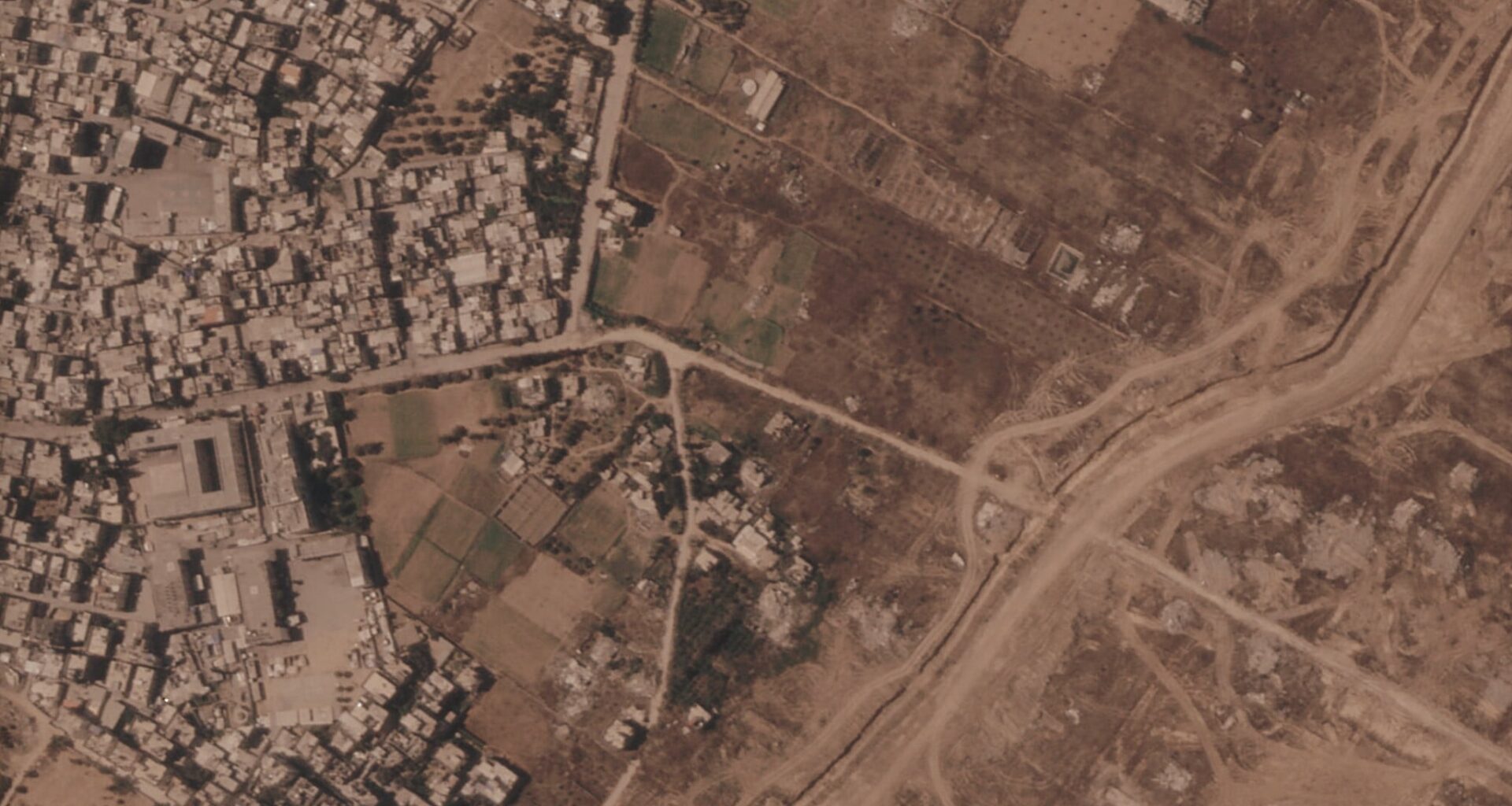
CAIRO, Egypt — The military is quietly but quickly building a giant earthen barrier separating over half of the Gaza Strip, which it controls, from the rest of the territory, according to satellite imagery, further entrenching the division of the small Palestinian enclave.
More than 23 kilometers (14 miles) have been constructed in recent months, running through Palestinian communities demolished by the military. That is equivalent to more than half the length of the coastal strip, which is some 40 kilometers (25 miles) long and 11 kilometers (7 miles) wide, and home to over 2 million Palestinians.
When presented with the satellite images, the Israel Defense Forces confirmed to The Associated Press it has built a physical barrier in the area of the Yellow Line, the boundary to which Israeli troops withdrew under the October ceasefire deal with Hamas. The line was envisioned in the US-backed agreement as a temporary division of the territory pending a fuller Israeli withdrawal.
But as the truce stagnates, it appears Israel is digging in, heightening Palestinian fears that the line is morphing into a border. Neither US Central Command, which is tasked with monitoring the ceasefire, nor the Board of Peace, the body led by US President Donald Trump meant to eventually oversee Gaza, would comment on the barrier.
Earlier this month, Israel confirmed it controlled more than 60 percent of the Gaza Strip’s territory, well beyond the portion of the enclave that it was allowed to temporarily continue holding as part of the October 2025 ceasefire deal.
Get The Times of Israel’s Daily Edition
by email and never miss our top stories
By signing up, you agree to the terms
Along with the barrier, the military told AP it has developed a “security zone” around the line, equipped with intelligence and technological assets. It declined to give details on the route of the barrier when asked how far it would be extended. It said the barrier aimed to prevent infiltration and protect Israeli troops and Israeli communities near Gaza.
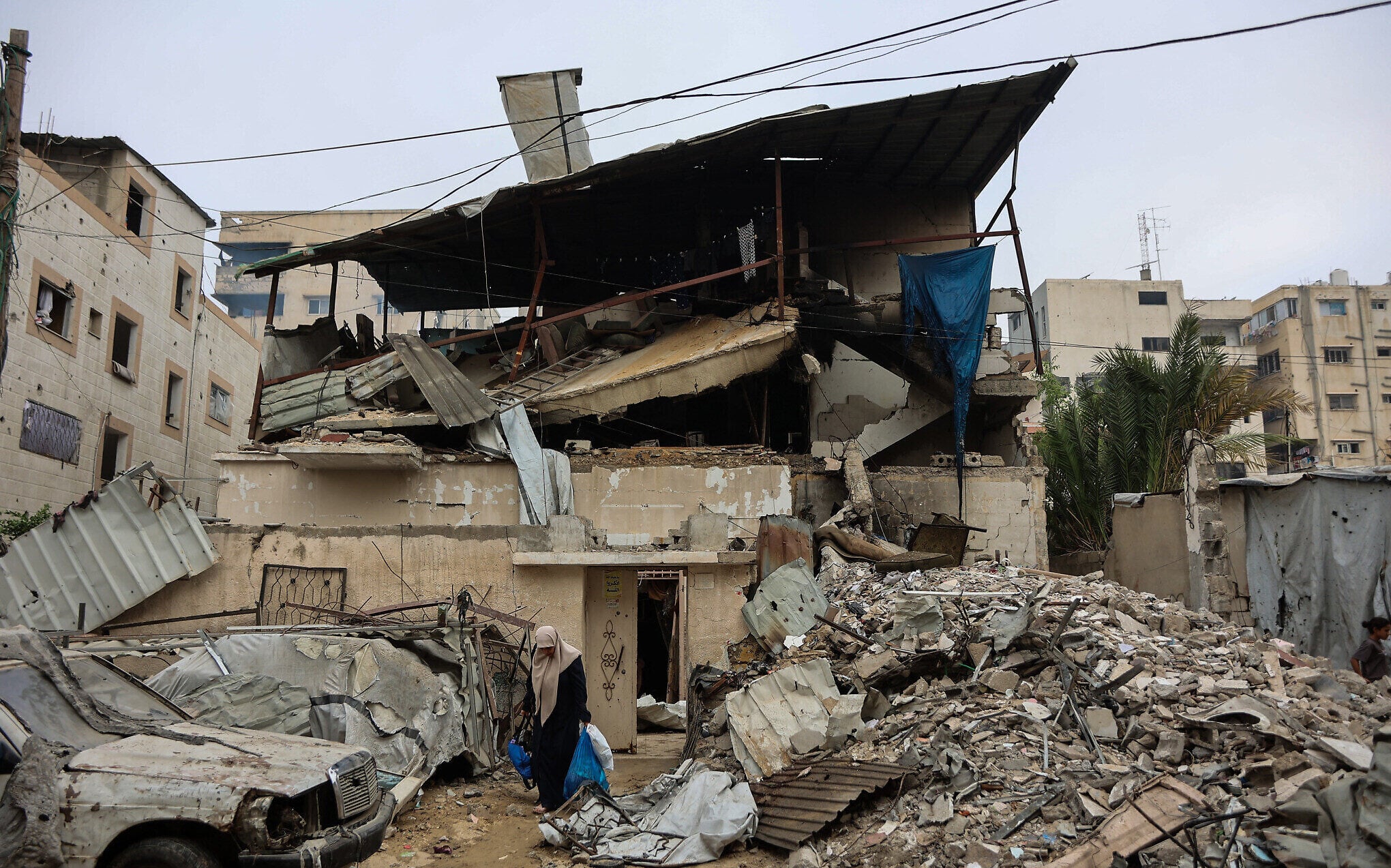
A Palestinian woman walks past debris at the site of an Israeli air strike in Gaza City on July 21, 2026. (Omar AL-QATTAA/AFP)
Construction of the barrier is proceeding rapidly
Since the ceasefire deal took hold, Palestinians in Gaza have feared Israel would not return the area of Gaza it controls. But few appear to be aware of the berms now being built around them — because of the danger of even approaching that area.
A portion of the berm network in southern Gaza was extended by more than 2 kilometers (1.2 miles) in two weeks this month, according to the satellite images provided by Planet Labs PBC.
The berm was about 500 meters (0.3 miles) long on July 1. By July 15, it was about 2.4 kilometers (1.5 miles), splicing the Israel-controlled ruins of the city of Rafah from the Mawasi area, site of some of the largest Palestinian tent camps.
If construction continues in its current direction, it will join up with the longest stretch of the barrier, which runs nearly unbroken for around 17 kilometers (10 miles) from the southern city of Khan Younis to near Gaza City, in the north.
Construction began on that stretch in February, and it appears work to extend it further south is continuing, according to the satellite images. More than a kilometer (0.6 miles) was added between June 21 and July 7, running close to an Israeli military base built on the ruins of the town of Bani Suheila, near Khan Younis.
In the far north of Gaza, several unconnected stretches of berms run just outside the largely leveled town of Beit Lahiya.
The height of the berms in each place remains unclear. In some places, the barriers appear to run outside the Yellow Line.
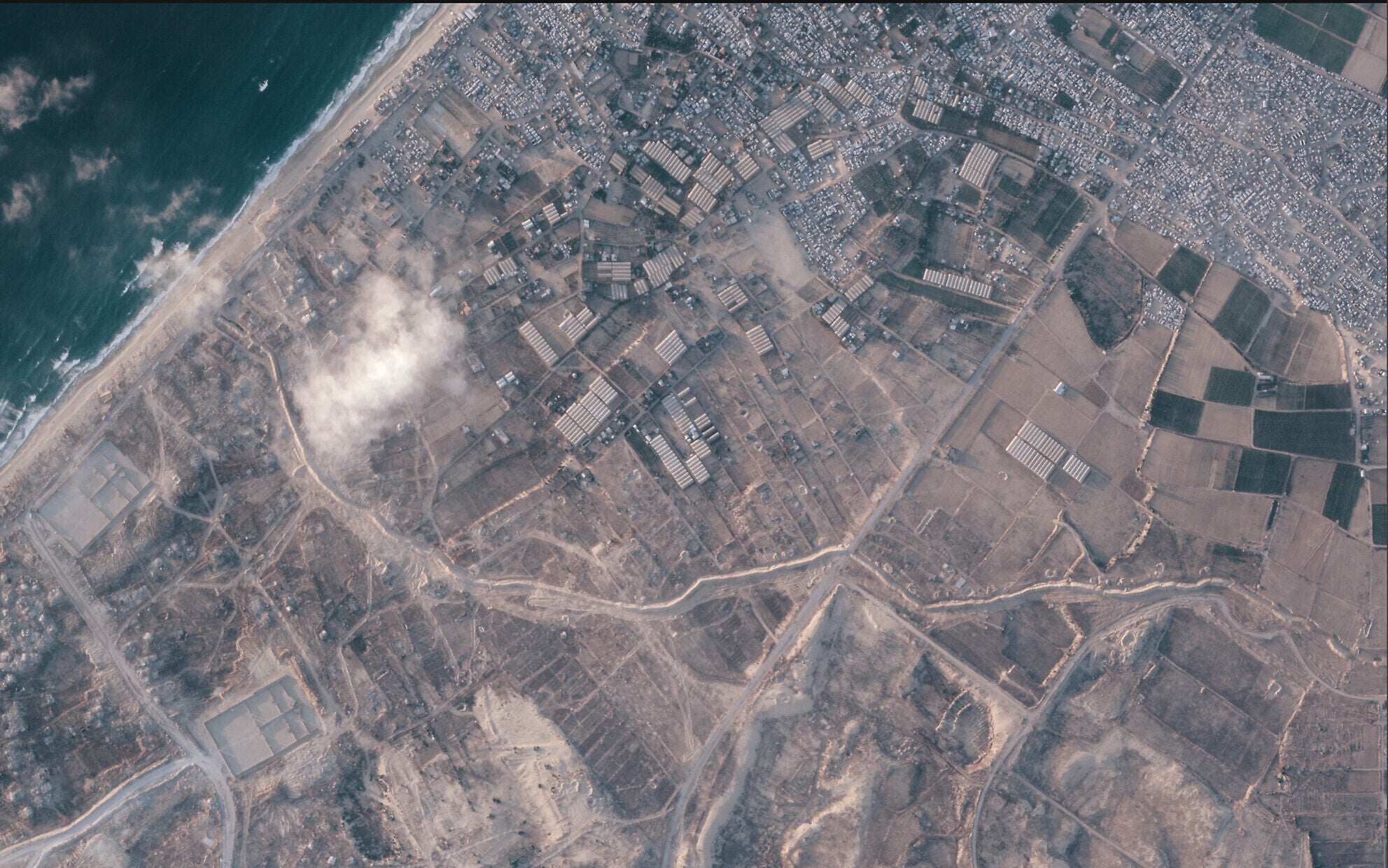
A satellite image from Planet Labs PBC shows a section of an earthen barrier, cutting horizontally across the middle of the image, being built by the Israeli military in the southern Gaza Strip, July 15, 2026. (Planet Labs PBC via AP)
Israel has mostly razed and depopulated the half of Gaza it controls
Gaza’s population has been crowded into the coastal area west of the Yellow Line, most living in squalid tent camps and dependent on aid.
On the other side of the line, satellite imagery shows that Israeli forces have leveled the vast majority of buildings using bulldozers and explosives, virtually erasing several towns and Rafah, once home to more than a quarter million people.
They have carved new road networks and erected new bases on the ruins of Palestinian towns. Agricultural land has also been destroyed.
The Israeli military says it is demolishing infrastructure used by Hamas, which it accuses of building tunnels under civilian sites, and using civilian infrastructure for a range of military purposes, including storing weapons.
At the start of the truce, the military controlled around 53% of the war-torn Palestinian enclave per the ceasefire agreement, but it has been inconsistently marked on the ground. The military told AP it is working to clearly mark the route of the Yellow Line to “reduce friction and prevent harm to uninvolved individuals.”
Israeli forces have killed Palestinians who came close to the line or crossed it. The Israeli military says it fires on those believed to be terrorists threatening its troops. But those killed have included children and other civilians seemingly unaware of the line.
Israeli strikes have killed hundreds of Palestinians since the ceasefire
At least 1,100 Palestinians have been killed in Gaza since a ceasefire took effect in October 2025, according to the Hamas-run health ministry in Gaza. That toll is unverified and does not differentiate between civilians and combatants, though the Israeli military has said that Hamas’s overall wartime figure is largely accurate.
Attacks by terror operatives have killed five Israeli soldiers in the same period.
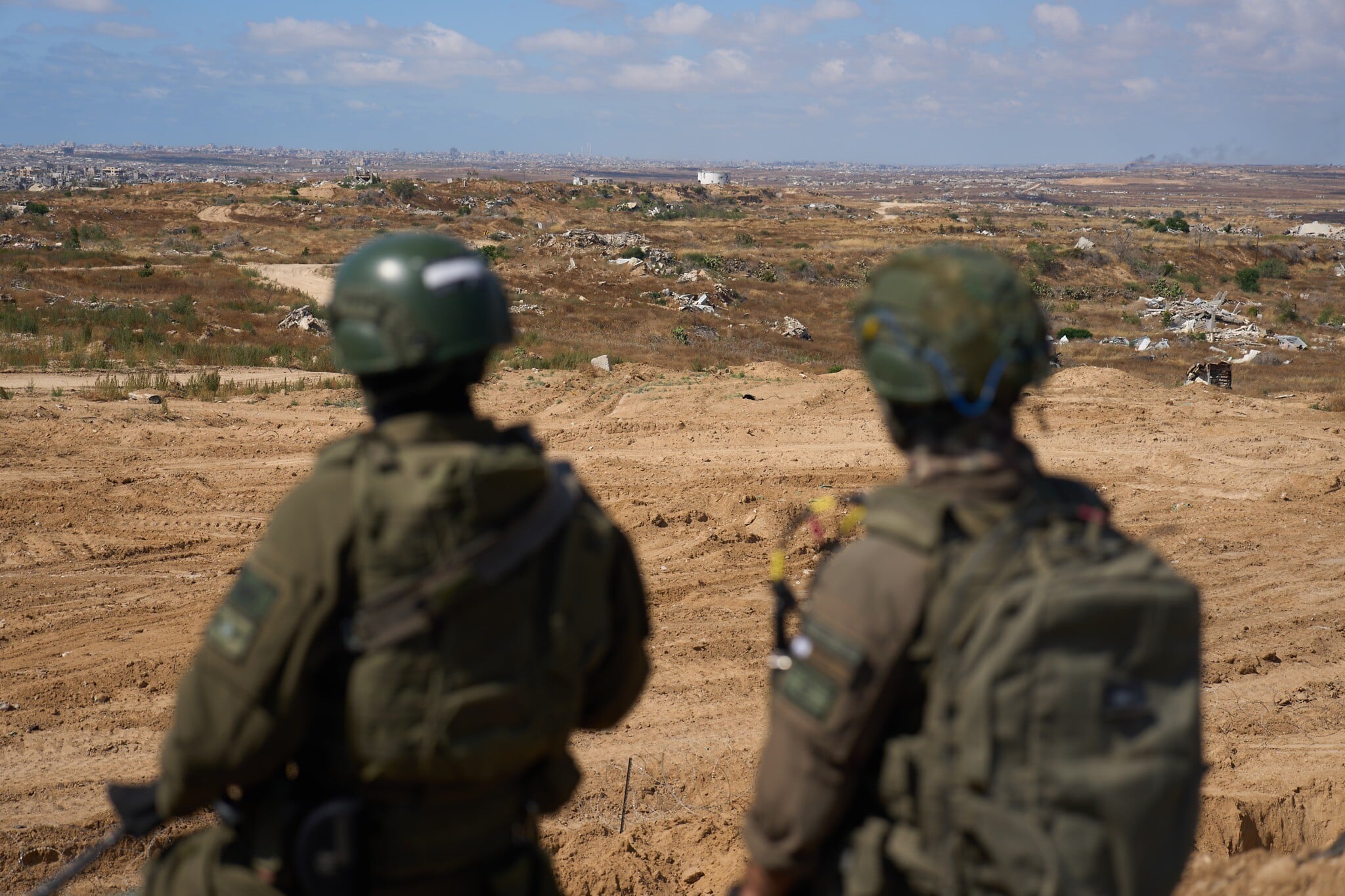
Israeli soldiers at a military position overlooking the so-called Yellow Line in the central Gaza Strip, Tuesday, May 26, 2026. (AP/Ariel Schalit)
Under Trump’s plan for Gaza, Israel is eventually supposed to withdraw its troops further to the very edges of Gaza, to be replaced by an international security force. But implementation of the plan has been stalled for months due to the Hamas terror group’s refusal to disarm, a condition for the withdrawal.
Sporadic talks to reach a formula for decommissioning the terror group’s weapons appear to have made little progress, and Hamas accuses Israel in turn of violating the ceasefire.
The war began after Hamas-led terrorists invaded Israeli communities on October 7, 2023, murdering around 1,200 people and taking 251 hostage. Israel responded with a punishing military offensive that has killed more than 73,000 people, according to the Hamas-run Gaza health ministry.
The ministry, which was part of the recently dissolved Hamas-run government, maintains detailed records viewed as generally reliable by UN agencies and international organizations, though it does not distinguish between civilians and combatants but says women and children make up around half of all fatalities.
We can’t do this work alone.

The war with Iran has been draining for all of us in Israel. But when I heard about a high casualty incident – ballistic missile impacts in Arad and Dimona that left nearly 200 people wounded – I drank a cup of coffee, packed a bag, and headed south.
There, I spoke with Shilgit, the head of an after-school program for underprivileged youth. Standing outside her destroyed center, Shilgit said it was a miracle that no children were hurt and spoke about the community coming together in the hours since.
As a Times of Israel reporter, I’m committed to telling stories of resilience like Shilgit’s. But my colleagues and I can’t do this alone. If you value work like this, please consider joining our reader support group, The Times of Israel Community. Your financial support is essential to keep real human reporting like this going.
— Stav Levaton, military reporter
Already a member? Sign in to stop seeing this
You’re a dedicated reader

That’s why we started the Times of Israel – to provide discerning readers like you with must-read coverage of Israel and the Jewish world.
So now we have a request. Unlike other news outlets, we haven’t put up a paywall. But as the journalism we do is costly, we invite readers for whom The Times of Israel has become important to help support our work by joining The Times of Israel Community.
For as little as $6 a month you can help support our quality journalism while enjoying The Times of Israel AD-FREE, as well as accessing exclusive content available only to Times of Israel Community members.
Thank you,
David Horovitz, Founding Editor of The Times of Israel