
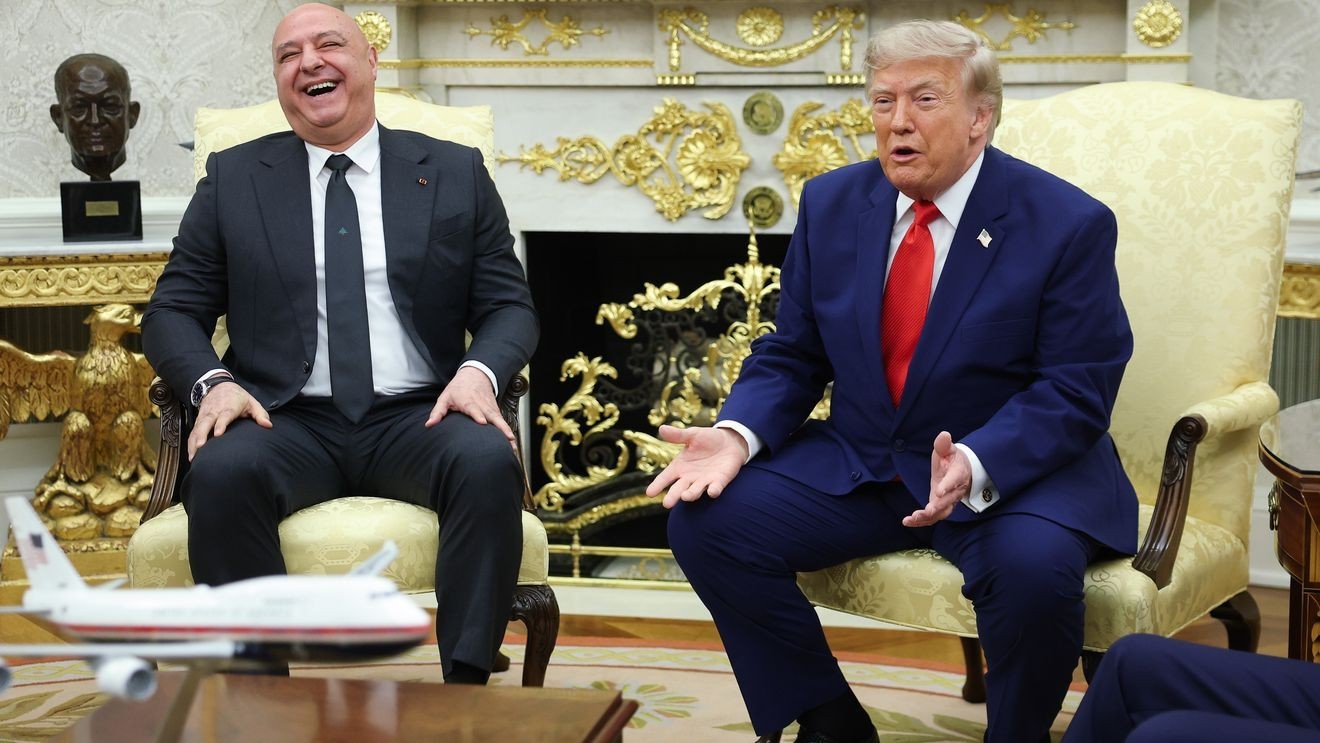
WASHINGTON (TNND) — Lebanese President Joseph Aoun arrived at the White House on Tuesday for high-stakes talks with President Donald Trump as Beirut seeks U.S. support to stabilize southern Lebanon following months of fighting between Israel and the Iran-backed Hezbollah militant group.
Trump greeted Aoun outside the White House, calling him “highly respected,” before opening what had been scheduled as a closed bilateral meeting to reporters in the Oval Office.
The meeting marks the first visit by a Lebanese president to the White House since 2009. Aoun is expected to seek Israeli troop withdrawals from southern Lebanon and additional U.S. backing for the Lebanese military as it works to replace Hezbollah’s influence in the region.
The meeting comes weeks after Lebanon and Israel signed a U.S.-backed “framework agreement” on June 26, described by officials as a first step toward a broader peace.
Ahead of his White House visit, Aoun met with Secretary of State Marco Rubio on Sunday. Rubio reaffirmed U.S. support for implementing the agreement and called it “the beginning of the beginning.”
“As I told all the parties here today, it’s the beginning of the beginning,” Rubio told reporters. “There’s a lot of work ahead. We don’t in any way underestimate the difficulty of the task ahead, but we understand the importance of it. How vital it is, and we are honored to have played a part in bringing this together.”
The State Department later said Rubio reaffirmed the United States’ commitment to supporting implementation of the agreement and backing Lebanon’s efforts to restore peace, economic recovery and long-term stability.
Israeli Prime Minister Benjamin Netanyahu said in June that Israel would withdraw from two areas in southern Lebanon and transfer control of the sites to the Lebanese military. He described the agreement as a major victory for Israel but said Israeli troops would remain in much of the territory until Hezbollah is disarmed.
The agreement also outlines steps toward an eventual peace deal between Israel and Lebanon, which have never established formal diplomatic ties and have technically remained in a state of war since Israel’s founding in 1948.
Even as diplomatic efforts continue, implementation on the ground remains uncertain.
The U.S. State Department announced Monday that operations had begun in three villages designated as part of a “pilot zone,” though it did not provide additional details. Two of the villages — Froun and Srifa — are already under Lebanese military control, while Israeli forces remain in parts of Zawtar al-Gharbieh.
The Lebanese military said Tuesday it was preparing to deploy troops to Zawtar al-Gharbieh once Israeli forces withdrew. The Israeli military said it would adjust its force posture to allow the Lebanese Armed Forces to carry out their mission but did not specify the location.
Later Tuesday, the Lebanese military accused Israeli troops of opening fire near Zawtar al-Gharbieh, warning the incident could delay its deployment. An Israeli military official, speaking on condition of anonymity under military guidelines, said the withdrawal had not yet begun.
Israeli officials have said they intend to maintain a long-term military presence in a security zone along southern Lebanon.
Hezbollah has rejected the U.S.-brokered talks between Lebanon and Israel while backing separate negotiations between Washington and its key ally, Iran, aimed at ending the broader regional conflict.
Lebanon’s government, which took office on a reform platform earlier this year, has pledged to disarm all non-state armed groups, including Hezbollah. Officials have blamed Hezbollah for dragging the country into another conflict with Israel in March after the group fired rockets into northern Israel two days after U.S. and Israeli strikes on Iran.
At the same time, Beirut has condemned Israel’s subsequent ground offensive and air campaign in Lebanon, which has killed more than 4,000 people and displaced an estimated 1.2 million.
_____
Editor’s note: The Associated Press contributed to this article.