
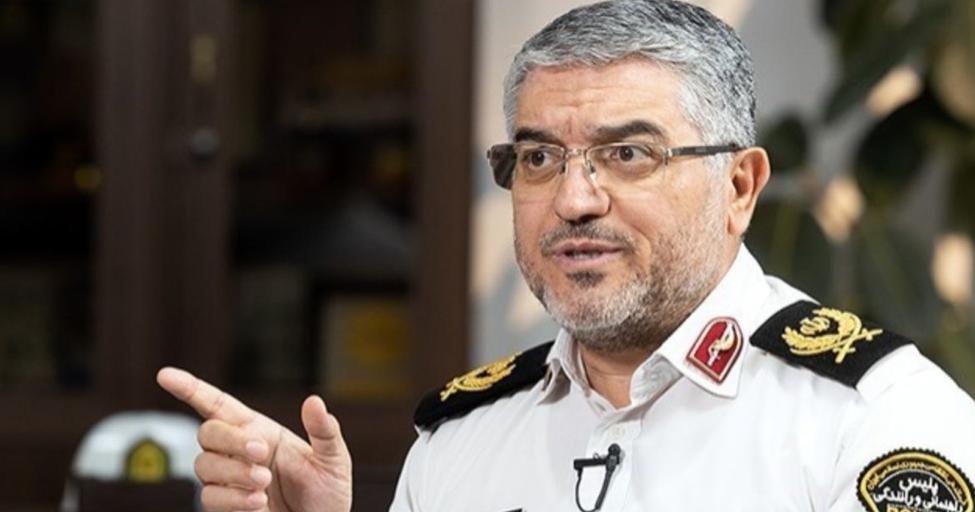
Iran’s Traffic Police (Rahvar) announced that the issuance of motorcycle licenses to women remains pending the completion of legal processes and that no such licenses have been issued to date. This statement contradicts claims by the Vice President for Women and Family Affairs, who had reported that a prototype license had been printed and suggested that issuance might begin as early as this month.
Teymour Hosseini, Chief of the Traffic Police, emphasized that the Traffic Police is the sole legal authority responsible for issuing driver’s licenses in the country. He stated that the agency will act only after all legal procedures are finalized and officially communicated. According to Hosseini, the timeline, issuance procedures, and other technical details will be communicated exclusively through official Traffic Police channels.
Hosseini dismissed reports regarding the printing of the “first sample of a women’s motorcycle license,” confirming that no licenses have been issued in this domain so far and describing such claims as technically and operationally groundless. He added that if and when the law takes effect, motorcycle licenses for women will not differ in template, specifications, or standards from those issued to men.
These remarks follow statements made on Tuesday morning by Zahra Behrouz-Azar, Vice President for Women and Family Affairs, who claimed that a prototype of the women’s motorcycle license had been printed. She noted that the issuance process – originally scheduled to begin in February or March 2026 – had been delayed due to the Ramadan war.
Highlighting the growing number of women using motorcycles for daily transportation, Behrouz-Azar stated that the government has pursued this initiative to mitigate risks associated with a lack of formal training, driving without a license, and exclusion from insurance coverage.
Citing religious opinions from various Islamic scholars and clerics, she noted that women riding motorcycles is “not inherently forbidden” (haram dhati) and should be regulated under the law like any other activity. Behrouz-Azar added that, based on recent follow-ups, Traffic Police and law enforcement commanders had pledged that the issuance of motorcycle licenses to women would become operational within the month.
Earlier, in February 2026, First Vice President Mohammad Reza Aref formally communicated a Cabinet decree regarding motorcycle licensing for women to the Law Enforcement Command of the Islamic Republic of Iran (Faraja). Under the directive, Faraja was instructed to establish training programs, administer tests, and issue motorcycle licenses to women under the supervision of the Traffic Police.
However, a government bill introduced in Parliament in September 2025 to amend relevant traffic legislation remains stalled. Several lawmakers, including Mohammad Seraj, a member of Parliament’s Social Commission, had previously voiced opposition to the measure.
Despite the lack of legal avenues to obtain a license, motorcycle use among Iranian women has continued to rise across various cities in recent years.