
Not only that, but it’s been widely reported that Russia’s demands include the withdrawal of Ukrainian forces from areas of the eastern Donbas not currently held by Russia, in exchange for a willingness to freeze the lines further south, in Zaporizhzhia and Kherson.
“It was determined by all that the best way to end the horrific war between Russia and Ukraine,” he wrote on Truth Social, “is to go directly to a peace agreement.”
Ceasefires, he noted, “often times do not hold up”.
This appears to fly in the face of Ukraine’s main demand, endorsed by all its European backers: that an unconditional ceasefire has to come first.
Crucially, it also buys Russia’s Vladimir Putin time on the battlefield, where he is convinced he’s winning.
“If Putin’s military objective was to avoid immediate constraints on Russian operations in Ukraine then he appears to have succeeded,” says Matthew Savill, the director of military sciences at the Royal United Services Institute.
Ian Bond, deputy director of the Centre for European Reform and a former British diplomat, said Moscow’s territorial demand was a non-starter.
“If Trump thinks that Zelensky is going to agree to give up the fortress cities of the Donetsk oblast, just to get Putin to stop making war on him, he’s out of his mind,” he said.
“It shows how little he still understands about the situation and the geography of Ukraine.”
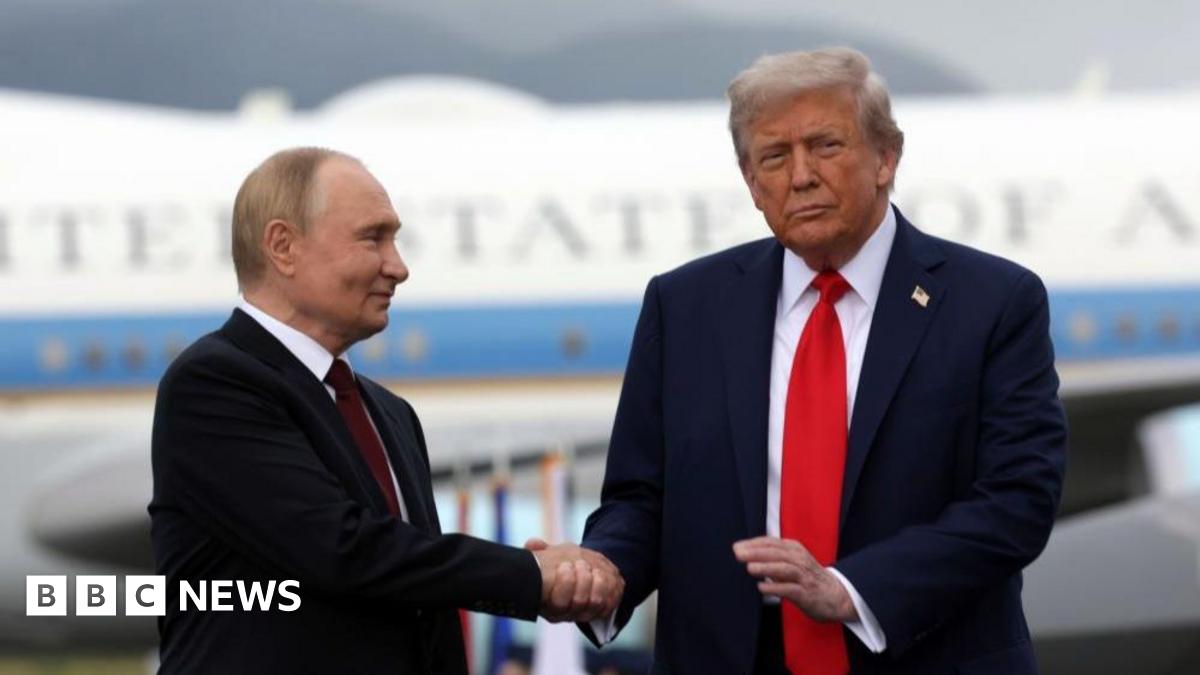
At their brief press appearance last night, Putin warned Ukraine and the Europeans not to “throw a wrench” in the works of the unspecified progress he and Trump had made.
But that, for Kyiv and its allies, is precisely what Trump has done, undoing the achievements of what they had all hoped was a successful preceding week of frantic diplomacy aimed at influencing the outcome in Alaska.
It’s a reminder, as if one were needed, of Trump’s tendency to echo the views of the last person to have his ear.
For a short while this morning, European leaders will have held their breath, waiting to see if their efforts had borne fruit or been cast aside.
True to his word before the summit, Trump got on the phone to Zelensky. The two men spoke for an hour, before being joined by European leaders.
Zelensky said the call was “long and substantive” and that he would travel to Washington on Monday for his first visit since the disastrous Oval Office encounter in February.
A lot has happened since then, with Kyiv’s European allies working assiduously to repair the damage and school Zelensky in the best ways of handling the capricious and volatile occupant of the White House.
“I am grateful for the invitation,” Zelensky posted, adding “it is important that America’s strength has an impact on the situation”.
But in a later post, after Trump’s statement on Truth Social, Zelensky adopted a more urgent tone.
“Killings must stop as soon as possible,” he said. “The fire must cease both on the battlefield and in the sky, as well as against our port infrastructure.”