
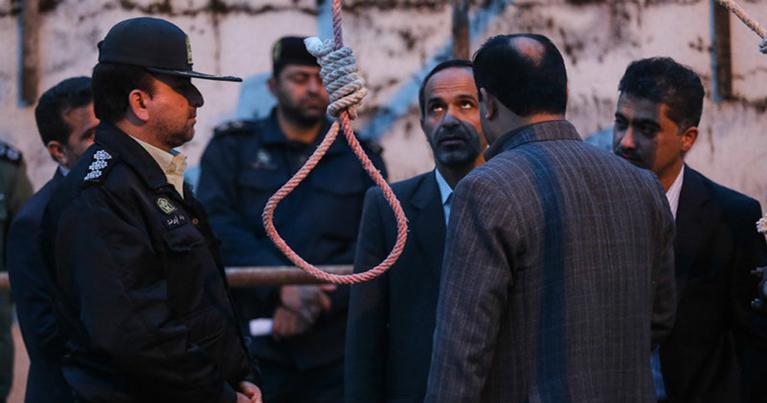
The Judiciary of the Islamic Republic announced the execution of Mehdi Khanki, one of those arrested during the nationwide protests in January 2026. Judicial officials accused him of “cooperation with the Zionist regime” and membership in a “terrorist group,” allegations for which no details or supporting documents have been independently published, making independent verification impossible.
Mizan News Agency, the official media outlet of the Judiciary, reported on Tuesday, July 21, 2026, that Khanki had been sentenced to death and the full confiscation of his assets under the “Law on Intensifying Punishment for Espionage and Cooperation with the Zionist Regime and Hostile States Against National Security and Interests.”
According to Mizan’s report, Mehdi Khanki was arrested on February 10 following a report by the Intelligence Organization of the Law Enforcement Command of Alborz Province and a judicial order. The judicial system claimed that he was a member of an “anti-revolutionary group,” possessed military weapons and ammunition, and acted in line with Israeli and U.S. interests.
The Judiciary further accused him of “operational action in favour of the Zionist regime and the U.S.” and the “manufacture and possession” of weapons, without releasing further information about the judicial process, the evidence presented, or the defendant’s access to legal counsel.
The legislation used as the legal basis for Khanki’s death sentence was passed by Parliament and approved by the Guardian Council following the nationwide protests of 2025–2026. The law expanded the scope of charges related to “espionage” and “cooperation with hostile states,” mandating the death penalty for several such offences.
The nationwide protests began on December 28, 2025, driven by the sharp depreciation of the rial, surging inflation, a severe cost-of-living crisis, and widespread public discontent with state governance. They quickly spread across various Iranian cities. In addition to economic demands, protesters chanted slogans opposing the Islamic Republic and demanded freedom, human dignity, democracy, and an end to clerical rule.
The demonstrations were met with heavy-handed state suppression, the use of lethal force, mass arrests, and internet blackouts. In the months that followed, security agencies opened dozens of cases against detainees, while the Judiciary handed down severe sentences, including capital punishment. Since March 18, at least 23 protesters associated with the January demonstrations have been executed, a figure that has heightened grave concerns among human rights organizations about the accelerating issuance and enforcement of death sentences against demonstrators.