
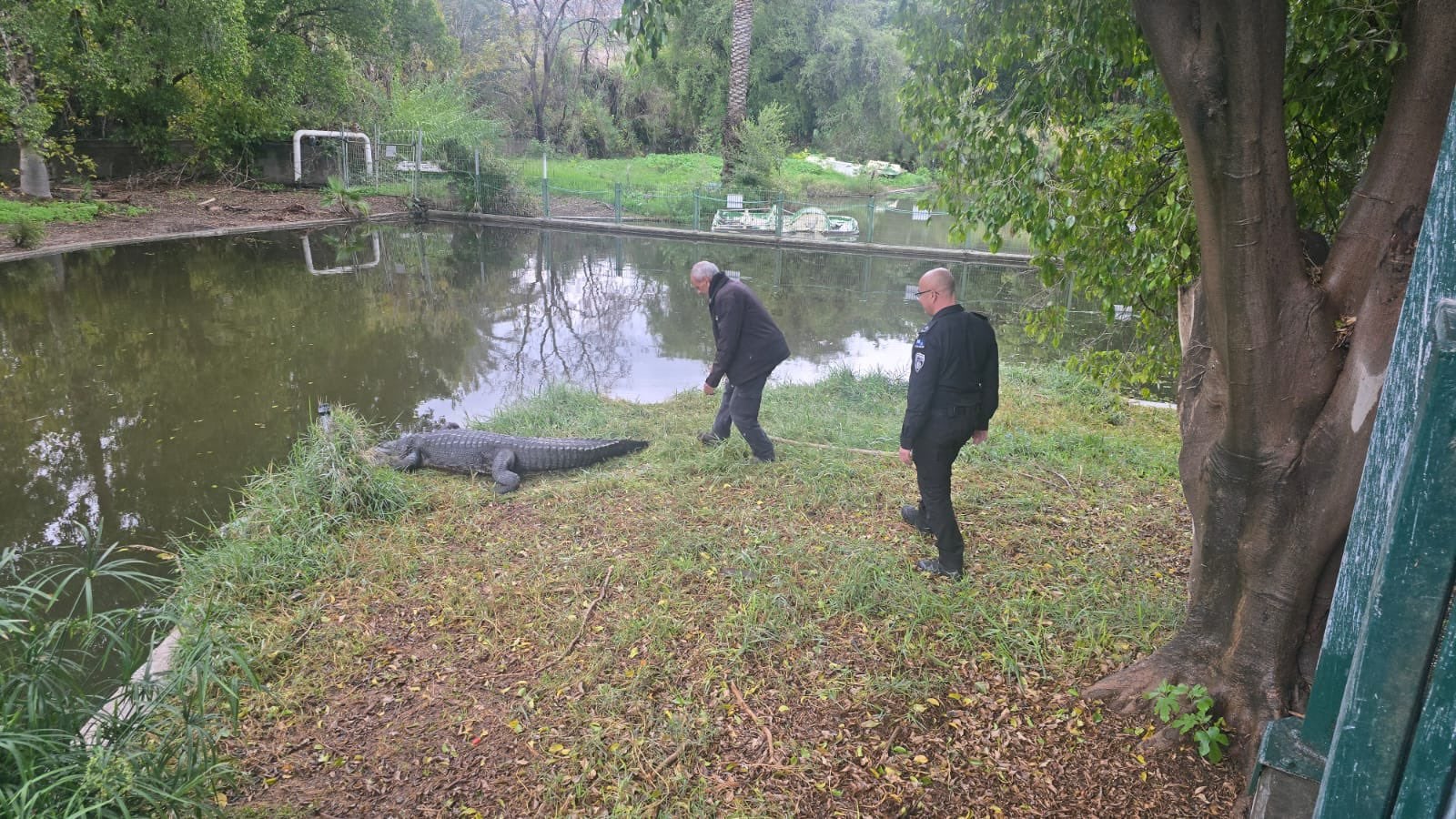
A moat meant to hold crocodiles is already being dug at Ketziot Prison as part of a campaign spearheaded by National Security Minister Itamar Ben Gvir to introduce the deadly reptile into holding facilities for Palestinian prisoners, according to a Wednesday report.
The Ynet news site, citing Ben Gvir’s ministry and local officials, said the physical preparations began Wednesday inside the southern facility, which holds detained Hamas terrorists and other Palestinian security prisoners.
“Digging [for] the crocodile moat is underway inside the prison, around one of their special wings,” a source in the Ramat Hanegev Regional Council, which has jurisdiction over the prison, told the outlet.
“It’s a moat about 170 meters [560 feet] long, and you can’t see it from outside the prison. No one knows if there will indeed be crocodiles there, but preparations are being made,” the source continued.
Ben Gvir’s office confirmed to the outlet that digging for the moat had started within the jail.
Get The Times of Israel’s Daily Edition
by email and never miss our top stories
By signing up, you agree to the terms
“Whoever thought this was a gimmick was mistaken,” it said.
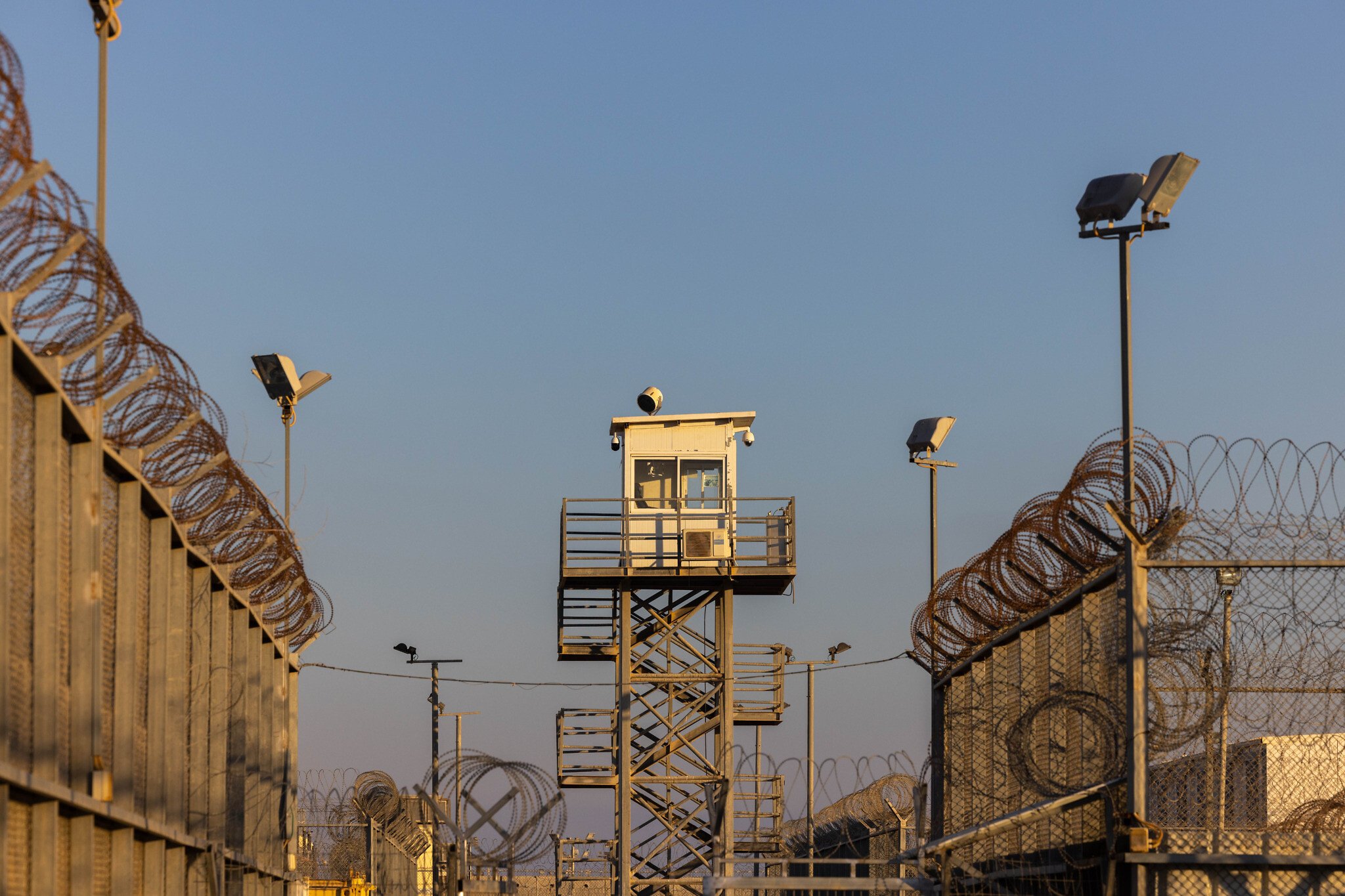
The Ketziot prison seen on September 13, 2022. (Nati Shohat/Flash90)
“The Prison Service is all set. The plan exists in the finest detail, from the maintenance and care of the crocodiles to the crocodiles’ resting cells,” the far-right minister’s office added.
According to the statement, the National Security Ministry has budgeted NIS 21 million ($7 million) for the construction of the trenches.
The digging began after Environmental Protection Minister Idit Silman issued a ministerial decision last week to reclassify the Nile crocodile as a “tended wild animal,” allowing its presence in security facilities, despite opposition from her own ministry’s legal counsel.
Silman’s move also encountered stringent opposition from career environmental officials in the Nature and Parks Authority, who stressed that the move has “no professional or scientific basis” and poses a physical danger to guards and prisoners alike.
“The Nature and Parks Authority found no professional or scientific basis anywhere in the world for bringing crocodiles into a detention facility for use as a security measure,” the agency said in a statement to The Times of Israel.
Introducing “a large, longevous, non-native predator into the ecosystem could create numerous and varied risks to both Israel’s natural environment and the public,” it continued.

Environmental Protection Minister Idit Silman attends a Knesset Internal Affairs and Environment Committee meeting on June 3, 2025. (Yonatan Sindel/Flash90)
Silman defended her decision Wednesday in an interview with the 103FM radio station, saying: “We are speaking a language our enemies know.”
She claimed the penitentiary system’s acute overcrowding crisis — which worsened considerably after the October 7, 2023, Hamas-led invasion — necessitates crocodiles as a deterrent for security inmates.
“At the end of the day, we must remember that as a result of October 7, the number of security prisoners increased considerably, and there is a real need to reckon with means of deterrence,” the minister told the station.
Ben Gvir and prison officials “told me that there is major deterrence in the fact that crocodiles will surround the prisons,” she added.
Ben Gvir, who has authority over the Israel Prison Service and its policies, has repeatedly boasted of the harsh conditions he has imposed on Palestinian detainees and prisoners.
We can’t do this work alone.

The war with Iran has been draining for all of us in Israel. But when I heard about a high casualty incident – ballistic missile impacts in Arad and Dimona that left nearly 200 people wounded – I drank a cup of coffee, packed a bag, and headed south.
There, I spoke with Shilgit, the head of an after-school program for underprivileged youth. Standing outside her destroyed center, Shilgit said it was a miracle that no children were hurt and spoke about the community coming together in the hours since.
As a Times of Israel reporter, I’m committed to telling stories of resilience like Shilgit’s. But my colleagues and I can’t do this alone. If you value work like this, please consider joining our reader support group, The Times of Israel Community. Your financial support is essential to keep real human reporting like this going.
— Stav Levaton, military reporter
Already a member? Sign in to stop seeing this
You’re a dedicated reader

That’s why we started the Times of Israel – to provide discerning readers like you with must-read coverage of Israel and the Jewish world.
So now we have a request. Unlike other news outlets, we haven’t put up a paywall. But as the journalism we do is costly, we invite readers for whom The Times of Israel has become important to help support our work by joining The Times of Israel Community.
For as little as $6 a month you can help support our quality journalism while enjoying The Times of Israel AD-FREE, as well as accessing exclusive content available only to Times of Israel Community members.
Thank you,
David Horovitz, Founding Editor of The Times of Israel