
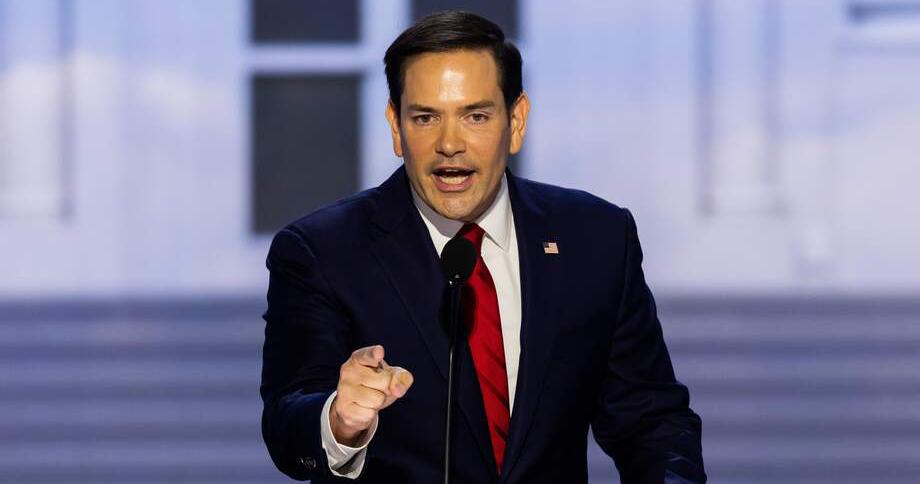
U.S. Secretary of State Marco Rubio, responding to remarks by Iranian Foreign Minister Abbas Araghchi regarding an “eye for an eye” policy, stated: “Donald Trump’s policy is a head for an eye.”
Speaking on the sidelines of the ASEAN Foreign Ministers’ Meeting in Manila, the Philippines, Rubio emphasized that the Islamic Republic has paid a “very heavy price” for its actions and that this trend will continue. He further claimed that Iran’s industrial infrastructure and defense capabilities “have been heavily damaged.”
Addressing Tehran’s stance on negotiations, the U.S. Secretary of State said: “Despite all the rhetoric, the Islamic Republic is suffering severe damage and is sending messages daily through third countries seeking negotiations and a deal.”
However, he noted that the Islamic Republic is not yet ready to accept an agreement that Washington considers acceptable. Rubio added: “They will pay the cost for this. Iran’s costs increase every night until they come to their senses.”
Rubio also stressed that the primary U.S. concern is preventing the Islamic Republic from acquiring nuclear weapons rather than pursuing regime change. Referring to Donald Trump’s position, he remarked: “The U.S. President believes the Iranian people deserve better leadership.”
In response to a question regarding Trump’s recent warnings about potential Iranian attacks on shipping in the Strait of Hormuz, Rubio reiterated: “Trump’s policy is a head for an eye, and Iran will pay a heavy price.”
Regarding the Houthis in Yemen, he expressed hope that the group’s attacks would cease, asserting that “Iran has deceived them.”
Rubio’s statements came as the ASEAN regional security summit was taking place in Manila, attended by senior officials from the U.S., Russia, China, the European Union, Japan, India, Australia, and the UK. The conflict between the U.S. and the Islamic Republic, as well as its impact on energy security and freedom of navigation in the Strait of Hormuz, were key areas of focus at the meeting.
Hua Chunying, China’s Vice Minister of Foreign Affairs, also addressed regional developments at the summit, noting that the Middle East crisis had spilled over into energy and food supply chains, making the preservation of peace and stability “more necessary than ever.” Meanwhile, Rubio reaffirmed that Washington still preferred a diplomatic solution but added that Tehran had so far shown no serious commitment to negotiations.