
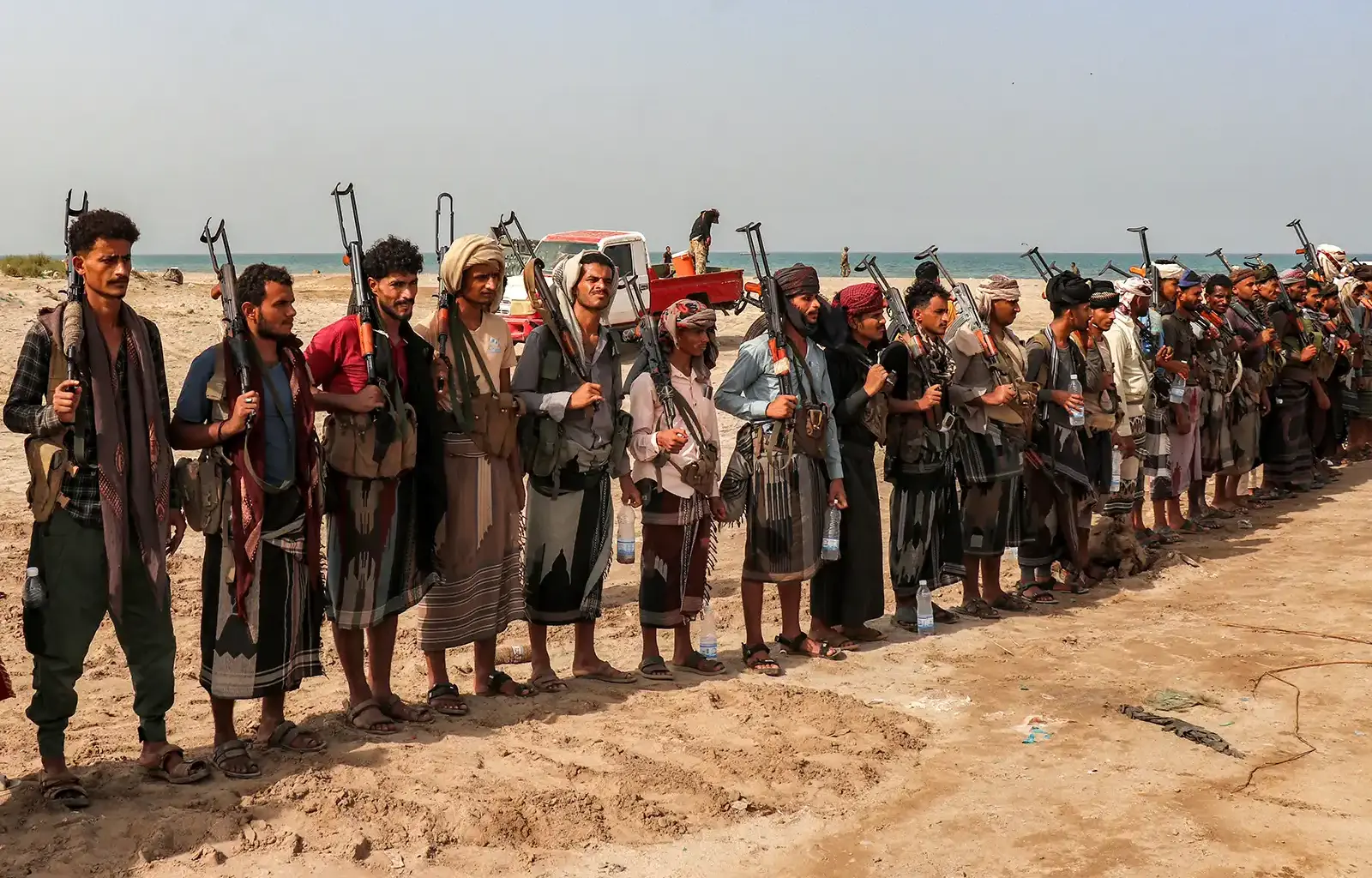
As the Houthis have crossed Riyadh’s red lines with their attempts to regain control of Yemen’s airspace and the blockade decision, Saudi Arabia will likely utilize this newfound political cohesion to fight the group, especially through Saudi-backed, pro-government factions like the National Resistance Forces along the Red Sea Coast. That campaign will constitute a highly localized, aggressive military campaign focused on the western coast, especially in the Houthi-controlled Hodeidah Governorate. The goal will be to push Houthi forces away from critical maritime choke points, stripping the group of their Red Sea launch pads and, thus, their maritime leverage. That effort may already be underway, with fighting between the Houthis and pro-government forces in and around the strategically crucial city of Hodeidah, Yemen’s primary port city, intensifying over the past few months.
For the Houthis, a fight for Hodeidah is welcome, especially after victories in previous battles for the city in 2014 and 2018. The group has faced unprecedented domestic economic failure and rising local anger in recent years across the territory under their control. Starvation and poverty are increasing, especially with aid flows to Houthi areas drastically decreasing since 2025, in no small part due to U.S. aid cuts under the Trump administration and Houthi pressure on aid providers. Last month, the United Nations warned that tens of thousands face starvation in Houthi-controlled territories, among the over 18 million people in Yemen experiencing crisis-level hunger or worse.
In such a difficult economic situation, the Houthis understand that resuming the conflict helps them preserve their authoritarian grip on the north. An active ground campaign in Hodeidah gives them the perfect narrative to declare full military mobilization and crack down on internal dissent under the banner of “defending against Saudi-U.S. aggression” without facing immediate domestic accountability. The group’s failure to secure Iranian flights landing at Sana’a airport further incentivizes the Houthis to act, as it exposed their lack of genuine sovereignty over the areas they govern. For the Houthis, to gain domestic and regional concessions that assert their sovereignty, they must leverage every pressure card at their disposal. They have a long history of doing just that.
With the Houthis, the IRG and their respective supporters transforming civil infrastructure, airspace and maritime gateways into active, high-stakes battlegrounds in and around Yemen, there will be immediate negative consequences, including on the global economy and the already catastrophic humanitarian crisis in Yemen. Any battle for Hodeidah and the Red Sea coastline, a primary commercial and humanitarian aid lifeline for the country that facilitates around 80% of humanitarian aid and 70% of commercial imports, risks sending Yemen back down a humanitarian spiral, underscoring the urgent need for a durable and just conflict resolution rather than military force. The current severe economic depression risks worsening widespread hunger into acute famine.
Peace efforts led by U.N. Special Envoy Hans Grundberg and Oman risk freezing as well, a setback presaged by the Houthis’ recent decision to postpone detainee exchanges until further notice. Renewed fighting would ultimately send already difficult negotiations on Yemen’s future backward at the expense of all Yemenis, who deserve a democratic future that they themselves lead. Renewed war does not help Yemen or its people get closer to that outcome.
As the regional conflict between the United States, Israel and Iran continues with no end in sight, unaddressed questions in Yemen are naturally and unfortunately spilling over as a result. Whether the worst-case scenario for the country can be averted remains to be seen as actors inside and outside the country gamble with Yemen’s future for their own designs. For now, a return to full-scale war appears most likely, with disastrous results for Yemeni communities.
The views and positions expressed in this article are those of the author(s) and do not necessarily reflect the views of DAWN.