
Birmingham City Council’s Local Plan said the Sports Quarter should ‘support the nature conservation site and provide appropriate mitigation’
11:18, 24 Jul 2026Updated 11:19, 24 Jul 2026
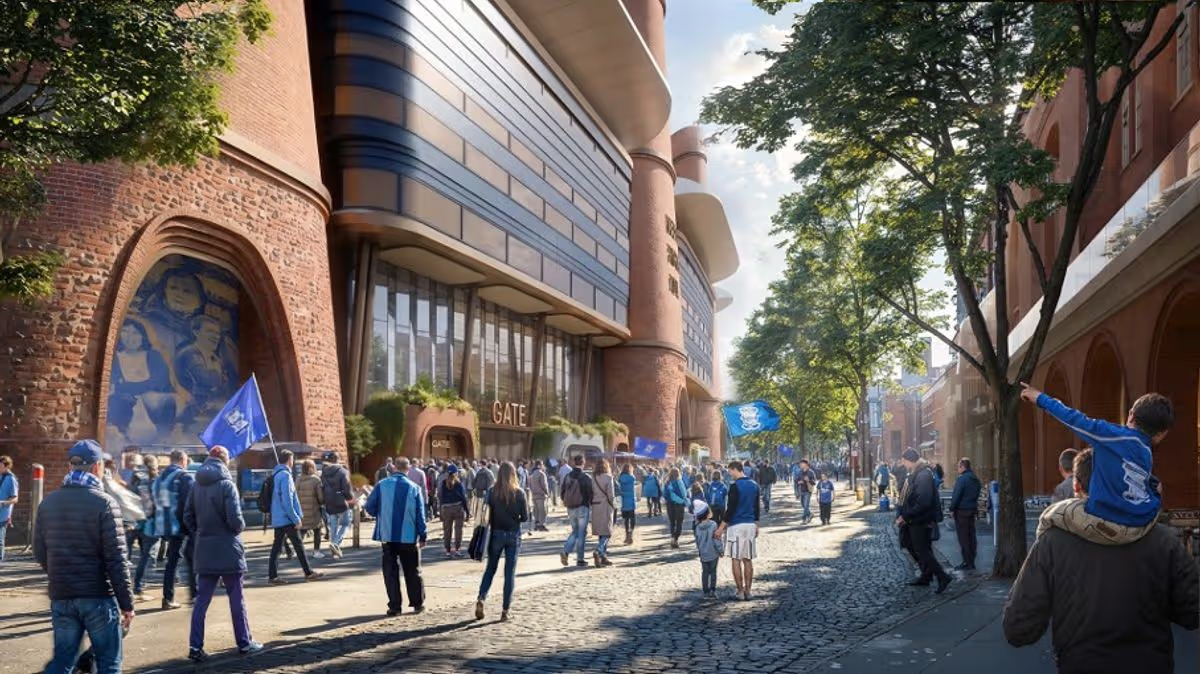
Birmingham City FC’s stadium, dubbed The Powerhouse
The land where Birmingham City FC are planning to build their “landmark” new stadium is set to be home to a new nature conservation site.
The club has huge ambitions of transforming the 48-acre Wheels Park site in the east of the city and building a stadium dubbed The Powerhouse, which features several striking chimneys.
Brummies got their first proper look at the proposed stadium last year, with Blues chairman Tom Wagner saying they want to create a ‘globally-recognised colosseum’ that can also host events such as concerts.
READ MORE: Mayor’s message to region’s venues as Andy Burnham move hailed as ‘small but important step’
The wider Sports Quarter project around the stadium itself also includes new transport links, a training centre, women’s stadium, arena and mixed-use development with housing.
Amid these plans, Birmingham City Council is proposing creating a number of new nature conservation sites and extending current ones across the city.
The authority – now run by a minority coalition including the Lib Dems and Greens – says these sites are key parts of the city’s ‘nature network’ and give a level of “nature protection not covered by statutory national or international designations”.
It continued that a Site of Local Importance for Nature Conservation (SLINC) has been proposed for part of the Wheels Park land.
“Habitat and protected/notable species surveys of the site were undertaken by ecological consultancy in 2021 in support of council proposals for site remediation and redevelopment,” the council said.
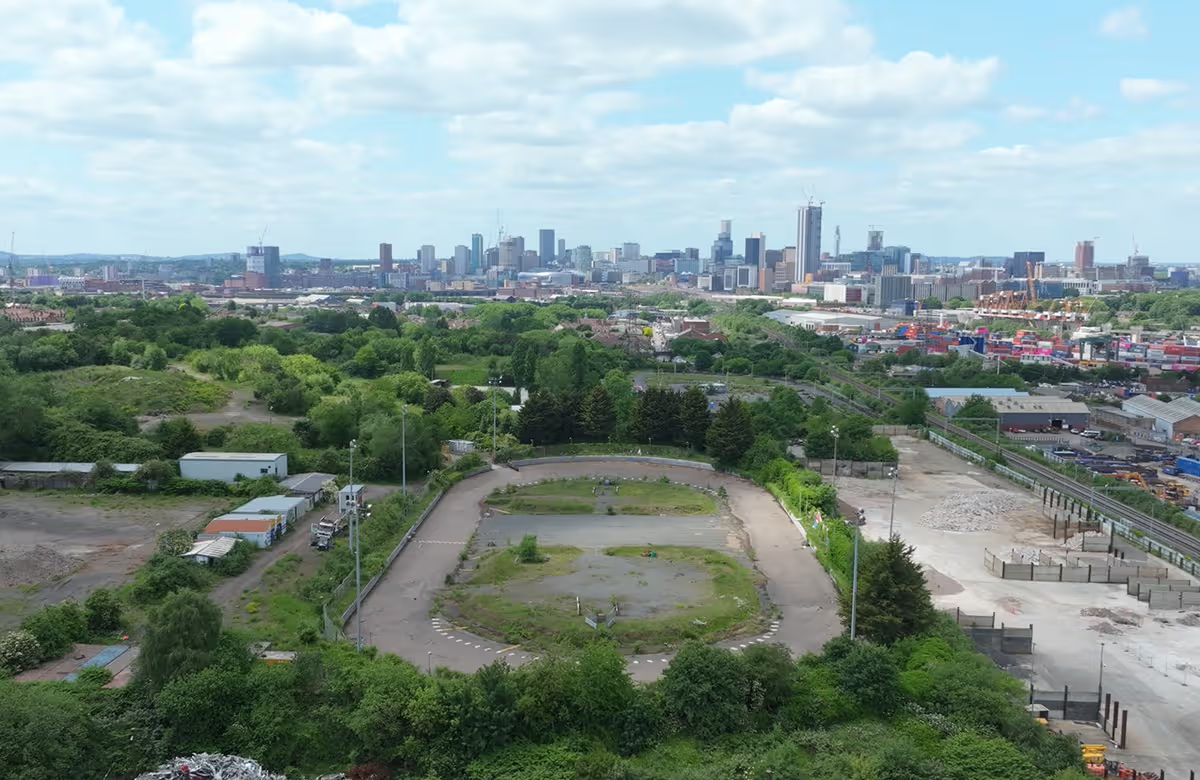
Drone footage of the Birmingham Wheels Park site, set to become BCFC’s new stadium
[A Local Site Assessment] concluded a small area of unimproved neutral grassland on the western side of the Wheels Park site, which had developed over former railway ballast and supported notable Orchid species.
“The LSA concluded this grassland, along with adjacent semi-natural woodland and scrub habitats, should be designated as a SLINC, due to the presence of relatively scarce grassland supporting locally uncommon plant species.
“[It’s also due to] the proximity of the grassland, woodland and scrub habitats to adjacent railway and canal habitat corridors which form part of the city’s strategic nature network.”
Julien Pritchard, Green councillor and deputy leader of Birmingham City Council, said protecting nature and green spaces is “absolutely crucial to our residents”.
“It’s also crucial for our city’s environment and helps in the fight against climate change,” he said.

Julien Pritchard, Green(Image: Nick Wilkinson/Birmingham Live)
“Safeguarding nature is a key priority for this administration. These new designations in areas across the city will help give vital protection to these nature areas.
“These sites are not just in the outer, leafier suburbs but also in inner city areas.
“For example, Wheels Park in the Sports Quarter and Bordesley growth area has a proposed SLINC.”
On the impact on the land being developed, the council said failure to designate the sites or amend the boundaries of existing ones would “present an increased risk to challenge to any future planning decisions relating to these sites”.
It also said these conservation sites are part of a new draft Birmingham Local Plan, which sets out how the council can shape the future of the city, support economic development, address housing need and attract investment.
READ MORE: Birmingham celebrates Ozzy Day as new city leaders hope to ‘save’ Black Sabbath’s birthplace
This draft Local Plan describes the transformation of the Wheels Park site as being at the heart of the Bordesley Park Growth Zone and a “major opportunity to regenerate brownfield land for comprehensive urban renewal and to act as a catalyst for wider regeneration”.
“This regeneration will be anchored by a new stadium for Birmingham City FC,” it continued. “The ambition is for international leisure and entertainment attractions to provide further anchors to the Sports Quarter, offering a broad spectrum of events and experiences.
“The promotion of high-quality architecture, design and landscaping will be key drivers.
“Any stadium development should act as a landmark for this part of the city, promoting a distinctive sense of place.”
It went to say that one principle for the Sports Quarter should be to support the SLINC on the western edge of the site and “provide appropriate mitigation, alongside measures to enhance green and blue infrastructure and biodiversity”.
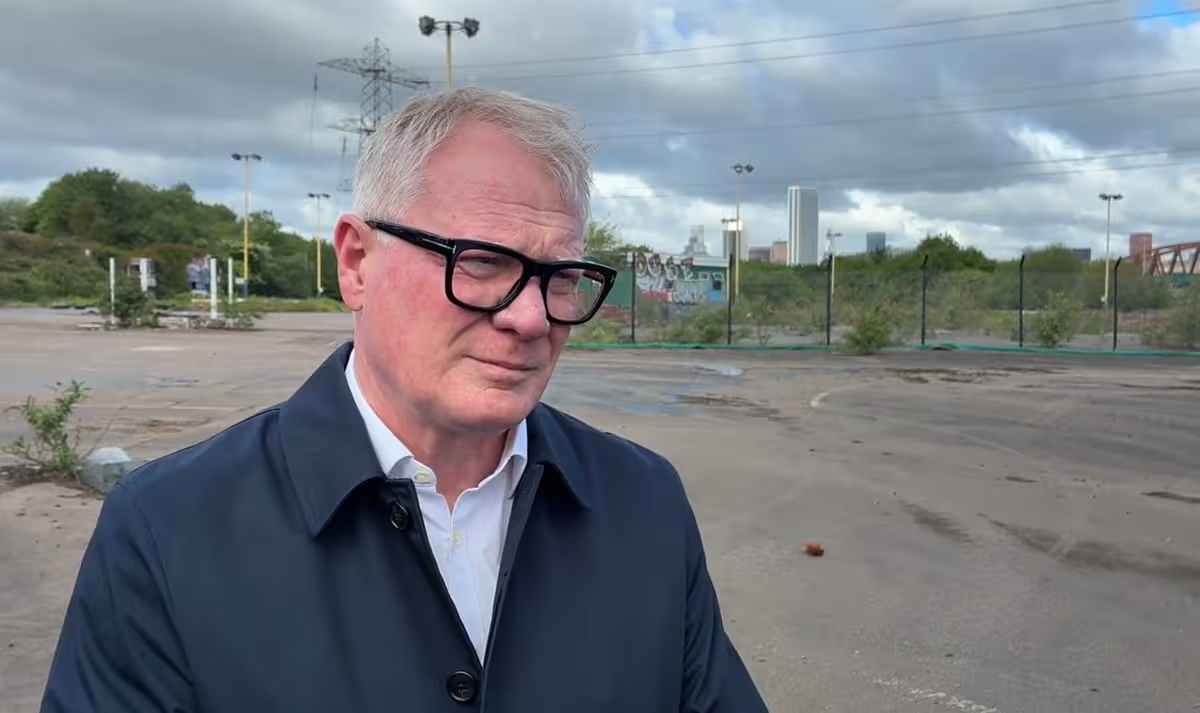
West Midlands Mayor Richard Parker at the Birmingham Wheels Park site
Cllr Pritchard added: “As the city evolves, we want to ensure we have the plans in place that guide the development and regeneration of Birmingham – for the benefit of all residents, businesses and nature here.”
A report, published ahead of a cabinet meeting next week, recommends 14 new conservation sites and extensions to six existing sites, as well as retention of sites and amendments to others.
Earlier this year, West Midlands Mayor Richard Parker launched Britain’s ‘biggest and most powerful’ Mayoral Development Corporation (MDC) to ‘significantly speed up’ the £11 billion regeneration of East Birmingham.
Mayor Parker said at the time that the MDC initiative will combine a range of powers including land acquisition, planning, business tax incentives and infrastructure funding.
He continued that this will allow it to cut through red tape, build investor confidence and accelerate investment into the area, benefiting enormous projects such as the Sports Quarter.