
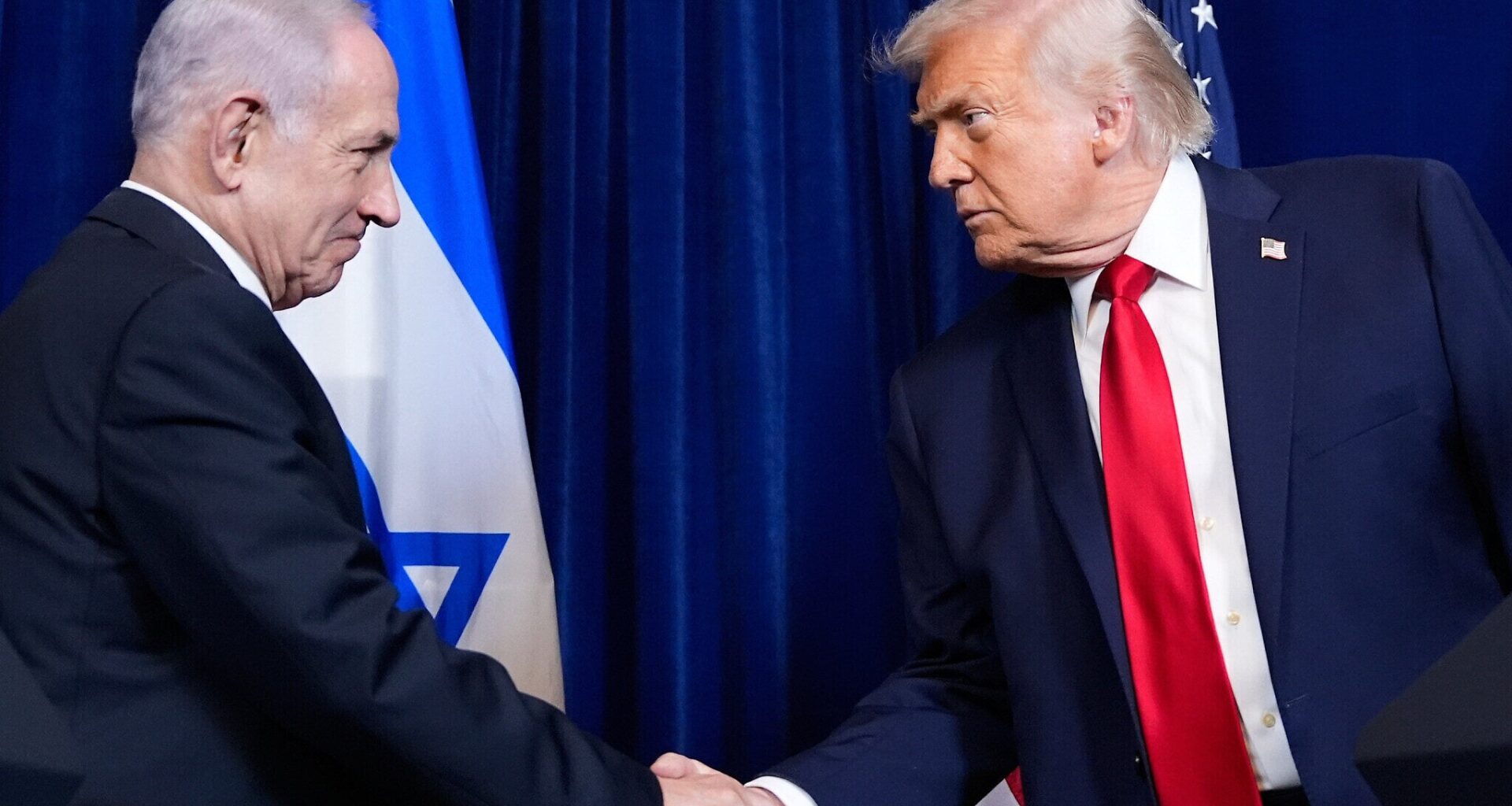
Prime Minister Benjamin Netanyahu will meet US President Donald Trump on Tuesday at the White House, the premier’s office announced Friday, in what will be the leaders’ first sit-down since the outbreak of the Iran war on February 28.
Netanyahu will fly to Washington on Monday and depart on Wednesday, according to a source familiar with the matter.
In addition to meeting Trump, Netanyahu’s Tuesday schedule will include attending a memorial service for the late, pro-Israel Republican senator Lindsey Graham.
The idea for a visit was first raised during a call between the two leaders on July 3.
After Graham died suddenly on July 11, Netanyahu announced that he would be flying to the US for his funeral.
Get The Times of Israel’s Daily Edition
by email and never miss our top stories
By signing up, you agree to the terms
He wanted to meet with Trump while in town, but the White House reportedly held off on scheduling a meeting, as Netanyahu’s popularity among both US political parties continued to nosedive.
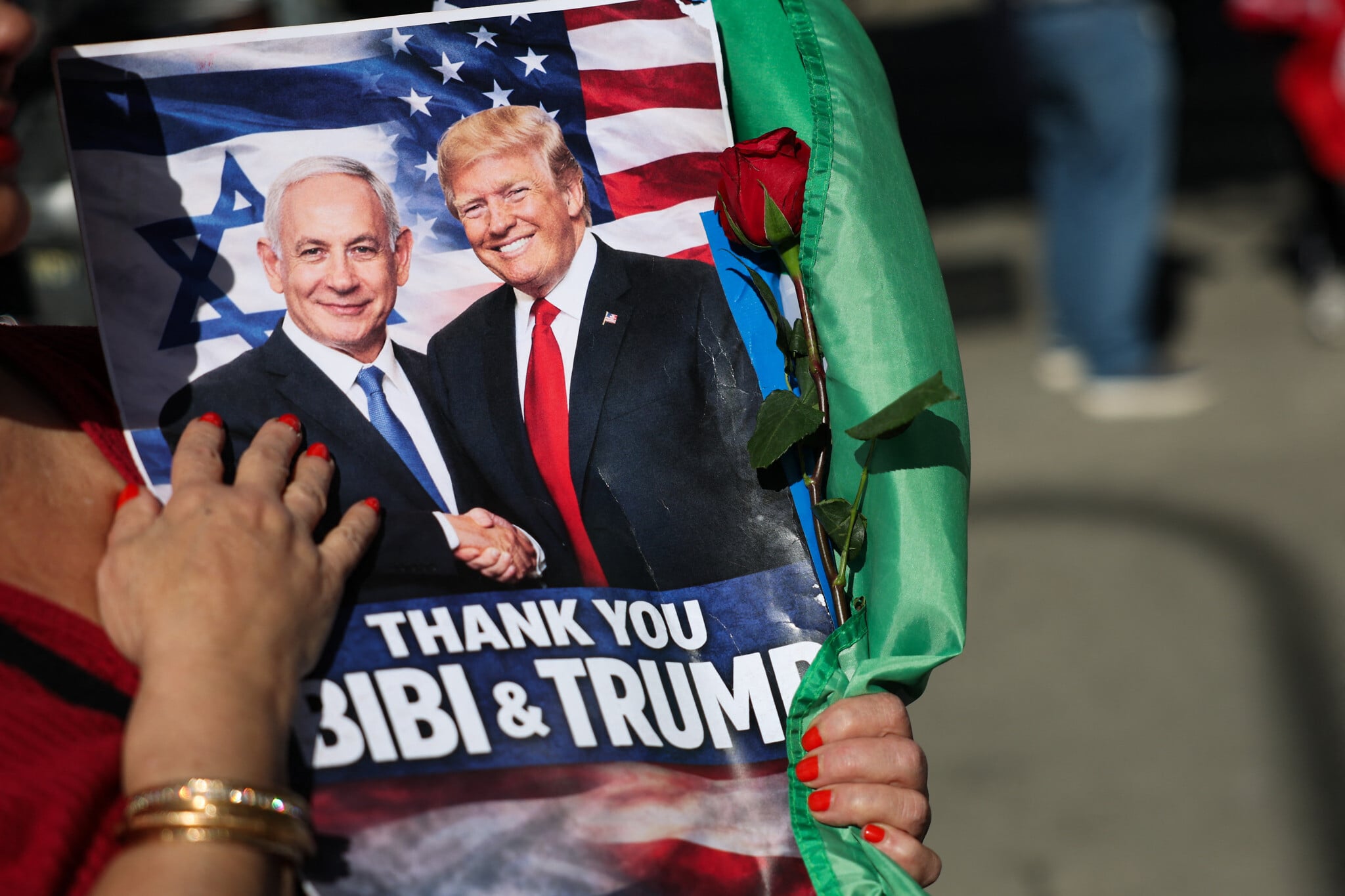
A person holds a sign supporting Prime Minister Benjamin Netanyahu and US President Donald Trump during a gathering of Iranian community members showing support for Israel and the United States, outside the Consulate General of Israel in Los Angeles, on March 5, 2026. (Patrick T. Fallon/AFP)
There were also reportedly concerns among Trump’s aides that if the US decided to launch a major attack after the president met with Netanyahu, Washington would again be accused of being dragged into the conflict by Israel.
The pair last met on February 11 in the White House, where Netanyahu made a high-stakes Situation Room pitch for the US to join Israel in another war against Iran, which included a series of predictions that didn’t pan out.
Netanyahu reportedly told Trump that Iran’s ballistic missile program could be destroyed in a few weeks; that Tehran would be so weakened by US-Israeli attacks that it would be unable to block traffic through the Strait of Hormuz; that it would likely be unable to strike US assets in neighboring countries; and that the regime was ripe for collapse, thanks to help from Kurdish fighters capable of invading the country from Iraq.
Less than three weeks later, the US and Israel launched a joint campaign against Iran.
Trump is now considering another major attack after the memorandum of understanding he signed last month to end the war has fallen apart due to disputes over control of the Strait of Hormuz.
Trump has been threatening to blow up Iranian energy sites, but has held off to date amid concerns that continued aerial attacks will be just as ineffective at shifting Iran’s position as previous strikes.
While Netanyahu aimed to meet Trump earlier this week, his office announced that his trip was put on hold due to the purported delay of Graham’s funeral to next week.
If Netanyahu ends up making the trip to Washington next week, it would suggest that a major US escalation against Iran is not in store, despite Trump’s repeated threats against Tehran.
Israel and the US carried out a multi-faceted misinformation campaign ahead of the June 2025 Israeli attack on Iran to convince Tehran that a strike on its nuclear facilities was not imminent. An element of the ruse was a video statement from Netanyahu announcing that there had been “significant progress” in hostage talks with Hamas, though foreign officials couldn’t figure out what progress Israel was speaking about.
Israel wanted Tehran to think it was still debating the matter of a potential strike with the White House. It thus announced that then-strategic affairs minister Ron Dermer and Mossad Chief David Barnea would take off for talks with US special envoy Steve Witkoff ahead of the next round of talks between Tehran and Washington, claiming the trip was meant to “clarify Israel’s position.”
In addition, Netanyahu’s office put out a statement stressing that, despite some media reports to the contrary amid the rising regional tensions, he would not be canceling his weekend vacation in the north. And preparations for the wedding of Netanyahu’s son Avner went ahead, even though it was cancelled.
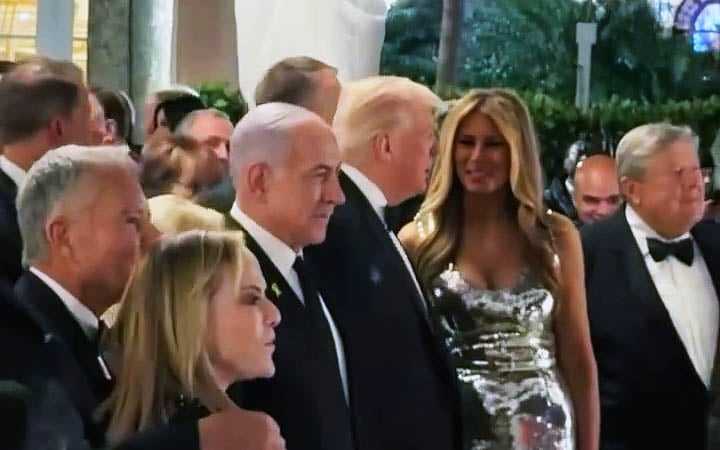
Prime Minister Benjamin Netanyahu stands next to US President Donald Trump and First Lady Melania Trump at the president’s New Year’s Eve party at his Mar-a-Lago resort in Palm Beach, Florida, on January 1, 2026. (Screenshot: Instagram, used in accordance with Clause 27a of the Copyright Law)
Netanyahu has already met with Trump seven times since the president returned to office — more than any other world leader.
In announcing the eighth meeting, the premier’s office said journalists from Israel would not be allowed to travel with Netanyahu on the taxpayer-funded Wing of Zion plane. No explanation was given, though, this is not the first time that the prime minister’s office has forced reporters to find their own way to the US, and his relationship with the press has long been cold.
In recent weeks, US media outlets have been reporting on mounting tensions between the US and Israel, amid Israel’s opposition to the MOU signed in mid-June.
Netanyahu’s office has argued that the reports have been exaggerated and that his close relationship with Trump has endured.
Trump publicly expressed frustration with Netanyahu last month over what the president said was Israel’s indiscriminate strikes against Hezbollah in Lebanon, as the conflict there risked upending the US-Iran MOU.
US Vice President JD Vance has been far more biting in his criticism, lashing out at far-right Israeli ministers who criticized the deal he helped negotiate, in addition to accusing Jerusalem of running an online misinformation campaign against the MOU.
The rhetoric against Israel has toned down in recent days, though, with Trump repeatedly insisting that his relationship with Netanyahu remains strong.
We can’t do this work alone.

The war with Iran has been draining for all of us in Israel. But when I heard about a high casualty incident – ballistic missile impacts in Arad and Dimona that left nearly 200 people wounded – I drank a cup of coffee, packed a bag, and headed south.
There, I spoke with Shilgit, the head of an after-school program for underprivileged youth. Standing outside her destroyed center, Shilgit said it was a miracle that no children were hurt and spoke about the community coming together in the hours since.
As a Times of Israel reporter, I’m committed to telling stories of resilience like Shilgit’s. But my colleagues and I can’t do this alone. If you value work like this, please consider joining our reader support group, The Times of Israel Community. Your financial support is essential to keep real human reporting like this going.
— Stav Levaton, military reporter
Already a member? Sign in to stop seeing this
You’re a dedicated reader

That’s why we started the Times of Israel – to provide discerning readers like you with must-read coverage of Israel and the Jewish world.
So now we have a request. Unlike other news outlets, we haven’t put up a paywall. But as the journalism we do is costly, we invite readers for whom The Times of Israel has become important to help support our work by joining The Times of Israel Community.
For as little as $6 a month you can help support our quality journalism while enjoying The Times of Israel AD-FREE, as well as accessing exclusive content available only to Times of Israel Community members.
Thank you,
David Horovitz, Founding Editor of The Times of Israel