
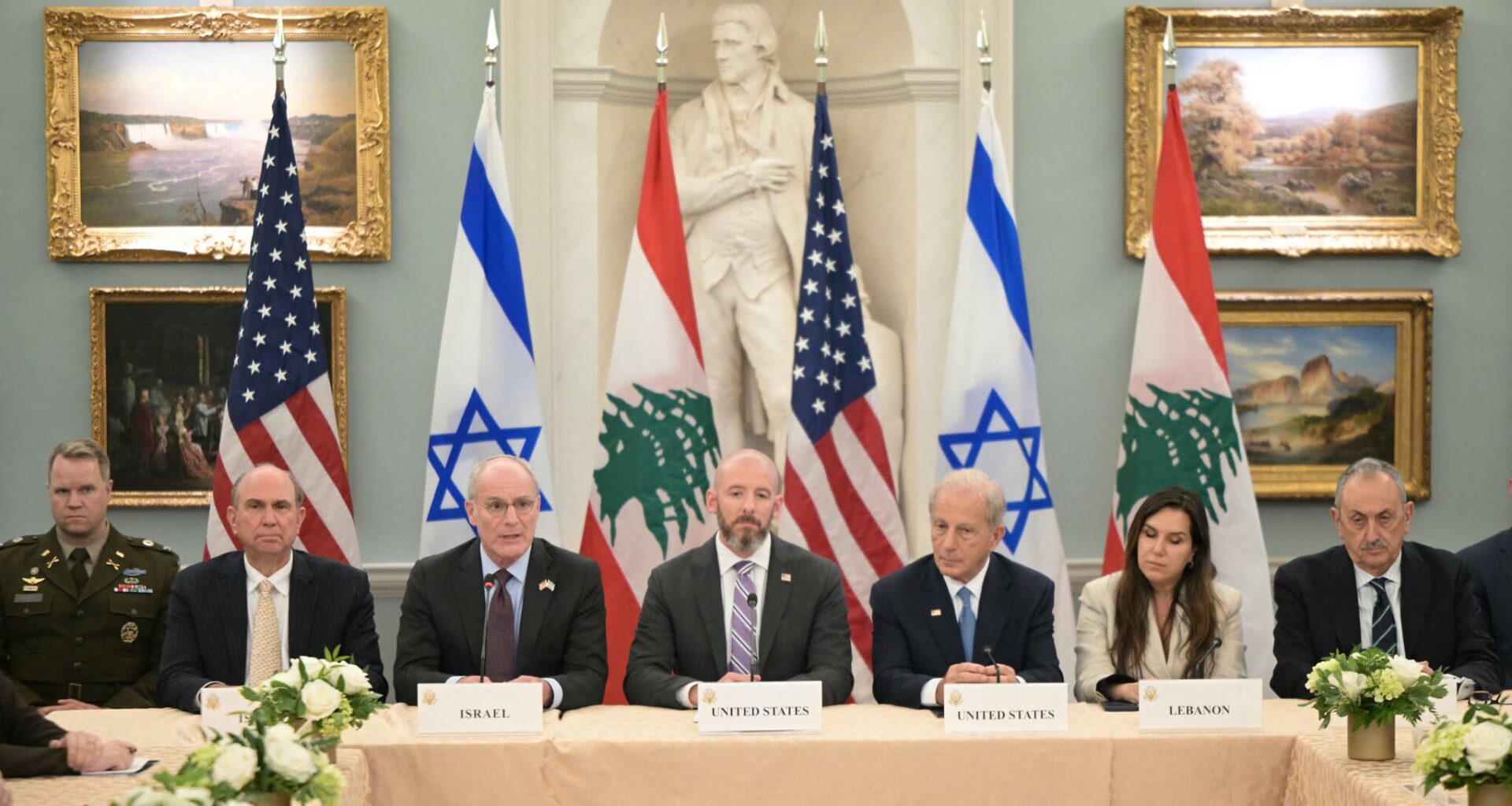
WASHINGTON — The next round of US-brokered talks between Israel and Lebanon will take place next week in Rome, the State Department confirmed on Monday.
Technical teams from each side will meet from August 4 to August 6 and focus on advancing the implementation of the framework agreement for an eventual peace deal that Israel and Lebanon signed last month.
“That includes expanding the pilot zone process, resolving all outstanding border issues, and working on a comprehensive peace and security agreement,” a statement attributed to a State Department official said.
Last month’s deal called for the Lebanese military to deploy in areas in southern Lebanon where the Hezbollah terror group had a military presence and influence, and for Israel to withdraw from its declared security zone in the south, dependent on Hezbollah disarmament.
The IDF carried out its first withdrawal from a pilot zone in southern Lebanon last week, though Beirut has since accused Jerusalem of hampering efforts by the Lebanese Armed Forces to operate in that area.
Get The Times of Israel’s Daily Edition
by email and never miss our top stories
By signing up, you agree to the terms
The State Department insisted the power transfer is going well, though there were concerns that Israel will not agree to perform additional withdrawals as the October Knesset election approaches.
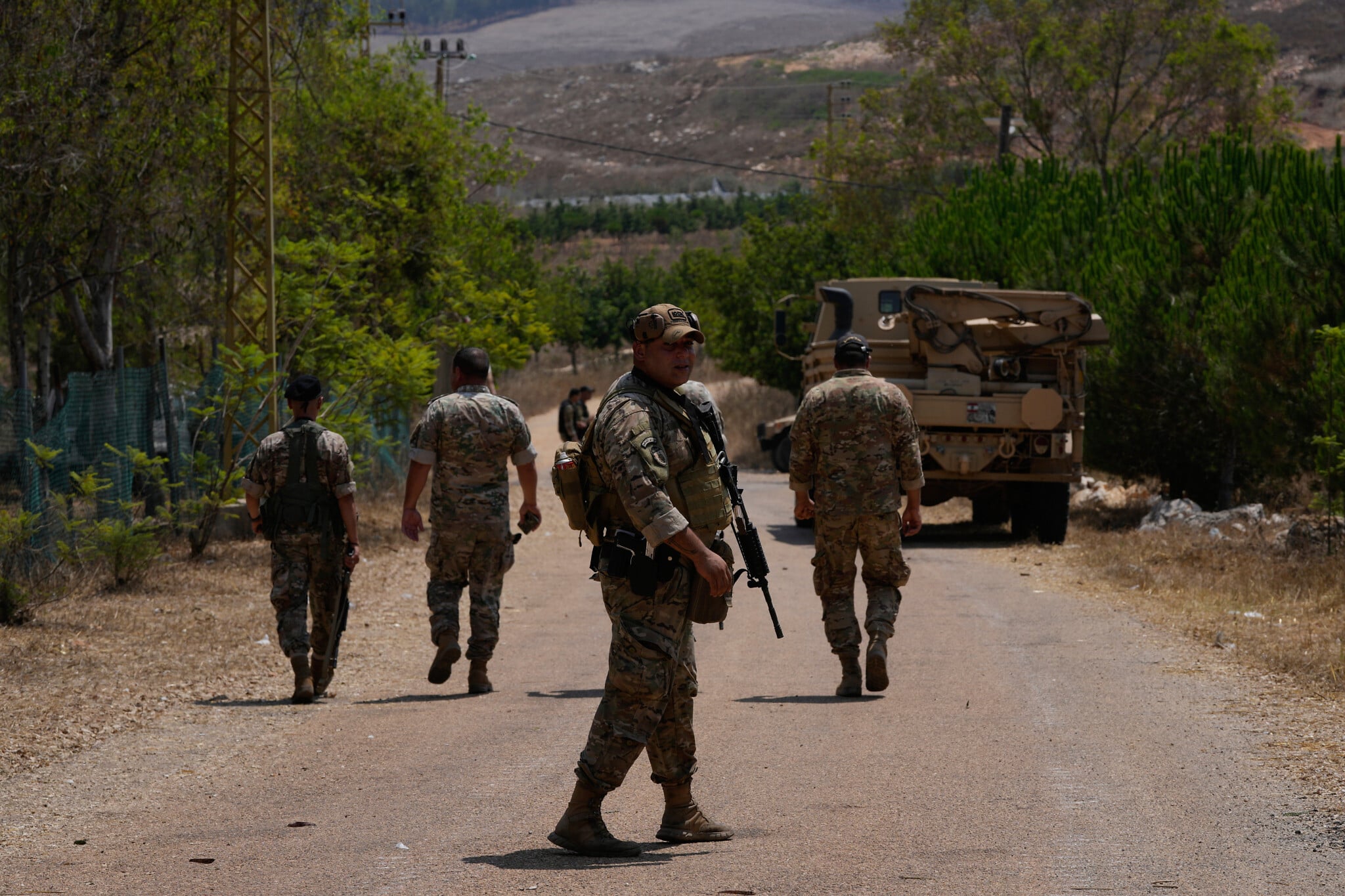
Lebanese army soldiers patrol at the entrance to the southern village of Zawtar Al Gharbieh, Lebanon, July 22, 2026. (AP Photo/Mohammed Zaatari)
“The experience of the initial zones will help us perfect pilot-zone implementation so it can expand in a phased manner,” the State Department statement said. “The Trilateral Framework is the only path to lasting peace. Fully implementing it is in the clear interest of both countries, and the Trump Administration is committed to its success.”
The latest war between Israel and Hezbollah started March 2, after the Lebanese terror group fired rockets into Israel to support Iran, its main backer. In response, Israel launched an aerial campaign and ground invasion in southern Lebanon.
Lebanon’s top political leadership criticized Hezbollah for dragging the country into another war, but also condemned Israel for its strikes and ground invasion.
Hezbollah has denounced the talks and agreement with Israel, but has not tried to sabotage it through military means.
Israeli officials have expressed skepticism that Lebanon’s armed forces are strong enough to disarm Hezbollah by force on their own, and say IDF troops are needed in the south to provide a buffer zone keeping the Iran-backed terror group away from its border.
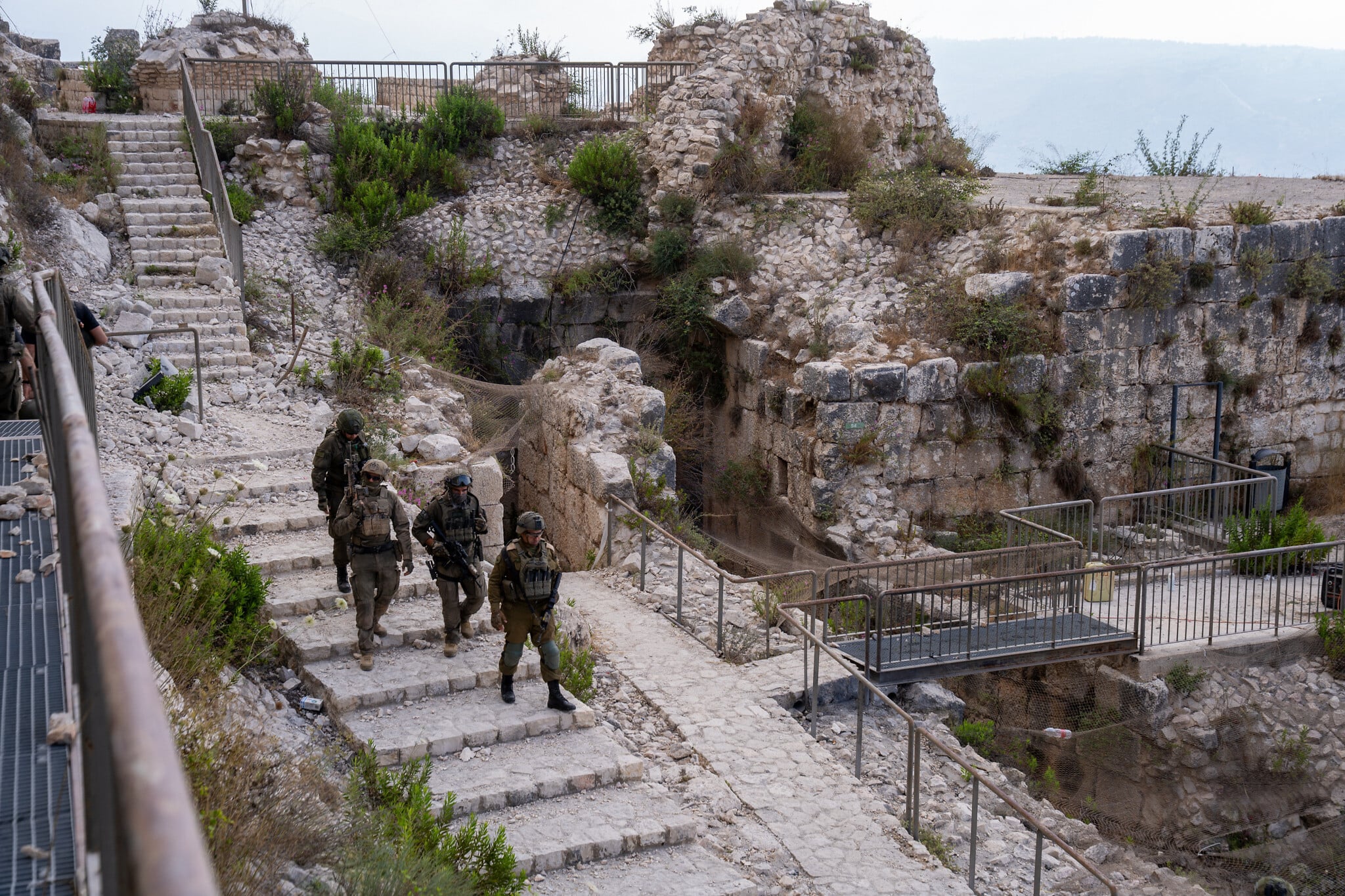
IDF troops are seen at Beaufort Castle in southern Lebanon, July 7, 2026. (Emanuel Fabian/Times of Israel)
More than a million Lebanese have been displaced by Israel’s military campaign since the war broke out in March.
More than 4,300 people have been killed, according to Lebanese authorities, which do not distinguish between combatants and civilians. Israel said late last month it had killed at least 2,500 Hezbollah operatives, including hundreds of members of the terror group’s elite Radwan Force.
Thirty-eight IDF soldiers and one Defense Ministry civilian contractor have been killed in southern Lebanon. Two civilians were also killed by Hezbollah rockets, and an Israeli civilian was mistakenly killed in the north by Israeli artillery shelling.
We can’t do this work alone.

The war with Iran has been draining for all of us in Israel. But when I heard about a high casualty incident – ballistic missile impacts in Arad and Dimona that left nearly 200 people wounded – I drank a cup of coffee, packed a bag, and headed south.
There, I spoke with Shilgit, the head of an after-school program for underprivileged youth. Standing outside her destroyed center, Shilgit said it was a miracle that no children were hurt and spoke about the community coming together in the hours since.
As a Times of Israel reporter, I’m committed to telling stories of resilience like Shilgit’s. But my colleagues and I can’t do this alone. If you value work like this, please consider joining our reader support group, The Times of Israel Community. Your financial support is essential to keep real human reporting like this going.
— Stav Levaton, military reporter
Already a member? Sign in to stop seeing this
You’re a dedicated reader

That’s why we started the Times of Israel – to provide discerning readers like you with must-read coverage of Israel and the Jewish world.
So now we have a request. Unlike other news outlets, we haven’t put up a paywall. But as the journalism we do is costly, we invite readers for whom The Times of Israel has become important to help support our work by joining The Times of Israel Community.
For as little as $6 a month you can help support our quality journalism while enjoying The Times of Israel AD-FREE, as well as accessing exclusive content available only to Times of Israel Community members.
Thank you,
David Horovitz, Founding Editor of The Times of Israel