
I have spent 46 years as an investment analyst, portfolio manager and chief investment officer in Canada’s mutual fund and pension industries. In that time, I’ve watched a great many markets react to a great many crises.
Almost always, the pattern is the same: uncertainty spikes, capital flees and months or years for confidence to return. So when the war reached Israel, I expected to watch a familiar story play out in Israeli markets — a sharp selloff, a long, slow climb back.
That isn’t what happened.
 Tom Czitron is an independent investment strategist with over 40 years of institutional experience as a portfolio manager, analyst and chief investment officer across Canada’s mutual fund and pension fund industries. (Tom Czitron/Courtesy)
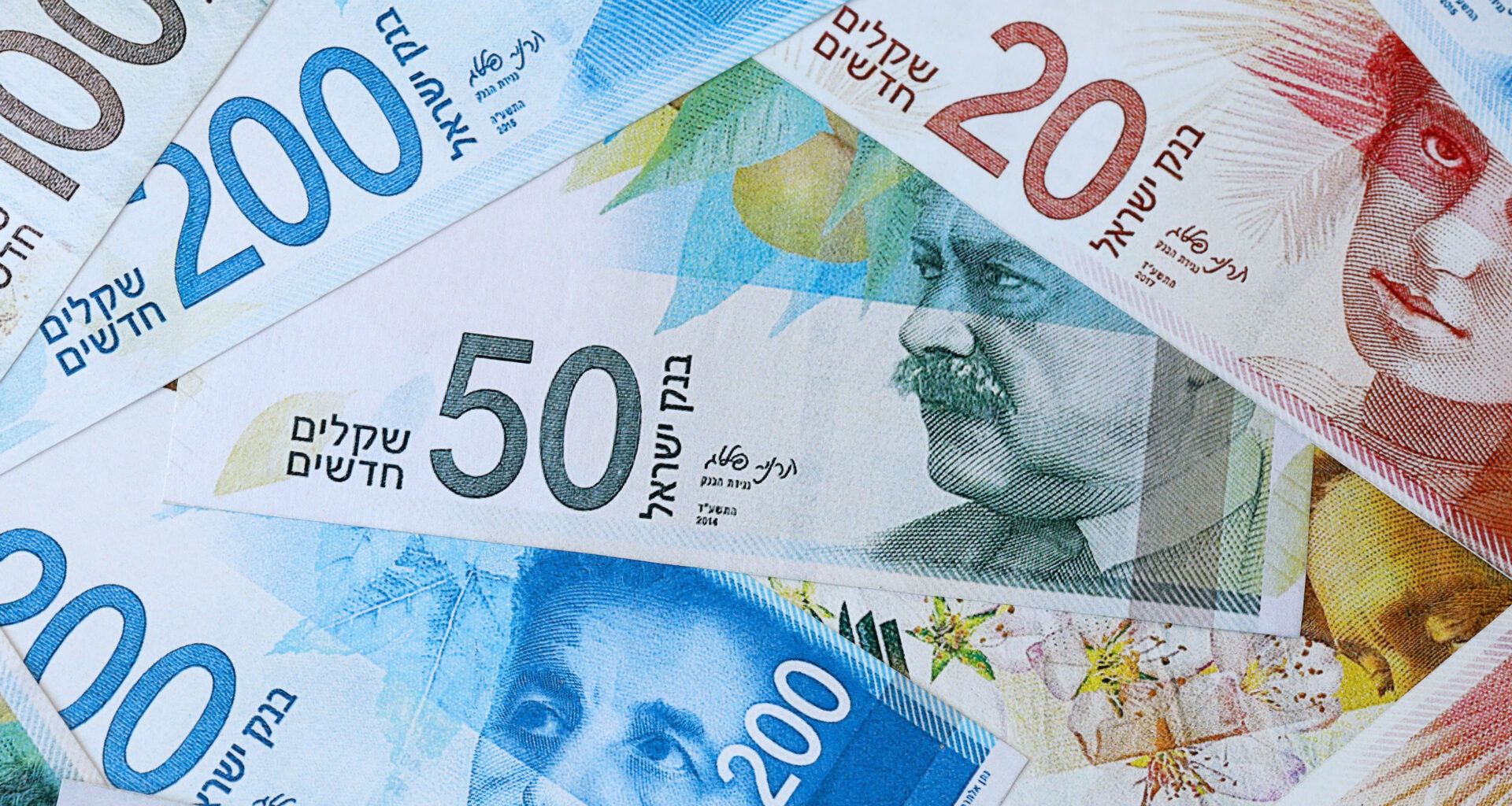
Instead, I watched Israeli equities absorb the shock and recover with a speed that, frankly, surprised me. The shekel, too, proved far sturdier than a textbook model would have predicted for a currency belonging to a small, open economy at war.
I don’t think this was luck. I think it was proof of something many investors, especially outside Israel, hadn’t fully priced in: this is a genuinely resilient economy, built on foundations that don’t crack easily under pressure.
I’ve come to think of it as Israel proving itself through fire. Not in a poetic sense — in a very literal, financial sense. Markets are supposed to be the most unforgiving judges of underlying strength. When money is on the line, sentiment and slogans fall away, and what’s left is a cold assessment of whether an economy can actually function, produce and grow under the worst conditions imaginable. Israel’s markets passed that test. And once a market passes a test like that, it tends to get re-rated, because investors now have real evidence instead of assumptions.
Here’s the irony I keep coming back to: the war itself may end up being the single best marketing event Israeli markets have ever had.
For years, global investors mostly ignored Israel — not out of hostility, but out of unfamiliarity. It’s a small market, thinly covered by Wall Street research, easy to overlook next to the U.S., Europe or emerging Asia. The war changed that.
Suddenly, the whole world’s attention was fixed on Israel, and what it saw wasn’t fragility — it saw a defense industry operating at a level few countries can match, a cybersecurity sector that global governments and corporations now understand they can’t do without and a technology base deep enough to keep functioning through mobilization and disruption. Investors who had never seriously looked at Israel before started looking. Some of them are still looking, and I suspect many more will follow.
Which brings me to the part of this I find most interesting as an investor: despite all of that, Israeli markets still trade at what I’d call a discount. The re-rating I just described is real, but it’s incomplete. Markets that have proven their resilience and demonstrated genuinely world-class strength in defense, cyber and technology don’t usually trade cheaply for long — but Israel, in relative terms, still does. That gap between what the market has proven and what it’s priced at is exactly the kind of opportunity that gets my attention after nearly five decades of doing this professionally.
The contrast becomes even sharper when I look at where a lot of Western capital is currently parked.
Much of Western Europe is dealing with the opposite problem: economies that are stable on the surface but structurally stagnant underneath — weighed down by demographic decline, heavy regulation and productivity growth that has essentially stalled for years.
There’s no single dramatic event forcing investors to reassess Europe the way the war forced a reassessment of Israel. It’s a slower, quieter erosion, which in some ways is harder for investors to see clearly. I’d rather own an economy that has been stress-tested and came through stronger than one that’s simply been avoiding a reckoning.
None of this means Israeli markets are without risk — no market is.
Geopolitical risk in Israel is real and won’t disappear. But I’d argue that risk is now better understood, not worse, than it was before the war. Markets had to price genuine uncertainty about whether Israel’s economy could function under sustained pressure. Now they don’t have to guess. They’ve seen it.
I write about Israeli markets every week, and I don’t say any of this as someone rooting for Israel out of sentiment alone, though of course I do care about the country and its people. I say it as someone who has spent his career trying to separate real value from narrative, and who believes the narrative around Israeli markets is still catching up to the reality.
For South Florida’s Jewish community — a community with deep, longstanding ties to Israel that go well beyond philanthropy — I think that gap is worth paying attention to.
Markets that prove themselves under the worst conditions tend to reward the investors who noticed early. I believe Israel just proved itself. The only question left is how many people were paying attention.
Tom Czitron is an independent investment strategist with over 40 years of institutional experience as a portfolio manager, analyst and chief investment officer across Canada’s mutual fund and pension fund industries. He publishes the Israel Investment Report, a weekly institutional-grade analysis of Israeli markets for international investors, and the Cantillon Letter, a global macro publication. He can be reached at tczitron@gmail.com.