
“Primarily, our concern is about censorship and its immeasurable cost,” they said.
“We can’t speak for the authors and their reasons, but nothing good ever results from silencing intelligent and engaged people who are speaking up against injustice. Complex conversations, such as those which occur at writers festivals, are crucial to addressing complex issues, locally and globally.”
Since the release of the code, at least 34 writers have withdrawn from the festival. Twenty-one sessions have been cancelled, with ticket holders to be issued automatic refunds.
High-profile departures include La Trobe history professor Clare Wright, who co-curated the La Trobe series within the festival, Overland editor and Stella Prize winner Evelyn Araluen, academic and author Randa Abdel-Fattah, and journalists and writers such as Jess Hill, Claire G. Coleman and Paul Daley.
Wright said she had curated nine sessions for the La Trobe stream of the festival’s program and was to have hosted the opening night gala and closing session, and appear on a panel discussing her own book, Ṉäku Dhäruk: The Yirrkala Bark Petitions, recently shortlisted for the Prime Minister’s Literary Awards.
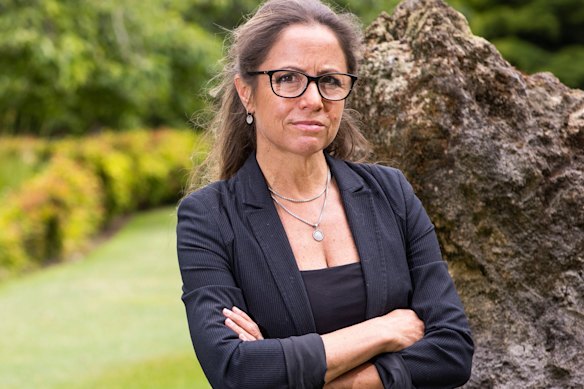
La Trobe University Professor and Bendigo Writers Festival co-curator Clare Wright.Credit: Paul Jeffers
Explaining her decision to withdraw, Wright said the fallout from the festival was a result of what happened when “managerialism trumps morality”.
“I think this is what happens when arts and educational institutions are not prepared to stand on principle against the significant pressure from Zionist organisations and other conservative lobbyists and outlets,” she said.
Wright, who is also a professor of history and professor of public engagement at La Trobe University, said there must be space for difficult conversations to be held at writers festivals and in places of higher education.
“The idea that you can risk-manage your way out of uncomfortable conversations when there is a genocide unfolding in real time, when violence against women is at epidemic proportions, when neo-Nazis are marching down our city streets, when we’re in the grips of a climate catastrophe, when sovereignty was never ceded in settler colonies, these are all the difficult topics we can and must discuss, respectfully and lawfully, at writers festivals and in places of higher education.”
Loading
Graphic novelist and artist educator Ita Mehrotra proceeded with her Saturday session, which was not part of the La Trobe-sponsored stream. However, she has since withdrawn from a Sunday panel she was to have shared with three other authors. All four pulled out, prompting the festival to cancel the event.
Mehrotra said she was deeply conflicted about participating but used her Saturday appearance to speak openly with attendees about the unfolding boycott.
“This kind of mass pullout isn’t something I’ve seen [before],” she said.
“We need spaces that allow for dialogue, that allow for uncomfortable conversations … to not allow for that is heartbreaking.
“It sets the tone for how people are thinking and the culture of the space. You’re going to crush dialogue. It’s a bleak future if this is how things are.”
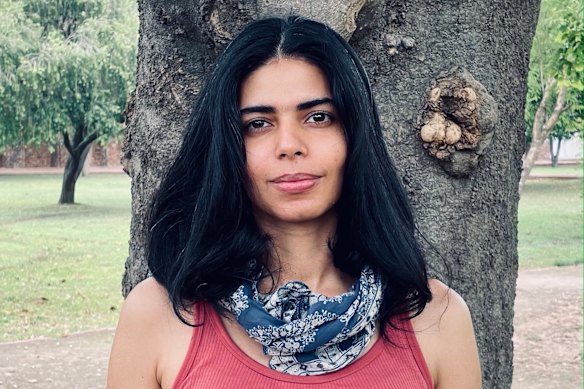
Graphic novelist and artist educator Ita Mehrotra.
Mehrotra added that authors and attendees shared a profound sense of disappointment about how events had unfolded.
“It’s not on the authors, it’s on a university having crushed this event,” she said.
In the wake of Bookish’s withdrawal, the store was flooded with customers on Saturday, many offering messages of support.
“Since publicising our decision, we have been overwhelmed with a wave of love and support from all over the country, with messages coming from authors, customers, human rights organisations, bookshops, industry organisations, and people we’ve never met,” the owners said.
“Obviously, it is a time of mixed emotions for Bookish as well as for the affected authors, but the overarching feeling in our shop today has been one of joy and solidarity. We are confident we made the right choice.”
The owners said the festival was the bookshop’s biggest weekend of the year and involved months of planning and extra work from their staff.
“It’s a logistical nightmare, a huge amount of extra work, and a massive financial blow to a regional small business,” they said.
“To be frank, we’d rather cop the financial loss and fight the good fight.”
La Trobe University defended its stance, stating that it was committed to fostering a culture that valued all forms of diversity.
“La Trobe University does not tolerate racism of any kind, including antisemitism and Islamophobia. La Trobe’s commitment to academic freedom and freedom of speech is consistent with our approach to creating safe environments for the free exchange of ideas,” a spokesperson said.
“Our Anti-Racism Action Plan, which includes a working definition of Islamophobia, was developed through extensive staff, student and community consultation, including of people with lived experience of racism.”
On Saturday, Bendigo City Council confirmed that 26 sessions had gone ahead since the festival opened on Thursday, including several sold-out events.
“Refunds are being provided for ticket holders for the cancelled sessions and in instances where ticket holders no longer wish to attend,” a council spokesperson said.
“A further eight sessions are scheduled for Sunday. By tomorrow afternoon, we will be pleased to have been able to deliver more than half the festival program.”
The Australian Society of Authors has been contacted for comment.
With Kerrie O’Brien
The Booklist is a weekly newsletter for book lovers from Jason Steger. Get it delivered every Friday.