
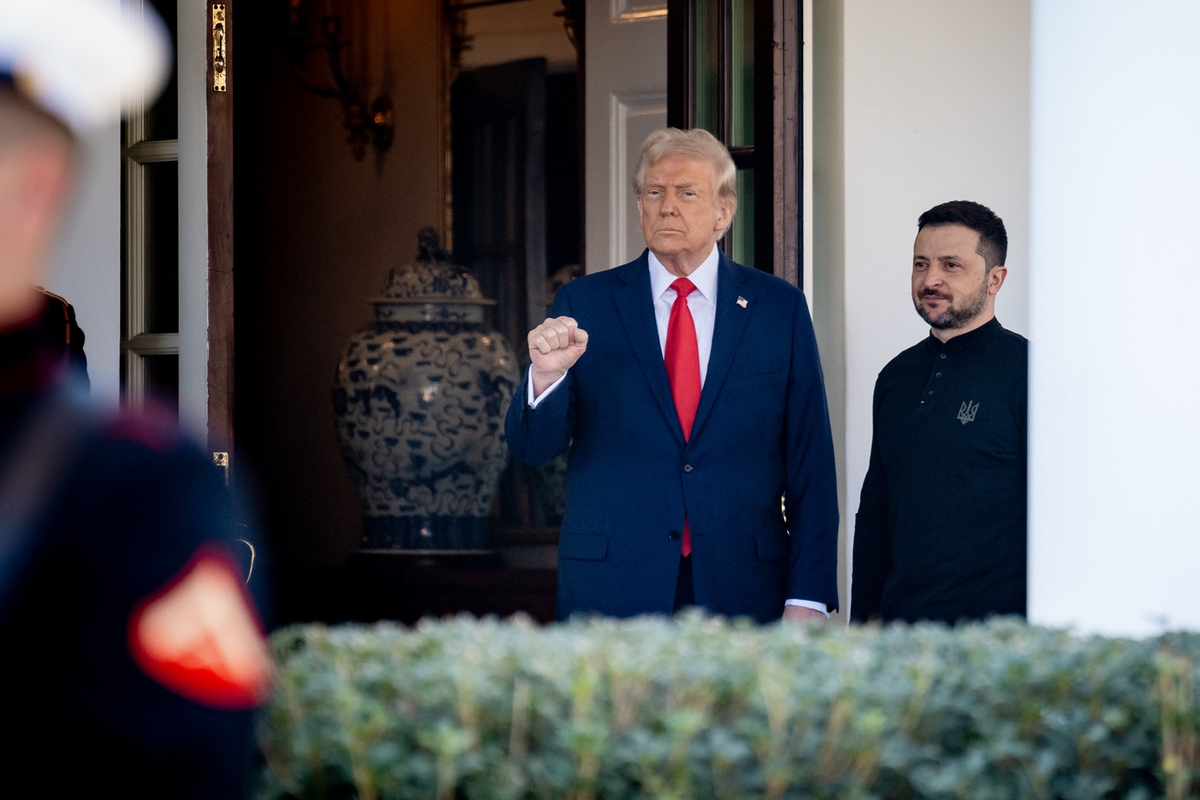
The high-stakes Friday summit between US President Donald Trump and his Russian counterpart Vladimir Putin in Alaska has been met with sharp criticism from foreign policy experts, who argue the meeting was a major propaganda victory for the Kremlin that left US leverage “idle.”
The summit’s inconclusiveness has intensified the focus on Ukrainian President Volodymyr Zelensky’s scheduled visit to Washington on Monday, which now carries immense significance.
JOIN US ON TELEGRAM
Follow our coverage of the war on the @Kyivpost_official.
A diplomatic “Masterclass” for the Kremlin
Analysts from the Center for European Policy Analysis (CEPA), a Washington think-tank promoting the alliance between the US and Europe, and other experts contend the last week’s summit was a diplomatic defeat for Ukraine.
Jason Israel, an Auterion Senior Fellow at the Defense Tech Initiative, says that “the optics of a warm welcome and farewell from the US to Putin suggest that Trump did not meaningfully adjust pressure or leverage related to negotiations.”
In the meantime, Israel added, “we should tragically expect the status quo horrific invasion of Ukraine by unconscionable methods to continue.”The optics of the meeting, including a “red carpet” reception for Putin on US soil, were particularly galling for Ukrainians.
Olga Tokariuk, a CEPA Fellow in Democratic Resilience, described the “five-star treatment” Putin received. “A red carpet, adjusted by kneeling American servicemen, was rolled in front of the man who committed numerous war crimes in Ukraine,” she said.
Other Topics of Interest
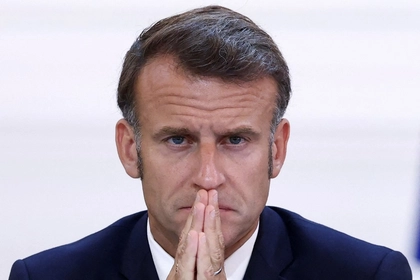
Macron: Russia Offers Only a ‘Capitulation’ Peace
Macron says European leaders will press Trump on Ukraine security guarantees, stressing Russia’s only offer is a “capitulation” peace.
Tokariuk also highlighted that Putin was given the opportunity to make a first statement at the joint briefing, an unusual practice for a guest. This display of cordiality was seen by many Ukrainians as a betrayal of the US promise to stand with Ukraine “for as long as it takes.“Beyond the optics, the substance of the meeting was equally grim. Tokariuk observed that “Putin had no intention to give up on his maximalist demands… and apparently faced no pressure from Donald Trump to do so.”
Instead, “the onus is once again on Ukraine to make concessions and agree to an unspecified deal, ‘a comprehensive peace agreement’ mentioned by the US president.”
A “worst possible outcome”
Yuriy Boyechko, CEO of US-based Hope for Ukraine, expressed deep disappointment with the summit, echoing the sentiment that it was a diplomatic defeat for Ukraine.
“Unfortunately, Putin got a 50-day pass to kill as many people as he can and do whatever he wants in Ukraine,” Boyechko told Kyiv Post.
He added that Russia is using the “empty peace talks” to regroup and launch new offensives. Boyechko believes that tough sanctions are essential to American credibility and that without them, Russia will not stop its offensive.
He warned that if and Western allies are not “serious,” more regions of Ukraine will be occupied by the end of the year.
Europe’s call for self-reliance
The summit’s results sent a clear signal to European capitals: they can no longer rely on US leadership alone. A joint statement from the leaders of eight Nordic and Baltic states underscored their deep distrust of Moscow.
Sam Greene, CEPA’s Director of Democratic Resilience, concluded that reversing this trajectory will require a “commitment to the near-term reduction of European dependence on US decision-making” and a concerted effort by European nations to build their own credible deterrence against Moscow.
Zelensky’s pivotal visit
In the wake of the inconclusive Alaska summit, all diplomatic attention has shifted to Washington and President Zelensky’s scheduled visit.
Ukrainian and European leaders, who were excluded from the Alaska talks, have been coordinating their positions with Kyiv ahead of this crucial meeting.
Their primary concern is that “no decisions on Ukraine” will be made without their involvement. As Olga Tokariuk put it, “This is arguably one of the most important outcomes of the meeting in Alaska: the final realization, for Ukraine and Europe, that the US under Trump is no longer willing to stand by its democratic allies, while instead it is embracing the tyrants.”
The immediate goal of the Washington meeting appears to be the setting of a new path for peace talks. Trump has stated his preference for moving directly to a full peace agreement rather than a mere ceasefire – an approach that stands in contrast to the prior stance of Ukraine and its allies.
The success of Zelensky’s visit will hinge on whether he can secure firm US security guarantees and ensure that any future talks with Russia do not come at the cost of Ukrainian territory, a prospect that Yuriy Boyechko has called “the worst possible outcome.”