
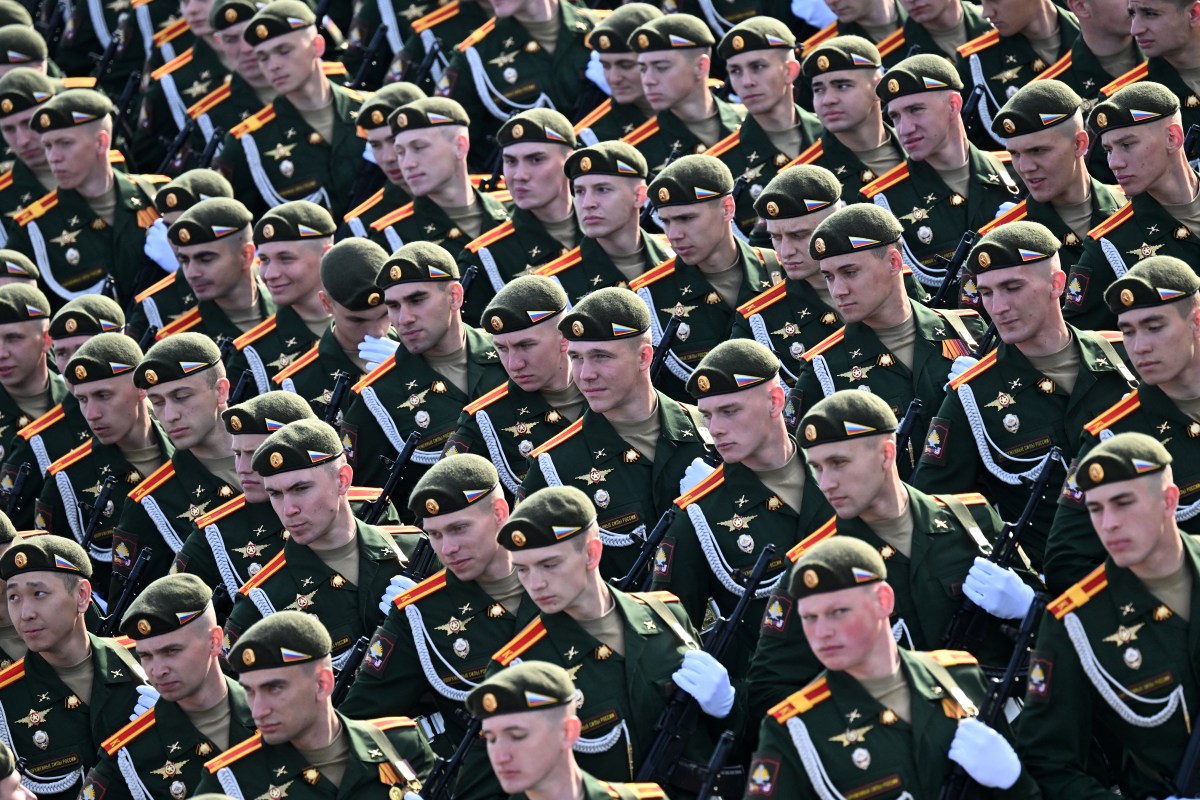
A partial mobilization Vladimir Putin announced in September 2022 for his invasion of Ukraine was never revoked, just managed quietly to avoid panic, as reports of a new 500,000-strong draft threaten a new battlefield dimension to the war four years on.
The Kremlin is looking at ways to draft troops, including imposing martial law to prevent civil unrest, and increasing restrictions on the population, according to Russian opposition news outlet Verstka, citing unnamed Moscow officials.
Ukrainian President Volodymyr Zelensky said between 300,000 and 500,000 troops could be drafted following Russia’s parliamentary elections in September, signaling Putin’s intention to continue fighting at all costs.
Read More on World
“Further mobilization would help Russia prolong the war but probably wouldn’t fundamentally alter its outcome,” John Hardie, deputy director, Russia Program at the Foundation for Defense of Democracies (FDD), told Newsweek.
However, a draft the size that Zelensky warned of would be a major strategic concern for Ukraine and its Western allies, said Yuriy Boyechko, CEO of Hope for Ukraine, which helps communities on the war’s front line.
“Sheer numbers allow Moscow to sustain a protracted war of attrition, absorb heavy front line losses, and fortify defensive positions against future counteroffensives,” he told Newsweek.
Former Russian president Dmitri Medvedev denied mobilization was imminent, saying that 200,000 volunteers had signed contracts to serve in its armed forces in the first half the year.
Newsweek has contacted the Kremlin for comment.
 Kremlin’s Move Toward Mobilization
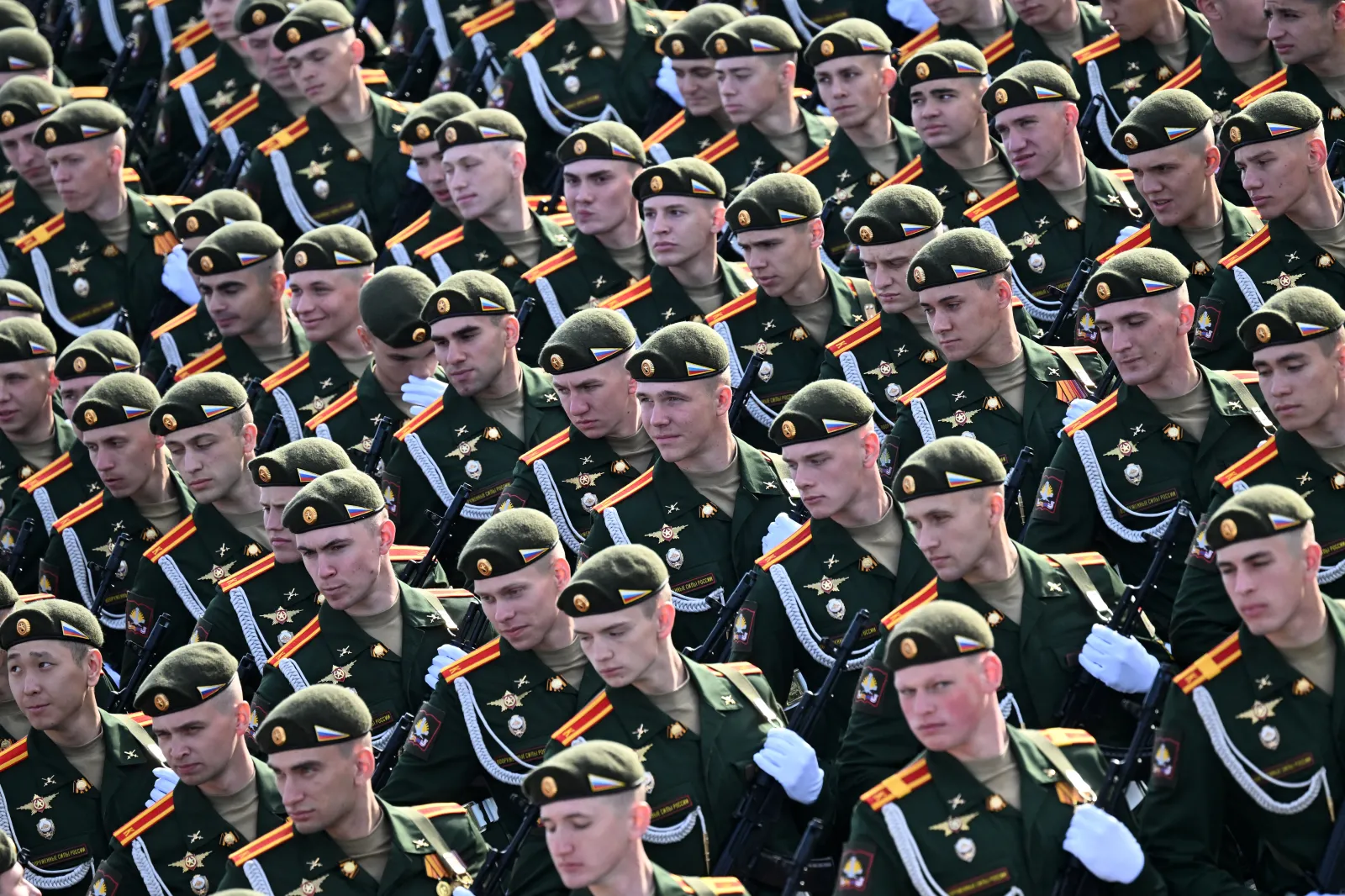
Russia’s parliamentary elections on September 18-20 will be choreographed in favor of the ruling United Russia party in a result Putin will use as a mandate to push the militarization of society for a long-term war that shows no signs of ending.
Rumors of a new post-election draft have abounded all summer as the Kremlin seeks to replenish casualties, which Zelensky said ahead of his White House meeting with Donald Trump, numbered 225,500 losses this year alone, including 131,000 killed.
“If Putin does decide to mobilize again, it would mean he has recognized the war is on a losing trajectory but has opted to double down rather than moderate his demands,” said Hardie from the FDD, a Washington, DC think tank.
“Putin has thus far avoided this option because it carries significant costs and risks. It would trigger another mass exodus from the country and could spark domestic unrest against an increasingly unpopular war,” he added.
The Kremlin will be keen to avoid a repeat of queues of Russians crossing into Georgia, Kazakhstan and Mongolia to flee the draft of September 2022 that followed Ukraine’s offensive in Kharkiv, as policies are put in place that could facilitate the next call up.
These include Putin signing a law in November 2025 changing the Russian military conscription administrative process to a year-round cycle, instead of every six months, easing the process of calling up conscripts and reservists.
The mobilization system has been digitized and largely automated with comprehensive monitoring of people’s movements and oversight of military registration records for everyone who could be mobilized or recruited under contract.
Putin signed a law on July 26 expanding authorities’ access to information about Russian military personnel and their families, which would reduce processing times.
Hardie believes that beyond filling out any existing units that may be undermanned, Russia would struggle to find sufficient equipment and officers if it wanted to form additional units.
The steep decline in force quality since 2022 due to heavy casualties coupled with a dramatic expansion of the force has increasingly limited Russia’s ability to plan and execute offensive operations at scale, he said.
“Russia’s main issue right now isn’t really manpower—it’s force quality,” he said.
Additional troops may allow Russia to grind through the rest of Donetsk Oblast, “but I expect Russia still won’t be able to break Ukraine’s defense or impose a draconian settlement on Kyiv.”
 Challenges For Ukraine
Giorgi Revishvili, a defense analyst behind the Russia Analyzed Substack, said that without mobilization it is virtually impossible for Russia to create new formations and units.
“The Russian General Staff understands perfectly well that building a large strike force capable of conducting major offensive operations is impossible without additional mobilization measures,” he told Newsweek.
“This would pose a challenge for Ukraine. Much will depend on the scale of Russia’s mobilization and how quickly newly mobilized personnel can be trained and integrated into combat units,” he said.
However, Russia’s deteriorating economic situation, high casualties and Ukraine’s deep-strike campaign on oil sites and retail sites like Wildberries will add pressure on the Kremlin over any draft.
Also, Russia faces challenges in training, equipping, and commanding a large intake which are likely to add to high casualty rates rather than swift operational breakthroughs.
Russia has denied any mobilization rumors, with Medvedev, deputy chairman of Russia’s Security Council, calling them “a lie spread by the enemy.”
Meanwhile, there is no clear word on the draft with the Institute for the Study of War (ISW) describing it on Tuesday as, “a very personal decision for Putin that is contingent on his personal perception of the battlefield situation.”
Exiled opposition activist and Putin critic Mikhail Khodorkovsky wrote on his Substack How to Slay a Dragon on Tuesday that recruits “will be sent to the front with little to no training, serving primarily as a meat shield for professional units.”
As Ukraine produces massive numbers of drones, “throwing untrained men into combat will not alter strategic outcomes,” he added, “it will simply raise the monthly death and injury toll from 30,000 to 50,000.”
Also, a new wave of mobilization would require tighter exit controls as the Kremlin looks to keep skilled workers and specialists inside the country, Khodorkovsky wrote.
Russians will have to choose between passive compliance, flight, or refusal and the regime has the problem that Russian prisons do not have the physical capacity to hold even two months of mass draft refusers, he said.
However, Boyechko from Hope for Ukraine said that while mass conscription does not guarantee decisive territorial gains for Russia, “it forces Ukraine to consume vast amounts of resources and rely even more heavily on continuous Western precision artillery, drone technology, and air defense to offset the sheer volume of manpower.”
Contact Newsweek editors for this story: John Fitzpatrick and Robert Greenall