
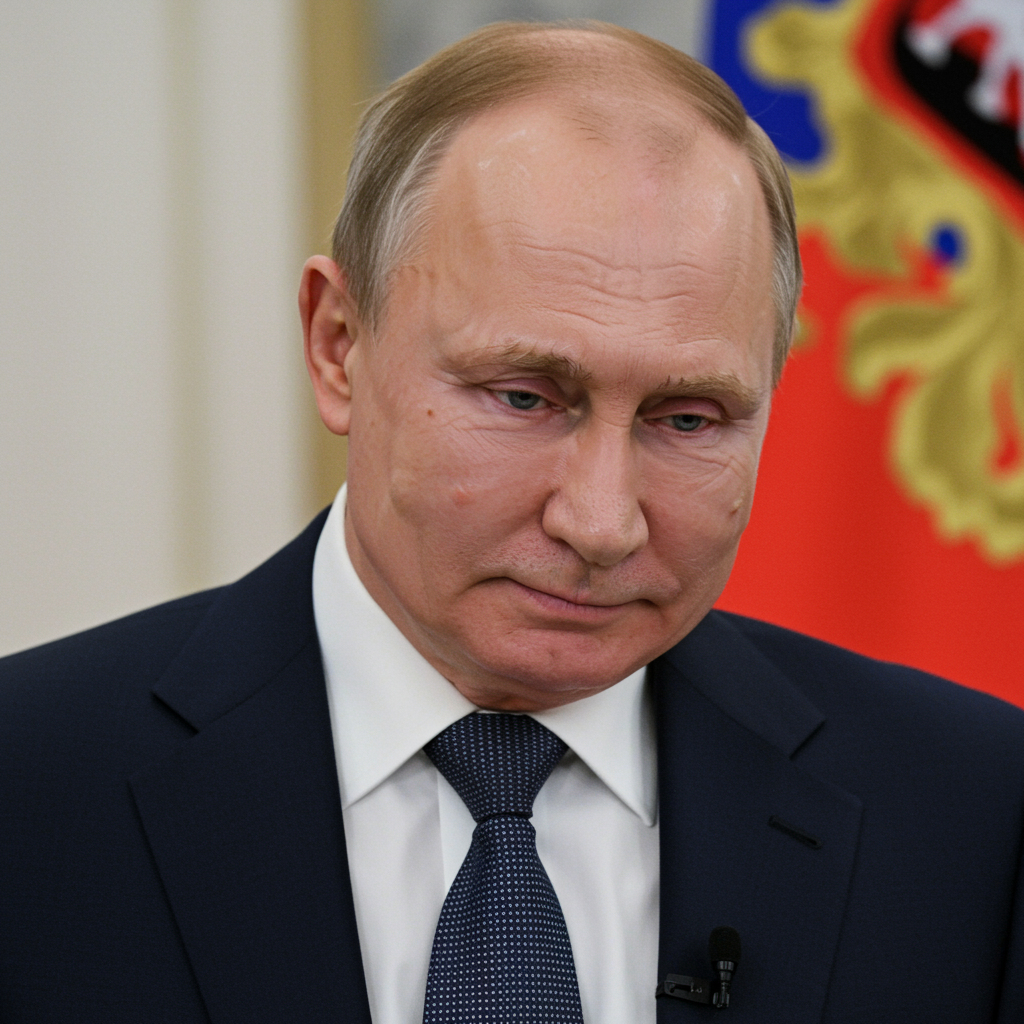
Today, Russia is on a collision course with economic and military reality. While Putin continues his maximalist demands for total control of Ukraine and to turn it into a vassal state for his Neo Russian Empire, the reality of the war is starting to close its jaws on the Russian state.
While over the winter of 2025 the Russian military continued to make incremental gains at enormous cost, the Ukraine adopted Fabian and delay tactics while their domestic military and industrial capability continued to expand and improve. This was due in no small part to Russia’s terror tactics on civilian cities trying to force the population to submit while the Ukrainian industrial base both became more dispersed and entrenched.
Then starting in the Spring of 2026, the tide of war began to change. Ukraine was able to stop the Russian advance in overall net territory. A rapidly rising number of drone strikes began to systematically destroy Russia’s oil infrastructure, thus beginning to cripple the hard currency economic engine that sustains the war effort. Crimea also began to be systematically starved and the Russian shadow fleet in the Black Sea was dramatically reduced over the summer. Ukraine is now operating several drone campaigns across multiple operational vectors that is slowly pushing the Russian state towards a crisis.
Given these facts, a sensible and logical observer would think that Putin would recognize that he achieved the most he was going to get through military means and it was time to cash his chips in and agree to a genuine cease fire with Ukraine. Yet, Putin continues his military campaign with a single mindedness that almost seems obsessive, seemingly oblivious to the changing forces affecting Russia.
While Putin does have a good grasp on how to control the Russian state apparatus and society, that does not mean that Putin, nor the Russian state itself, is immune to external forces. Russia is simply too big to willfully ignore what is happening to it through a protracted war, loss of key international political allies namely Hungary’s Victor Orban and Syria’s Assad regime, and mounting economic stress. Yet Putin believes that he, his Siloviki regime and Russia itself has enough mass to shrug off all of this and treat his imperial ambitions as a fait accompli.
Yet, Russian history clearly shows otherwise. While the Russian state has both enormous natural resources and human capital, it has often treated those attributes as a crutch rather than as an advantage. For example, during WW 1, Russia fielded enormous armies of men and equipment against the empires of Germany and Austria-Hungary. And yet, disastrous battles like Tannenberg and the Gorlice-Tarnów Offensive effectively destroyed the Russian army in the field and shattered morale. Even the tactically successful Brusilov offensive in 1916 was a pyrrhic victory and not enough to prevent the loss of faith in the Tsarist empire. This was compounded by Tsar Nicholas II bumbling command of the army, the attrition of the old imperial officer corps and replacement with rushed conscripts and the near collapse of the Russian economy leading to starvation and frozen winters. Tsar Nicholas II ignored the plight of the Russian people and the dreadful state of the Imperial Russian Army during WW1, thus leading to the fall of the Russian state.
And here we see a similar story playing out with Putin, the 21st century tsar. The Russian Army today is suffering mounting losses due to Ukraine’s advanced drone tactics and growing industrial capacity. The Russian economy is contracting and the Ruble has lost much of it’s value due to rampant inflation. But most importantly is that Putin can’t seem to deliver the win that he promised to his people and his allies in Beijing, Minsk and Pyongyang. The aura of the invincible modern Russian army has been shattered and now even finds itself in retreat is certain areas. Russia also is beginning to run up against the limits of it’s soldier replenishment strategy as the jails have been emptied, the young Russians that are wiling to fight for money are either dead or crippled and foreign mercenaries are becoming harder to enlist as the war now seems to be turning against Russia. And just as the Imperial Army of WW1 lost the last of it’s officer corps, the modern Russian Army of today has been forced to go from mechanized units to low trained, expendable assault units, resulting in mounting casualties.
But will Putin recognize this trend and agree to a ceasefire? No he will not. He exists inside a perfectly curated political bubble in the Kremlin. He either fails to recognize the deteriorating situation or chooses to ignore it. Either way, like a gambler that keeps coming back to the tables to “win it all back”, he will keep pushing his war to the breaking point.
And that is where the real danger lies. Because there is a real possibility that the Russian state’s breaking point is lower than Putin’s. It’s easy to ignore reality when one is ensconced on a throne in Moscow, while the southern Russian Army and Navy continues to get chewed up in Ukraine trying to deliver Putin’s political ambitions. At what point does the average Russian solider say it’s enough? These boys are armed and can reach a point there they decide to point their rifles north towards Moscow instead of west towards Kyiv. And with a Russian populace that has grown increasingly fatigued and despondent at their plight, these could be the same conditions that led to Tsars Nicholas II’s fate in that basement in Yekaterinburg in 1918.
We’ll get straight to the point: The financial hardships that Daily Kos is facing this year are tough.
We continue to be paywall-free. We continue to be supported by our readers, not billionaires or corporations. But we need to bring in more revenue. We are leaning on our community more than ever to help make ends meet.
Power matters.