
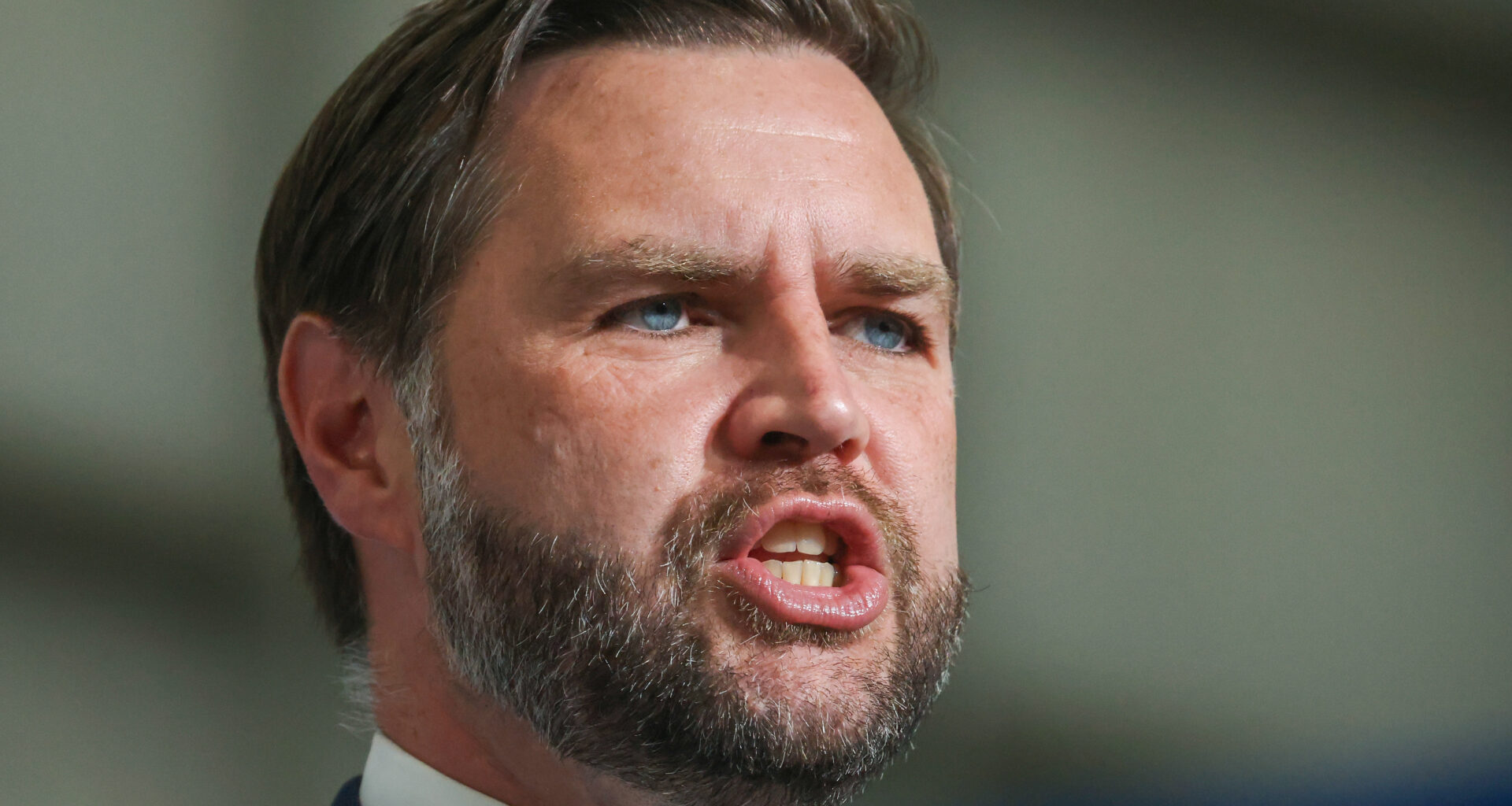
When Vice President JD Vance discussed foreign influence and American policy on Joe Rogan’s podcast this month, he likely believed he was making an argument about geopolitics. Many Jewish listeners heard something else entirely. They heard echoes of one of history’s oldest accusations: that Jews wield hidden influence or possess loyalties separate from the nations in which they live.
I do not doubt that Vance intended to raise a legitimate policy question. In a democracy, foreign influence, lobbying and government decision-making should be debated openly. But many Jewish Americans were responding to something deeper than a disagreement over foreign policy. They were hearing language through a historical tradition shaped by centuries of studying how prejudice develops before persecution begins.
The Holocaust did not begin with Auschwitz. It began years earlier with propaganda, conspiracy theories, respectable speeches and ordinary conversations that gradually taught people to see their neighbors differently.
That understanding lies at the heart of Holocaust education. At the Auschwitz Jewish Center Foundation, our mission is not only to preserve the memory of what happened. It is to understand how it happened and to apply those lessons before history reaches its darkest conclusions again.
Many Jews were not claiming that every discussion of foreign policy was antisemitic. They were responding to language that resembled patterns they have spent generations studying. Historical memory functions like a smoke alarm. It notices resemblance before certainty because history has too often shown what can happen when warnings come too late.
For centuries, antisemitic movements portrayed Jews as wielding hidden power or divided loyalty. The accusations evolved over time, from antisemitic forgery “The Protocols of the Elders of Zion” to more recent rhetoric that substitutes “Zionists” for “Jews” while repeating familiar narratives about hidden influence or divided loyalty. The vocabulary changes. The underlying pattern can remain recognizable.
None of this makes Jews right about every controversy. Historical memory is not prophecy and every generation must test old patterns against present realities. But after nearly two thousand years as a dispersed minority, Jews have accumulated unusual expertise in one narrow field: understanding how societies gradually change their minds about Jews. That experience deserves consideration rather than dismissal.
Statesmanship therefore requires more than choosing words carefully. It requires historical imagination, the ability to understand how different citizens have been taught to hear.
Democracies depend on vigorous disagreement. Every government, including Israel’s, should remain open to criticism. Foreign policy should be debated freely. But democratic debate is strongest when it focuses on actions rather than identities, evidence rather than inherited suspicion and policies rather than assumptions about entire peoples.
The purpose of Holocaust education is not to prevent difficult conversations. It is to make those conversations more responsible. Remembering the Holocaust means understanding not only how hatred reached its worst consequences but how it first entered public life.
Democracies ask minorities to trust majorities. That trust depends, in part, on the willingness of majorities to understand why certain words awaken concerns that history has taught others not to ignore.
The lesson of the Holocaust is not simply to remember what happened. It is to recognize how it begins.
History whispers before it shouts. The question for every democracy is whether it has learned to listen.
Simony serves as director general of the Auschwitz Jewish Center Foundation.