
Today marks the final sailing of the Aratere which is being retired because it is no longer up to scratch. This will mean that rail freight will be affected. The Aratere was the only rail enabled ferry.
One would wonder how this could occur. After all the Aratere’s weaknesses had been known for a while and replacement ferries had been purchased and were under construction.
But this Government cancelled those contracts in what looks like a weak attempt to try and embarass the previous Government.
But at some cost.
There is this recent weird press release from the Government which is all spin and no substance. It celebrates the Government signing a $141 million settlement with Hyundai for the Government walking away from the deal. As $300 million was originally provisioned this is presented as some sort of win.
Winston Peters claims:
Doomsayers said cancelling the contract would cost the taxpayer the full $551 million contract value, but these are some of the same people who accepted Project iReX ballooning from $1.45 billion when approved in 2021 to Treasury warning it was on course to $4 billion in 2023 thanks to eyes-bigger-than-their-mouths ambitions and absentee management. Even their criticisms blew out.
“So the factual final settlement is net $144 million, not:
$300 million as reported by RNZ, who said that ‘may not be enough to cover all the costs.’
$300 million as headlined by The Post.
$1.16 billion as stated by Labour Transport Spokesperson Tangi Utikere.
But the “factual final settlement” is not the total loss on the project. And we will have to see the final deal with Hyundai to work out how much more the new ferries are going to cost, and how inferior their quality is compared to the ferries that Labour had purchased.
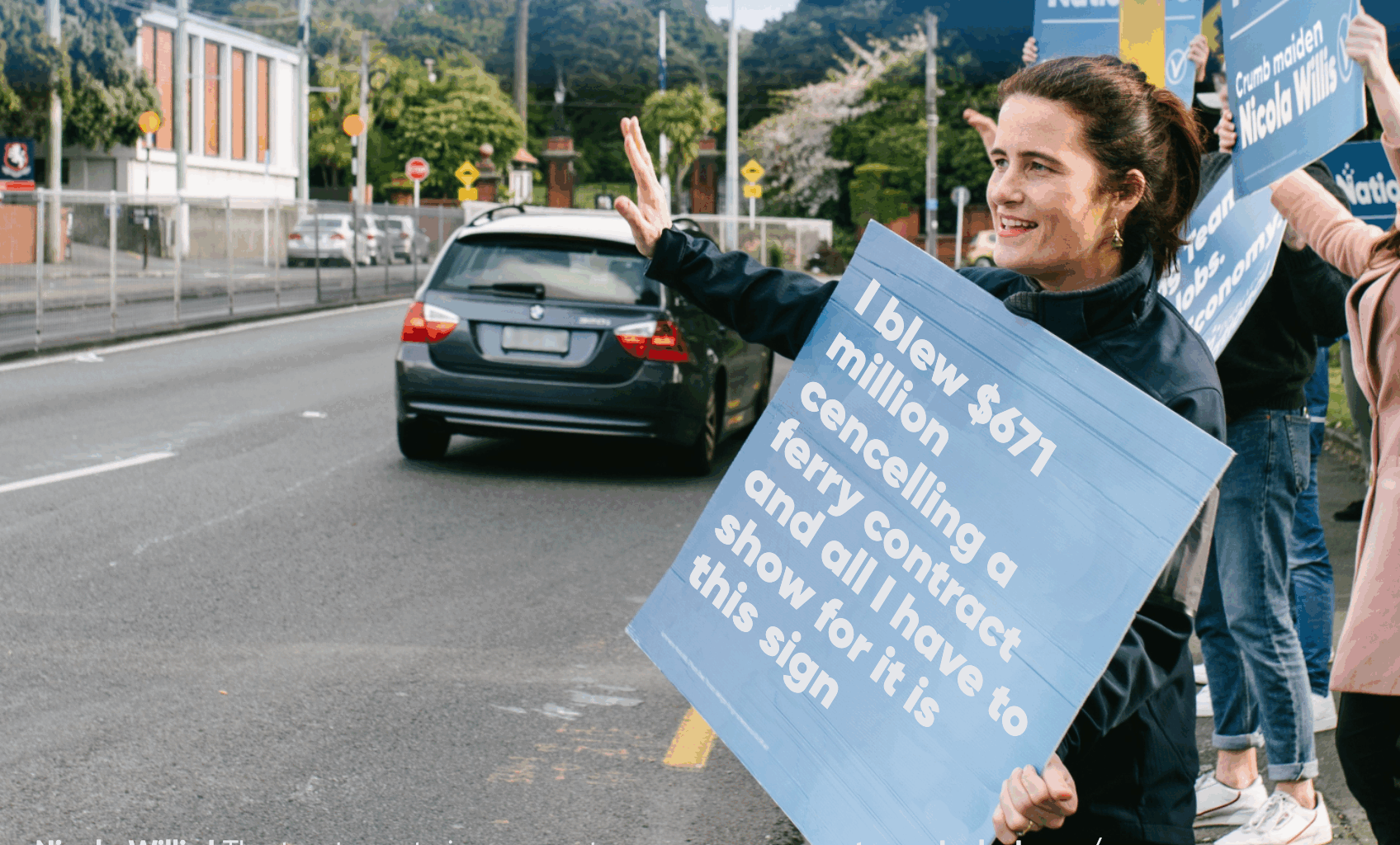
And we have spent $671 million and have absolutely, precisely nothing to show for it.
Ganesh Nana has this wonderful tongue in cheek take on this. From his Facebook page:
Apologies, as I am not clever enough to have an MBA – I only have a mere economics degree and so am clearly way out of my depth here – so, I am happy to defer to those expert in the field …
So, can one *just one* of you *please* (yes, I’m desperate) explain how spending $671m so that we don’t have to spend $550m, on not buying ferries, that we are not now getting (but will still need to buy soon) constitutes a sound business decision?
As noted above, my economics degree only extends to benefit-cost ratios …
Benefits = not spending $550m.
Costs = spending $671m
+ $s on additional maintenance on ageing boats
+ $s cost of buying new boats in x(?) years time
+ $s cost of alternative transport in interim while waiting for new boats to be built)
+ opportunity cost of lost production due to fractured transport network (SH1)
+ opportunity cost of lost business investment deterred due to no confidence in future transport networks
+ opportunity cost of lost employment in future businesses
Admittedly there was a significant costs increase, one which Kiwirail did not advise the Government about until late in the piece. As I noted earlier some of the increase, an estimated 10%, was because of building inflation which was rampant at the time. The rest was primarily in the terminals programme which needed larger piles, stronger sea walls and greater structural rigidity that what was estimated in 2021.
Some of the increased cost was due to the need to meet higher seismic standards. 70 tonne piles that are 1.5 metres in diameter were now needed at Picton. This not only increased material costs but also required larger safety zones to ensure safety during construction.
The project still had a positive benefit cost ratio of 2.1. The overall return was estimated to be twice the amount to be spent.
So a lot of the extra cost was to strengthen terminals and make them more resilient to earthquakes and climate change. Presenting them as a waste is disingenuous in the extreme.
Munz thought the decision could cost us about a billion dollars. When the increased costs of the new ferries and the losses caused by inferior boats and interim disruption are factored in I suspect that estimate will be right.
And Nicola Willis will be to blame.
Related Posts