
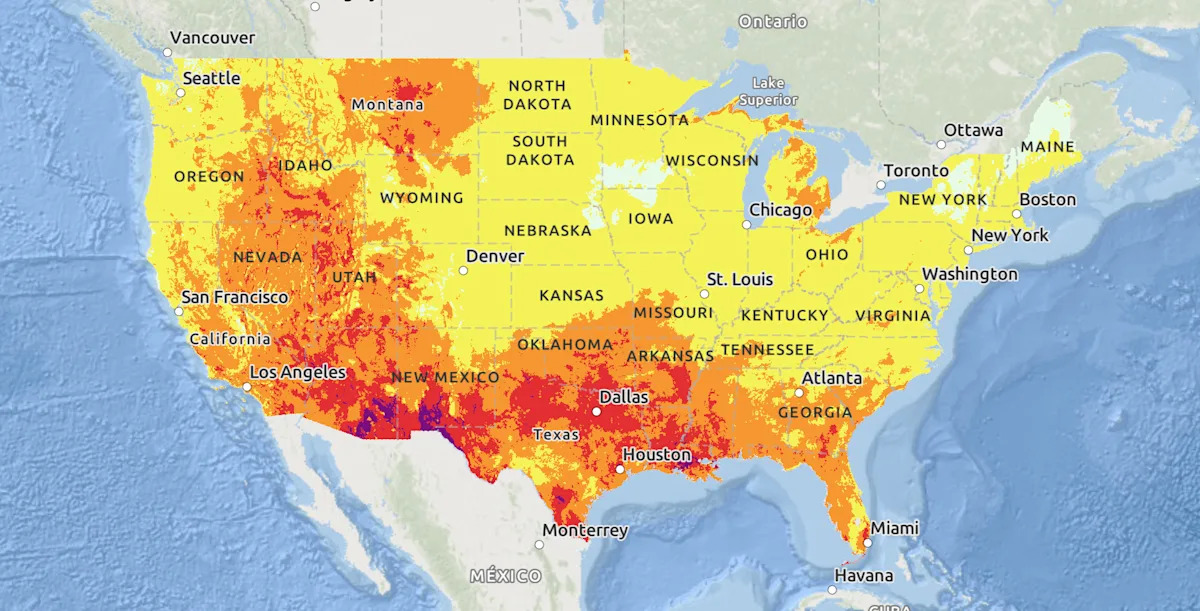
Dangerous heat is gripping parts of the United States, with more than 39 million people under heat alerts across much of the South as temperatures are expected to rise over the weekend.
Temperatures in some cities have climbed above 100°F, while a high of 119°F was recorded Thursday at weather stations near Topock, Ariz., on the California border, and near Tecopa, Calif., in the Mojave Desert southwest of Death Valley National Park, the National Weather Service said.
The “heat dome” that brought extreme heat to much of the central and eastern U.S. has shifted west and is expected to intensify before expanding into the intermountain West and northern High Plains this weekend. Parts of the Southwest are forecast to reach 110-120°F from late this week into early next week, with some locations expected to experience one of their 10 hottest days on record.
Know before you go outside. The new Yahoo Weather app tracks real-time heat and “feels like” temps for your area.
Extreme heat warnings are in effect on Friday across parts of six states: Arizona, California, Nevada, Utah, Oklahoma and western Arkansas, covering the Phoenix and Tucson metro areas, Las Vegas, Death Valley, Joshua Tree National Park, Zion National Park, Capitol Reef National Park and the Lake Powell area in Utah.
Most warnings remain in effect through Sunday, although parts of California’s Mojave Desert, the Coachella Valley and parts of Arizona remain under extreme heat warnings through Monday night.
Highs are forecast to range from around 100°F to as high as 120°F in some desert locations, with little chance of overnight relief in many areas.
How hot will it feel, exactly?
A couple cool off by the fountain at the World War II Memorial amid a heat wave in Washington, D.C., on June 25. (Kevin Lamarque/Reuters)
(REUTERS / Reuters)
Heat index values, which indicate how hot it feels when humidity is taken into account, are forecast to reach as high as 120°F (49°C) in parts of southern Arizona and South Texas on Sunday.
Evening temperatures are anticipated to provide little relief, with overnight lows remaining in the upper 70s and low 80s across much of the Gulf Coast, while temperatures in desert cities stay well above 80°F.
According to the National Weather Service’s HeatRisk monitor, more than 3.5 million people across parts of southern Arizona, the lower Rio Grande Valley in Texas and southern New Mexico face the highest heat risk level.
Another 43.4 million people across much of the Desert Southwest, including parts of California, Arizona, Nevada and southern Utah, as well as portions of Oklahoma and western Arkansas, face a “major” risk, the second-highest level.
Such levels are “dangerous for anyone without adequate cooling or hydration,” the weather service warned, noting that the risk of heat-related illnesses increases significantly with prolonged exposure to extreme heat and humidity.
What you can do to protect yourself
Indianapolis Colts linebacker Segun Olubi cools off during practice at training camp in Westfield, Ind., on July 24. (Michael Conroy/AP)
(ASSOCIATED PRESS)
“Drink plenty of fluids, stay in an air-conditioned room, stay out of the sun, and check up on relatives and neighbors,” the weather service advised. “Take extra precautions when outside. Wear lightweight and loose-fitting clothing. Try to limit strenuous activities to early morning or evening. Take action when you see symptoms of heat exhaustion and heat stroke.”
When will the heat wave break?
Some relief is on the way. According to the weather service’s long-range forecast, a strong cold front is expected to bring cooler temperatures to much of the eastern U.S. by next weekend, with much lower humidity and highs falling 10 to 20 degrees below this week’s levels.

Relief from the heat is “likely” by week’s end. (National Weather Service)