
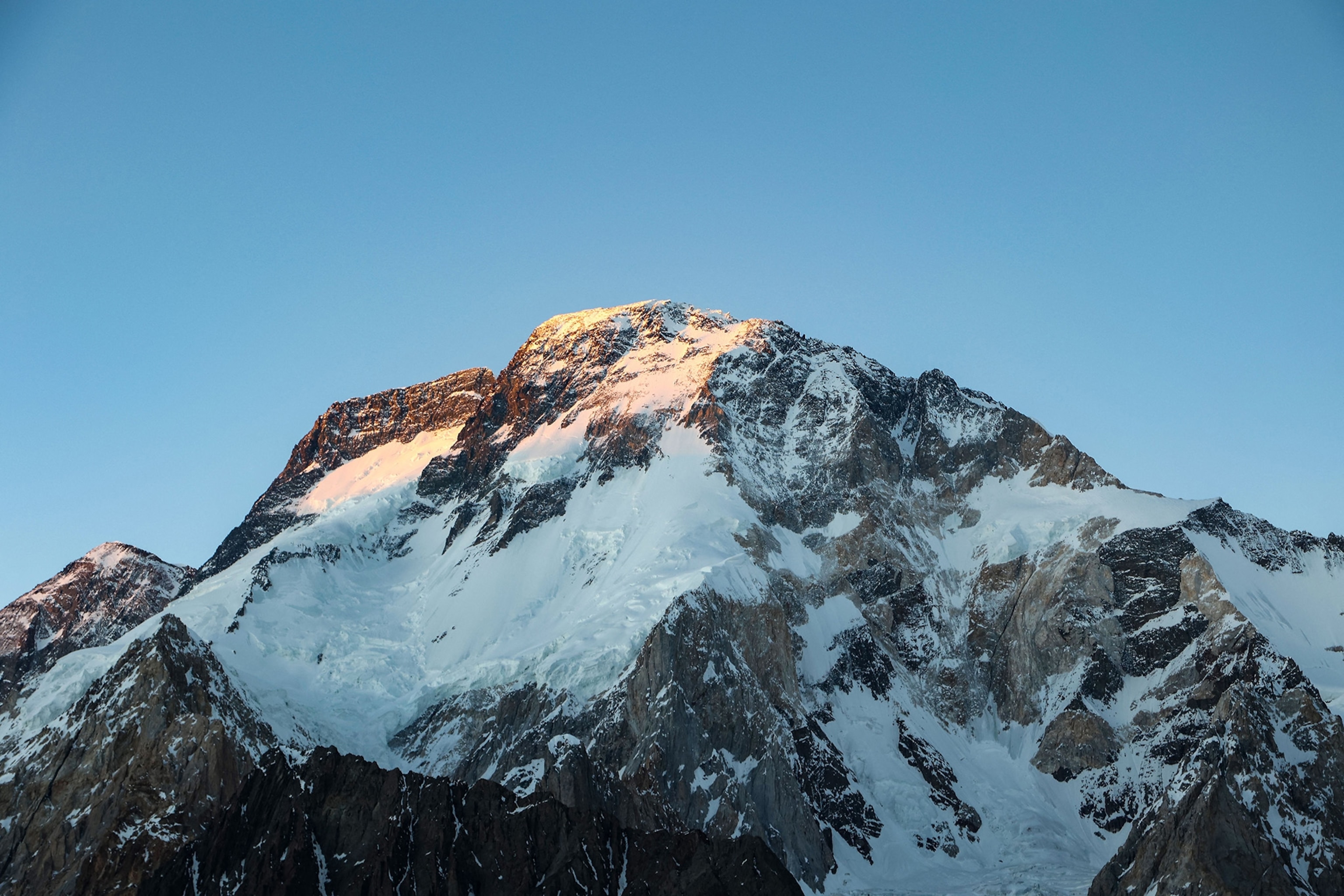
Broad Peak stands austerely in Pakistan’s Karakoram range. Heavy snowfall had started to blanket the mountain a week before the fatal avalanche.
Joe Stenson, AFP, Getty Images
Most of the teams at base camp had already gone home. On July 25, Klein and Overton packed up and walked out as well. Yet a few teams with summit hopes remained, including that of Nirmal “Nims” Purja, who rose to fame in 2019 after summiting all 14 of the world’s 8,000-meter peaks in record time, and his team from Elite Exped, who were staged at a nearby base camp.
Why they decided to stay is still opaque, but the consequences were deadly. At around 9 a.m. local time on Thursday, July 30, an avalanche swept ten climbers down the mountains’s main west-facing gulley, up to a vertical mile, and a rescue and recovery mission was immediately initiated. The Alpine Club of Pakistan confirmed on Friday that the bodies of two climbers, Nadhira Al-Harthy of Oman and Pur Bahadur Gurung “Yukta” of Nepal, have been recovered; seven climbers have been spotted via drone but it’s unclear if any are still alive. One other climber is unaccounted for.
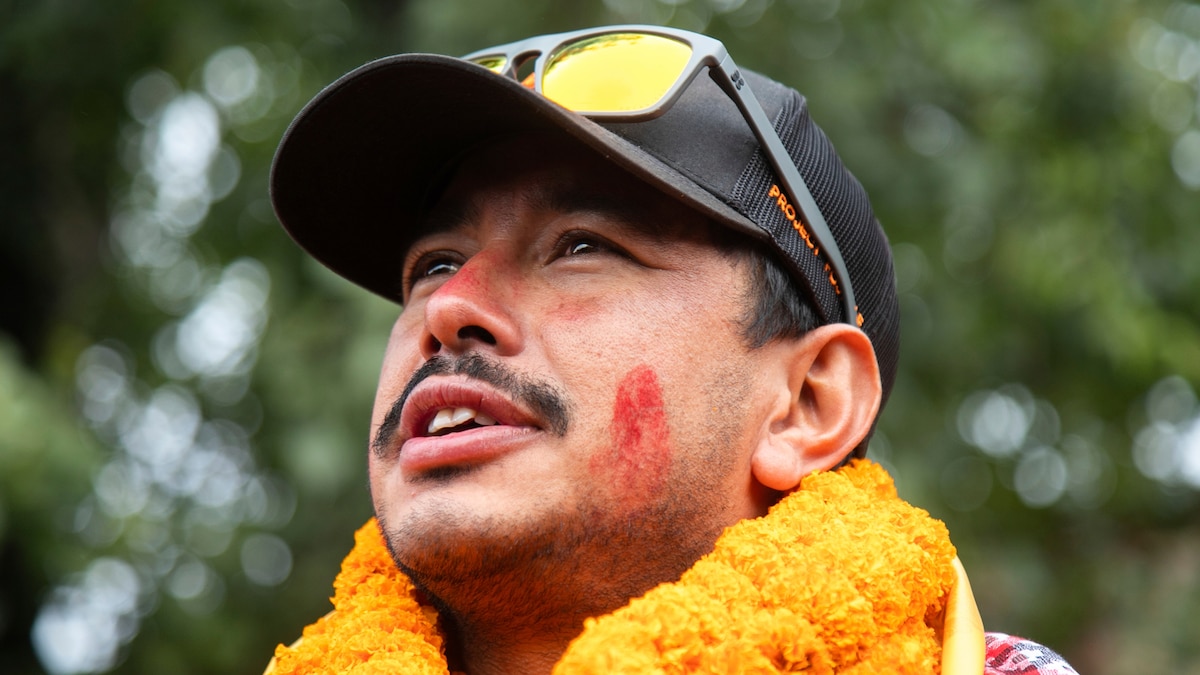
When the Alpine Club of Pakistan announced the accident late Thursday, it described the group of ten: five Nepalese climbers led by Purja, the Pakistani guide Sohail Sakhi from Moving Mountains, the Omani climber Al-Harthy, American climber Mallory Geis, a Chinese climber identified only as Mr. Wang, and one other foreigner. “The entire team has reportedly been out of communication since the avalanche,” the statement read. Al-Harthy was the first Omani woman to summit Everest. And Yukta had worked for years on the world’s highest peaks. Last fall, he was part of a team that climbed Everest’s north face to support mountaineer Jim Morrison’s first ski descent of the famed Hornbein Couloir.
Purja, like most climbers, carried a Garmin device, and it broadcast his position for four hours after he left Camp 2 that morning. The first pings put him at 6,166 meters—20,231 feet, right about at Camp 2—at 5:33 a.m. Pakistan time on Thursday July 30. Al-Harthy’s device broadcast similar readings. From there the track ascended steadily: By 7:03 a.m. the Elite Expedition team had reached 6,430 meters.
Purja and Al-Harthy’s next pings both came just before 9 a.m. local time, at around 6,660 meters—21,850 feet. Then, the pings from his device placed him more than 2,000 feet below his position just 30 minutes earlier. Al-Harthy’s GPS signal also disappeared from the upper slopes of the mountain and hers turned up more than a vertical mile below. None of the climbers appear to have been heard from since.