
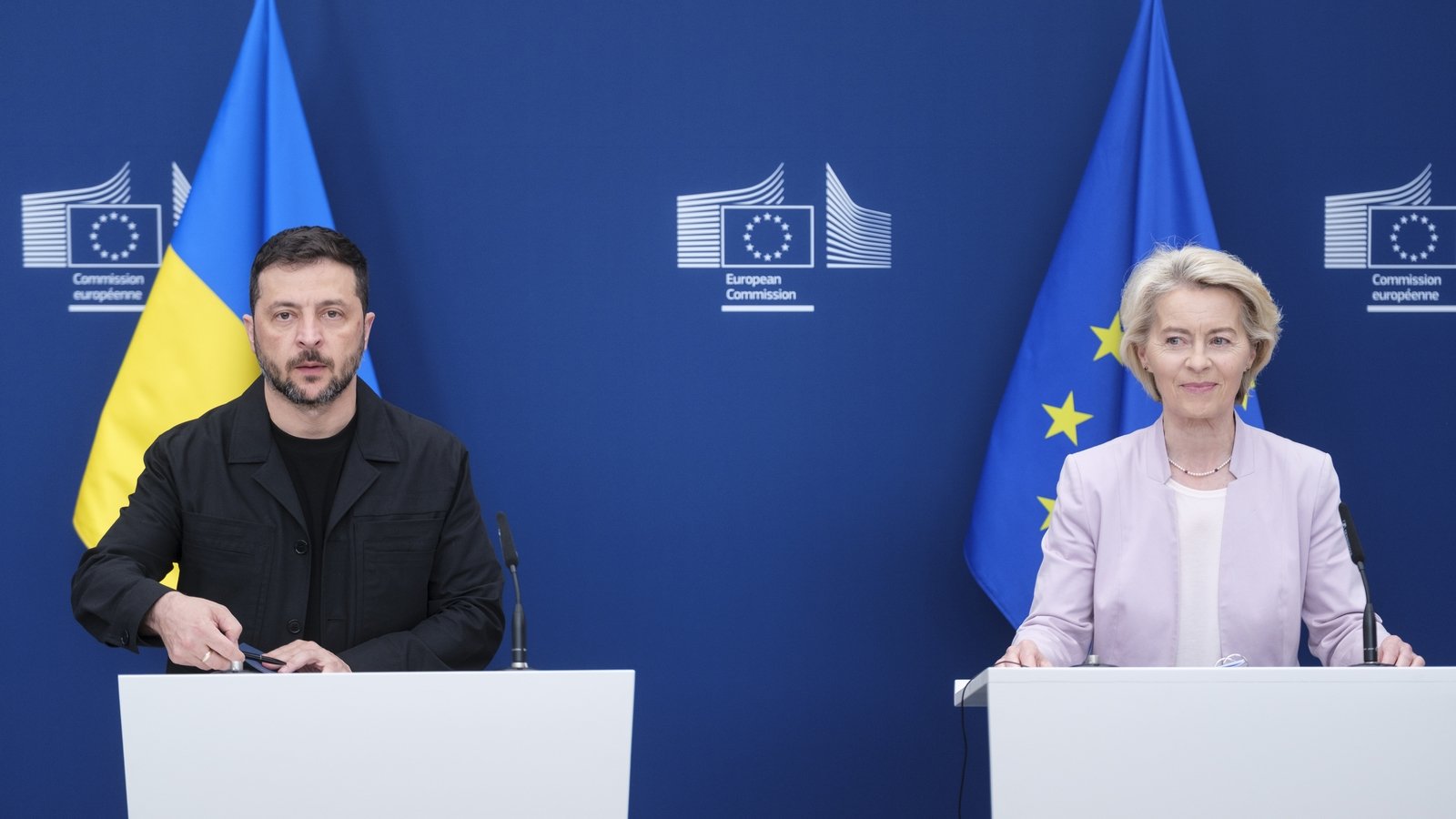
European leaders will join the Ukrainian President Volodymyr Zelensky to meet Donald Trump in Washington later today, they said, seeking to shore up Mr Zelensky’s position as the US president presses Ukraine to accept a quick peace deal to end Europe’s deadliest war in 80 years.
Mr Trump is leaning on Mr Zelensky to strike an agreement after he met Kremlin chief Vladimir Putin in Alaska and emerged more aligned with Russia on seeking a peace deal instead of a ceasefire first.
“If peace is not going to be possible here and this is just going to continue on as a war, people will continue to die by the thousands … we may unfortunately wind up there, but we don’t want to wind up there,” Secretary of State Marco Rubio said in an interview with CBS’ “Face the Nation.”
Mr Trump promised “BIG PROGRESS ON RUSSIA” in a social media post without specifying what this might be.
Mikhail Ulyanov, Russia’s envoy to international organisations in Vienna, said Russia agreed that any peace agreement on Ukraine must provide security guarantees to Kyiv.
“Many leaders of #EU states emphasise that a future peace agreement should provide reliable security assurances or guarantees for Ukraine,” Mr Ulyanov said on social media platform X.
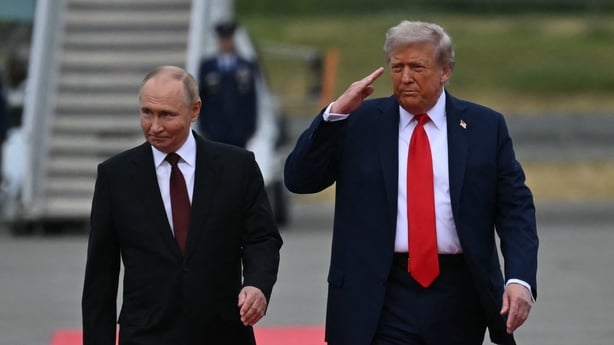
US President Donald Trump held a summit with Russian leader Vladimir Putin in Alaska on Friday
“Russia agrees with that. But it has equal right to expect that Moscow will also get efficient security guarantees.”
Top Trump officials hinted that the fate of Ukraine’s eastern Donbas region – which is already mostly under Russian control – was on the line, while some sort of defensive pact was also on the table.
“We were able to win the following concession, that the United States could offer Article 5-like protection,” Mr Trump envoy Steve Witkoff told CNN’s “State of the Union”, suggesting this would be in lieu of Ukraine seeking NATO membership.
Mr Witkoff said it was “the first time we had ever heard the Russians agree to that.”
Article 5 of NATO’s founding treaty enshrines the principle of collective defence, in which an attack on any member is considered an attack on all.
That pledge may not be enough to sway Ukraine to sign over Donbas.
Ukraine’s borders were already meant to be guaranteed when Ukraine surrendered a nuclear arsenal in 1994, which proved to be little deterrent when Russia absorbed Crimea in 2014 and launched its full-scale invasion in 2022.
The war has killed or wounded more than one million people.
German Chancellor Friedrich Merz, French President Emmanuel Macron, and British Prime Minister Keir Starmer hosted a meeting of allies yesterday to bolster Mr Zelensky’s hand, hoping in particular to lock down robust security guarantees for Ukraine that would include a US role.
The Europeans are eager to help Mr Zelensky avoid a repeat of his last Oval Office meeting in February when Mr Trump and Vice President JD Vance gave the Ukrainian leader a public dressing-down, accusing him of being ungrateful and disrespectful.
European Commission President Ursula von der Leyen will also travel to Washington, as will Finnish President Alexander Stubb, who has played rounds of golf with Mr Trump this year, and Italian Prime Minister Giorgia Meloni, an admirer of many of Mr Trump policies.
European show of solidarity
European leaders at the meeting projected unity, welcoming US talk of a security guarantee but stressing no discussions over territory could take place without Ukrainian involvement and clear arrangements to safeguard the rest of Ukraine’s land.
Some called for an immediate ceasefire, which Mr Trump originally said he was trying to secure during his summit with Mr Putin.
Mr Trump later changed course and agreed with the Russians that peace negotiations could come without a ceasefire, an idea dismissed by some of Ukraine’s European allies.
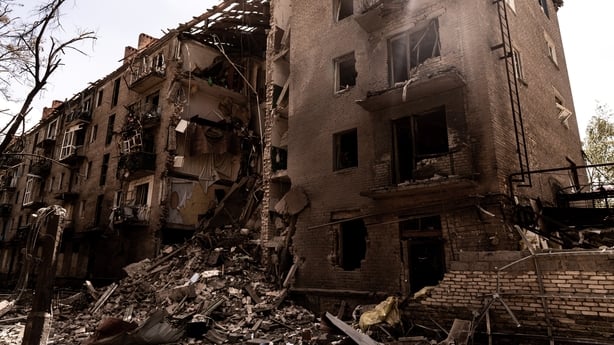
The war in Ukraine has killed or wounded more than one million people
“You cannot negotiate peace under falling bombs,” Poland’s foreign ministry said in a statement.
A joint communique released by Britain, France and Germany after the meeting said their leaders were ready “to deploy a reassurance force once hostilities have ceased, and to help secure Ukraine’s skies and seas and regenerate Ukraine’s armed forces.”
Some European countries, led by Britain and France, have been working since last year on such a plan, but others in the region remain reluctant to become involved militarily.
Mr Zelensky said on X there had been “clear support for Ukraine’s independence and sovereignty” at the meeting.”Everyone agrees that borders must not be changed by force.”
He said any prospective security guarantees “must really be very practical, delivering protection on land, in the air, and at sea, and must be developed with Europe’s participation.”
Mr Rubio said both Russia and Ukraine would need to make concessions to reach a peace deal and security guarantees for Ukraine would be discussed. He also said there must be additional consequences for Russia if no deal was reached.
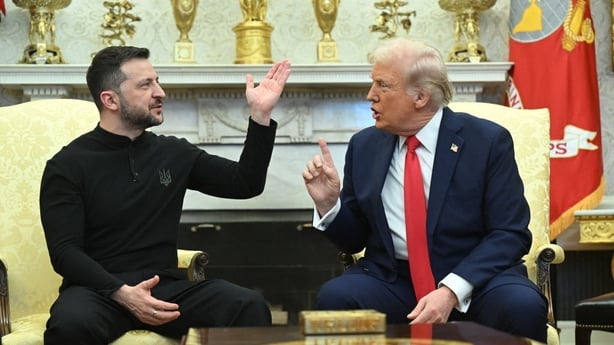
Mr Zelensky’s last visit to the White House involved a heated exchange with Mr Trump
“I’m not saying we’re on the verge of a peace deal, but I am saying that we saw enough movement to justify a follow-up meeting with Mr Zelensky and the Europeans, enough movement for us to dedicate even more time to this,” Mr Rubio told broadcaster CBS.
Mr Putin briefed his close ally, Belarusian President Alexander Lukashenko, about the Alaska talks, and also spoke with Kazakhstan’s president, Kassym-Jomart Tokayev.
Mr Trump said Ukraine should make a deal to end the war because “Russia is a very big power, and they’re not.”
After the Alaska summit, Mr Trump phoned the Ukrainian leader and told him the Kremlin chief had offered to freeze most front lines if Ukraine ceded all of Donetsk, a source familiar with the matter said. Mr Zelensky rejected the demand.