
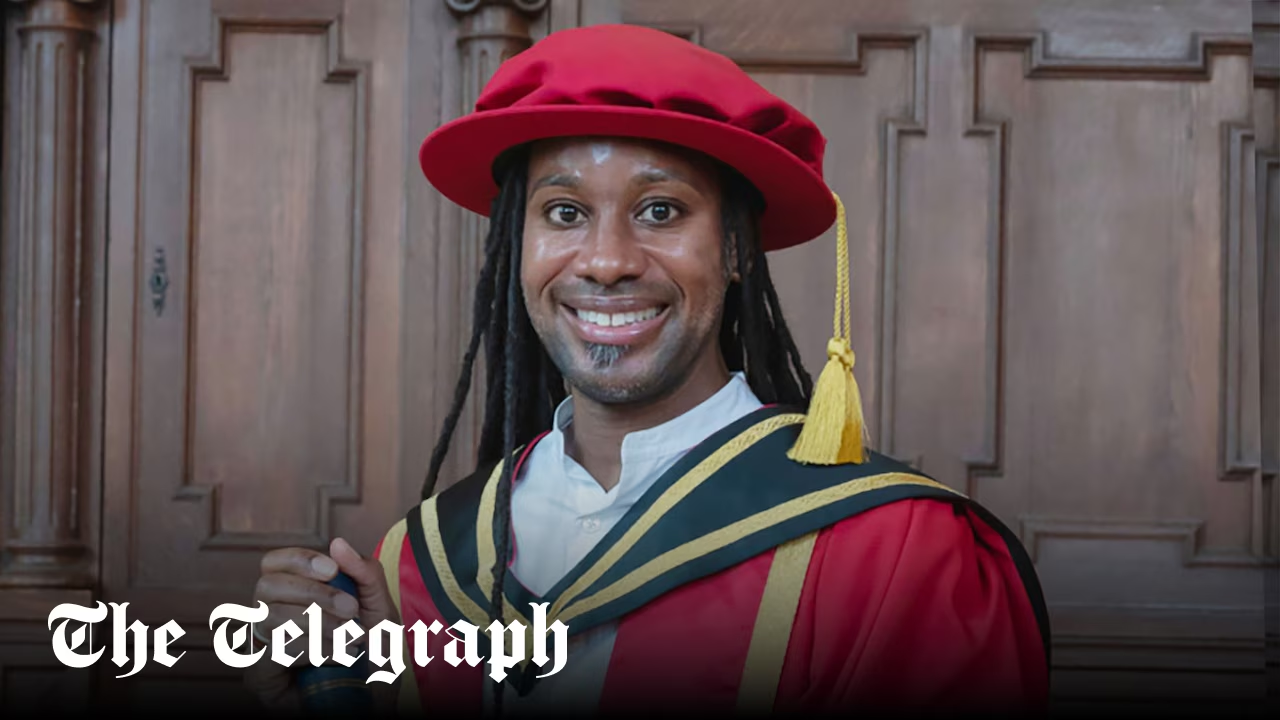
University of Cambridge bosses are facing a staff revolt over their handling of the plagiarism row surrounding one of its most high-profile professors.
A growing number of academics have expressed disquiet over Cambridge’s refusal to re-examine the academic credentials of Prof Jason Arday, who has been accused of copying parts of his PhD thesis from another student.
The university insists he is the victim of a “vile campaign to undermine his credibility”, but some senior staff believe the institution’s own credibility is now at stake.
In a first concession from Cambridge, it announced that “research misconduct” will be discussed at a forthcoming meeting of a committee that could “make a recommendation to review our academic misconduct procedures”.
The plagiarism row has made international headlines, including in the US, after analysis of Prof Arday’s PhD thesis showed more than 180 separate passages were identical or near-identical to an earlier thesis published by another student.
Cambridge is split into two camps – those who believe the sociology of education professor is the victim of a racist smear campaign, and those who believe the university is ignoring prima facie evidence of plagiarism to protect someone who has become its poster boy for diversity.
The Telegraph has learnt that a draft resolution, known as a Grace, is circulating among senior members of Cambridge’s academic staff, stressing the importance of academic integrity and requesting an investigation into alleged shortcomings in the Research Policy, Integrity and Governance division (RPIG).
The RPIG has attracted criticism from professors at other universities for ignoring warnings about Prof Arday’s work as long as three years ago, and insisting his PhD is a matter for Liverpool John Moores University, which awarded him his doctorate.
If the Grace is submitted to the Regent House – effectively Cambridge’s parliament – and is passed by it, it would be “virtually a no confidence motion in the vice-chancellor”, in the words of one academic source.
The vice-chancellor, the university equivalent of a chief executive, is currently Prof Deborah Prentice, the first American to hold the post, whose academic speciality is gender stereotypes. In her previous role at Princeton University in the US, she was commended for improving diversity at the Ivy League institution.