
Unlock the White House Watch newsletter for free
Your guide to what Trump’s second term means for Washington, business and the world
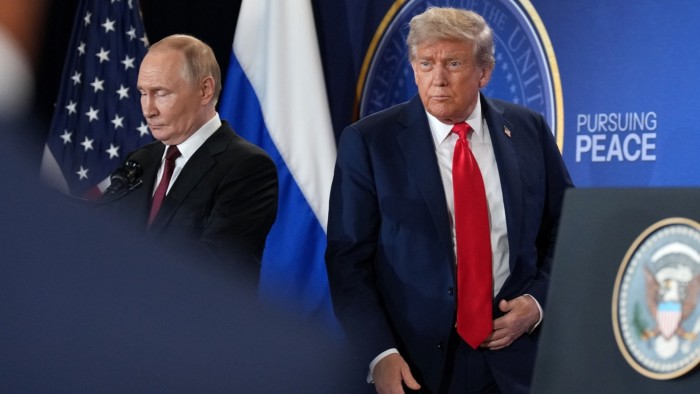
Donald Trump’s Alaska summit with Vladimir Putin was an embarrassing failure. Worse, it was a terrible mistake. In return for lavishing guest-of-honour treatment on a Russian leader hitherto deemed a pariah in the west, the US president earned nothing except for some cheap flattery. Putin rejected a ceasefire, which had been Trump’s main goal for the meeting, and stuck to his maximalist goals which are tantamount to Ukraine’s capitulation and subjugation. Trump once again waived this threat of “severe consequences” for Russia if it refused to pause hostilities, making him look weak. The two men did not even discuss a three-way summit with Ukrainian President Volodymyr Zelenskyy, according to the Kremlin. The ease with which Putin won him to Russia’s hardline positions makes him look a dupe.
It was a relief that Trump did not sell out Ukraine there and then in Anchorage. But what we have learned since is anything but reassuring. Trump has endorsed Putin’s wish to negotiate a comprehensive settlement rather than agree to the interim truce Washington demanded. That was Ukraine’s position too, until Trump forced Zelenskyy to fall into line earlier this year. Now it has the upper hand on the battlefield, Russia has every incentive to string out talks. Its hardened position on territory — demanding Ukraine abandon the quarter of Donetsk and sliver of Luhansk it still controls — shows Putin’s intentions.
Trump said in Alaska he and Putin had agreed on most points. It is particularly shocking that he did not appear to push back on the most important, Putin’s territorial demand, which Zelenskyy, with European support, has said is an absolute red line. Abandoning territory Ukrainians have spilled much blood over 11 years to defend is politically indefensible and militarily suicidal. It would mean relinquishing the belt of towns and fortifications as well as rivers and ridge lines that have enabled Ukraine to resist Russia’s advances and help protect the rest of the country. Giving up this land would plunge Ukraine into political turmoil and leave it badly exposed to further Russian aggression.
If Zelenskyy and his European allies thought they had persuaded Trump on these points last week, they were badly mistaken. There are two possible interpretations: either Trump has always been sympathetic to Russia’s land grab, a feature of a world in which the strong triumph over the weak; or his mind is simply shaped by the last conversation he has had. If the latter, Ukraine and the Europeans will have another chance to change Trump’s mind. But last week’s diplomatic success was fleeting. They need to adjust their approach to gain more lasting traction.
For Zelenskyy, who will meet Trump in the White House on Monday alongside European leaders, this means being more explicit about the compromise he is willing to make — in effect freezing the front lines and ceding de facto but not de jure control over territory Moscow occupies in return for security guarantees outside Nato.
For the Europeans, it means pushing back more assertively against Trump’s alignment with Putin while appealing to congressional Republicans and members of the administration who surely have grave misgivings about the Alaska fiasco and the message of American weakness it sends to the world. Europe will also need to raise its ambitions for helping Ukraine financially and militarily, including using frozen Russian sovereign assets.
European leaders will be tempted to celebrate Trump’s support for European security guarantees for Ukraine as a diplomatic advance and proof of enduring transatlantic co-operation. But it will count for little if the proposed deal is tantamount to Ukraine’s capitulation.