
If the Israeli Left wants to govern and strengthen Israeli democracy, it needs a different political culture – one that listens more, broadens representation, and builds relationships across social divides.
It is election season in Israel, and there is a growing sense of optimism among the centre, liberal, democratic, and anti-Netanyahu camps. Many believe that a political transition could open a new chapter for the country.
I cannot fully share that optimism.
A political movement cannot build a future by speaking only to people who already share its assumptions. Much of the Israeli left has developed a political language centred on liberal democracy, institutions, and checks and balances. Yet many Israelis experience institutions such as the Supreme Court differently. They associate them with distance, elitism, and decision-makers who seem disconnected from their daily lives. While political debates often revolve around constitutional principles, many citizens are asking a simpler question: Does this system see me? Does it represent people like me?
This disconnect is also shaped by who has occupied Israel’s positions of power. Politics, the military, and the economy form interconnected elite networks, with many individuals moving between them and continuing to shape public life long after leaving office. The erosion of public trust is therefore also a failure of those who have repeatedly held responsibility for the country’s direction.
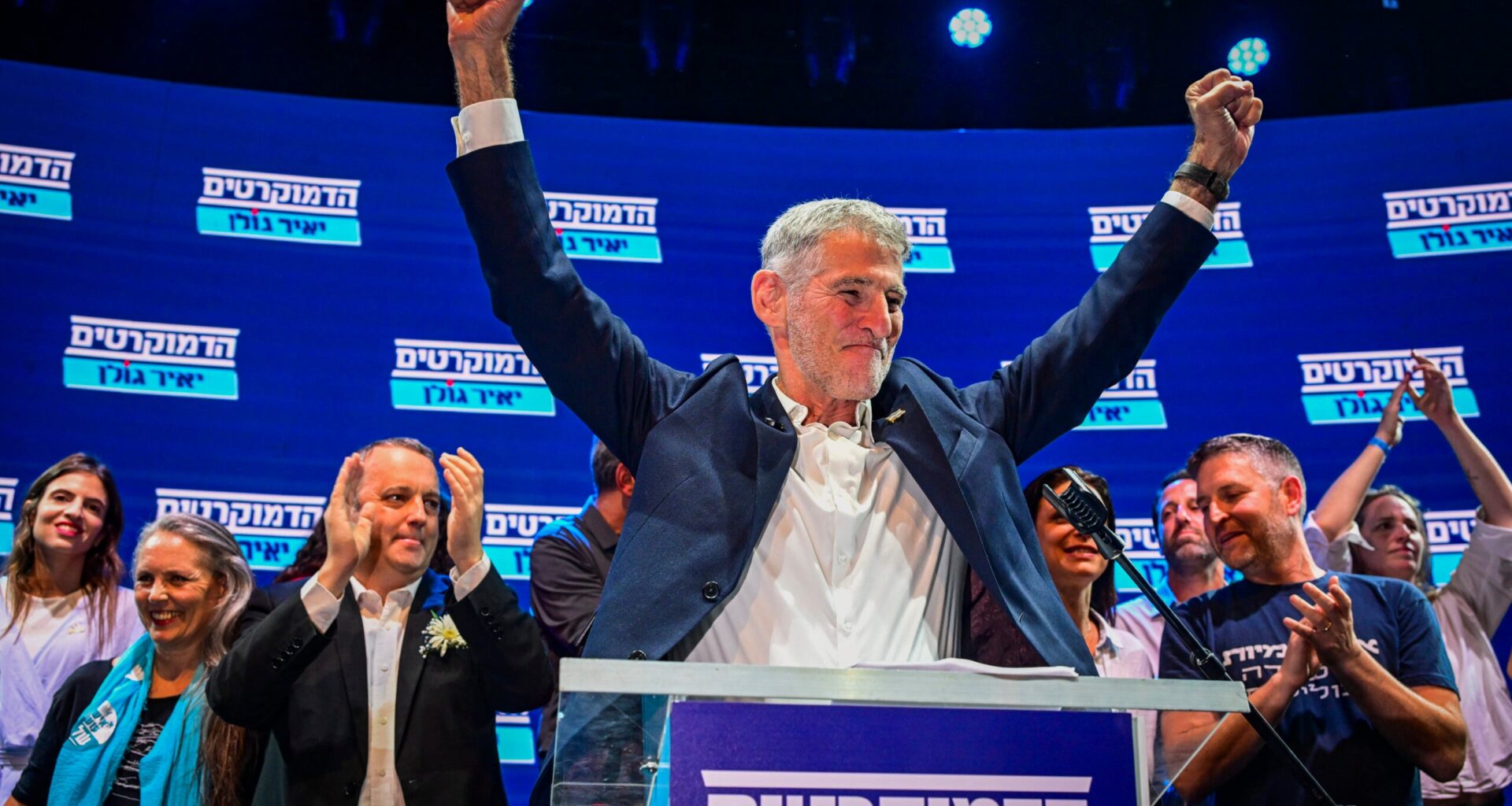
Yet the current opposition largely offers familiar faces from these same circles. One of its leading figures is Gadi Eisenkot, a former IDF Chief of Staff. The leader of the largest liberal-democratic party is Yair Golan, another former senior military officer who was once considered a potential army chief before his controversial speech ended that possibility. Israel has repeatedly turned to former generals in moments of political crisis, yet this pattern has done little to address the deeper crisis of public trust and legitimacy. Perhaps what the country needs now is a different kind of leadership altogether.
But leadership is not only about ideology or professional background. It is also about representation – who is given the opportunity to shape the country’s future.
Representation requires more than recognizing different communities from a distance. It requires opening the gates of political leadership and allowing new voices, experiences, and social groups that have long felt absent from the centers of power to shape the country’s future. A democracy cannot renew itself if the same circles continue to dominate public life while speaking in the name of everyone else. New generations and new communities must have the opportunity to lead – not simply be represented by those who have long held power.
The Israeli left has also struggled with questions of identity and representation. The right has invested significant effort in building relationships with communities such as Druze, immigrants from the former Soviet Union, and residents of peripheral and developmental towns. These relationships are often imperfect and politically motivated, but they exist. The left often argues that it represents all Israelis, yet many communities do not see themselves reflected in its leadership, culture, or political language. When criticism of exclusion arises, parts of the liberal left can become defensive rather than reflective.
A movement cannot represent society without confronting its own blind spots.
The same challenge exists with economic messaging. A movement associated with cultural institutions and professional elites can struggle to convince working-class communities that it understands their economic struggles. Arguments about inequality become less persuasive when delivered by people perceived as benefiting from the very system they criticize. Representation is about more than policy – it is also about experience and recognition.
One of the most troubling aspects of parts of the liberal left is the growing hostility toward the Haredi community. The argument is often framed in economic and civic terms: not opposition to Haredi identity itself, but concerns over military service, employment, and public funding. Yet beneath this language can sometimes be a deeper attitude: that one segment of Israeli society must be reshaped according to the values of another segment that sees itself as more modern or advanced.
A society cannot build solidarity by treating one community as a problem to be managed.
A similar pattern appears in discussions of settlers. There are real and legitimate criticisms regarding government investment priorities. Many settlements receive greater state resources per citizen than some communities in Israel’s periphery. There are also serious cases of violence and intimidation carried out by extremists, and such actions must be addressed by the state. At times, however, parts of the political discourse on the left have come to view settlers as the primary symbol of Israel’s moral failure – its “original sin”.
But yet again, political anger is directed at a population, rather than at the decision-makers who created these policies. Settlers are not a single political or social group. They include ideological activists, religious communities, working-class families, and people with diverse views. Some are deeply opposed to the Israeli left; others could potentially become partners.
A political movement that views an entire population only through its most extreme representatives limits its own ability to create change.
For many Israelis on the left, the occupation is the central moral and political question. For many other Israelis, their worldview is shaped first by security concerns, family history, economic struggles, and collective memory. A political language built around international frameworks may not resonate with people who understand their lives through different experiences. If the left wants to persuade a broader Israeli public, it needs to develop additional frameworks for discussing these questions – ones that are connected to Jewish history and Israeli identity. People rarely change their worldview when they are told that their own understanding of reality is morally flawed.
A movement that wants to convince society must first understand society.
The Israeli left often asks why so many Israelis refuse to listen to it. Perhaps the deeper question is whether it has learned how to listen.
Leftist activists are rarely seen building long-term relationships with communities in Israel’s social and economic periphery. Many political conversations take place within communities that already share similar educational backgrounds, cultural references, and political values. The result is a movement that often speaks about the needs of ordinary Israelis while having limited experience listening to them. At times, it has defined what people need before asking what they want.
A political movement cannot transform a country by speaking about people from a distance. It must understand their fears, memories, identities, and hopes.
A future Israeli democracy will not be built by those who already believe in it. It will be built by those willing to enter conversations with the people they hope to convince.
Adam Refaelov is an independent Israeli writer exploring Jewish identity, Zionism, and the discourse surrounding these subjects. He publishes essays and commentary on his Instagram page, LostInTheConflict.