
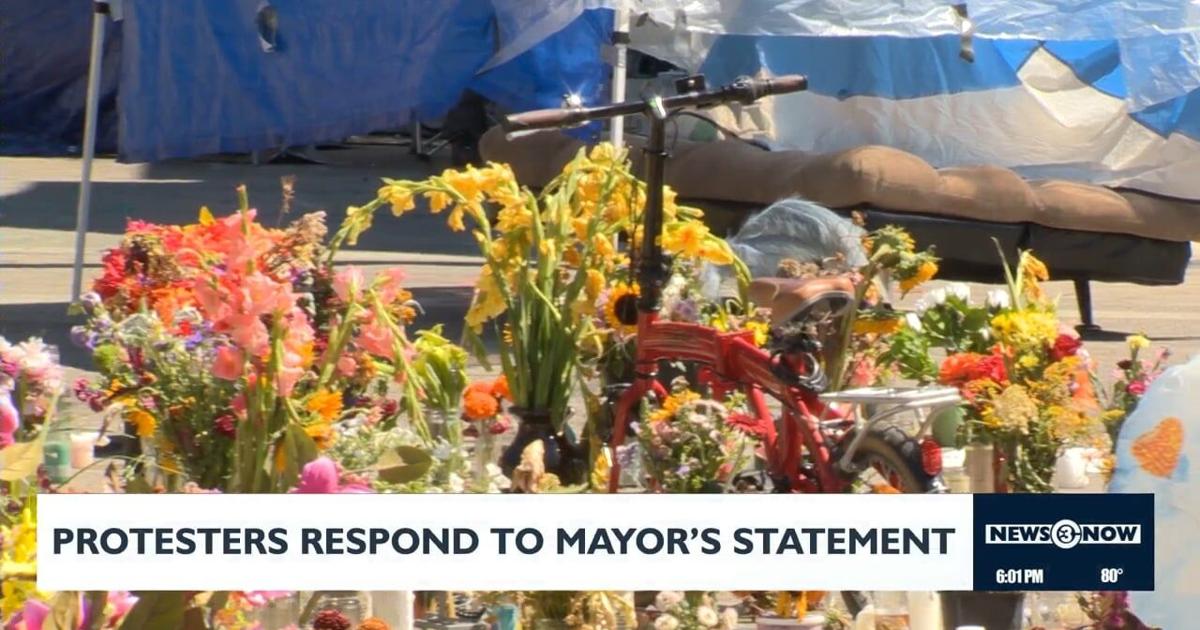
MADISON, Wis. — For the fourth day in a row, Madison Mayor Satya Rhodes-Conway is calling for an end to the encampment on Williamson and Baldwin streets. The encampment follows the death of Corey Ruiz who was shot by a Madison police officer on July 22.
“For almost two weeks now, City of Madison staff and elected leaders have been on the ground and communicating to and through community leaders to peacefully resolve extremely complex, emotionally fraught circumstances that started with the police taking the life of Corey Ruiz,” Rhodes-Conway said.
“Countless efforts have been made to convince people that the occupation of Williamson Street and Baldwin Street is counterproductive…A huge amount of patience has been given because the last thing Madison needs is a large-scale police operation. That’s why those occupying the area need to leave immediately.”
We have a packed show today! Madison Mayor Satya Rhodes-Conway speaks with For the Record exclusively regarding the ongoing encampment.
COPYRIGHT 2026 BY CHANNEL 3000. ALL RIGHTS RESERVED. THIS MATERIAL MAY NOT BE PUBLISHED, BROADCAST, REWRITTEN OR REDISTRIBUTED.
Rhodes-Conway said she hopes to work with Ruiz’s family for a memorial and the community to visit the memorial but it cannot happen until the encampment ends.
“I’m deeply troubled that Corey is largely no longer at the center of the current crisis our city faces.” Rhodes-Conway said. “We’ve provided the time and space to allow the community to grieve Corey and the loss of other community members by police hands in the Marquette neighborhood.”
Rhodes-Conway emphasized there’s nothing the city can do to bring an arrest or criminal charges as that responsibility rests with Dane County District Attorney Ismael Ozanne following an independent investigation by the Wisconsin Department of Justice.
Additionally, the mayor said there are too many residents and local businesses suffering because of the encampment.
Organizers at a Madison encampment are pushing back on Rhodes-Conway’s plan to begin clearing the site, while acknowledging the need to reopen the blocked street.
“To be honest with you, I don’t give a rat’s a– what the mayor says. I really don’t, and that’s just me being honest,” Maleyk Mason said when asked about the mayor’s plan.
Mason said the mayor should visit the encampment.
“The mayor can say all she wants. I’m calling her out. Please come out here and come see what we’re doing for once,” Mason said. “We’re not causing any harm. This is a peaceful protest, and it’s been a peaceful protest since day one.”
Not everyone at the encampment disagrees with reopening the street.
“We believe that these businesses should be open for business,” community organizer Alan Robinson said. “We understand that the housed and unhoused community here have needs that need to be met. However, we also want to ensure that justice is done and that accountability is taken.”
Robinson said organizers plan to continue working with the mayor’s office while pressuring city leaders to address what he described as the systemic issues that brought people to the intersection.
“Our plan is to follow the leadership of the mayor and hope that we actually get justice this time,” Robinson added. “The organizing may begin in the street, but it certainly doesn’t end there.”
The city has issued tow notices to vehicles blocking the intersection and citation and impounding the vehicles will follow, according to the city.
“It’s become increasingly clear that unsheltered people are being used as leverage for demands that, frankly, the City of Madison cannot deliver because we do not have the power to deliver them.” Rhodes-Conway said.
Additionally, Rhodes-Conway stated the city did not pay for porta-potties and the company that supplied them have been asked to remove them or risk being cited and fined.
COPYRIGHT 2026 BY CHANNEL 3000. ALL RIGHTS RESERVED. THIS MATERIAL MAY NOT BE PUBLISHED, BROADCAST, REWRITTEN OR REDISTRIBUTED.