
In recent years, Bollywood has undergone a quiet but significant shift. The larger-than-life romances and family dramas that once defined mainstream Hindi cinema now share space with a growing genre of military and espionage thrillers. These films are not just about action, they are about power, resolve, and a ‘reimagined’ idea of the Indian state.
At the heart of this transformation lies an interesting, often understated reference point, i.e., Israel. Not always named directly, but frequently evoked, Israel appears in these films as a benchmark, a “gold standard” for how a nation should confront terrorism. Through narratives of precision strikes, covert missions, and political decisiveness, Bollywood is increasingly borrowing from what it perceives as the Israeli model of counter-terrorism.
This cinematic trend is not accidental. It reflects both changing geopolitics and a shifting public appetite for stories where India is no longer reactive, but assertive.
From Restraint to Retaliation: The Uri Moment
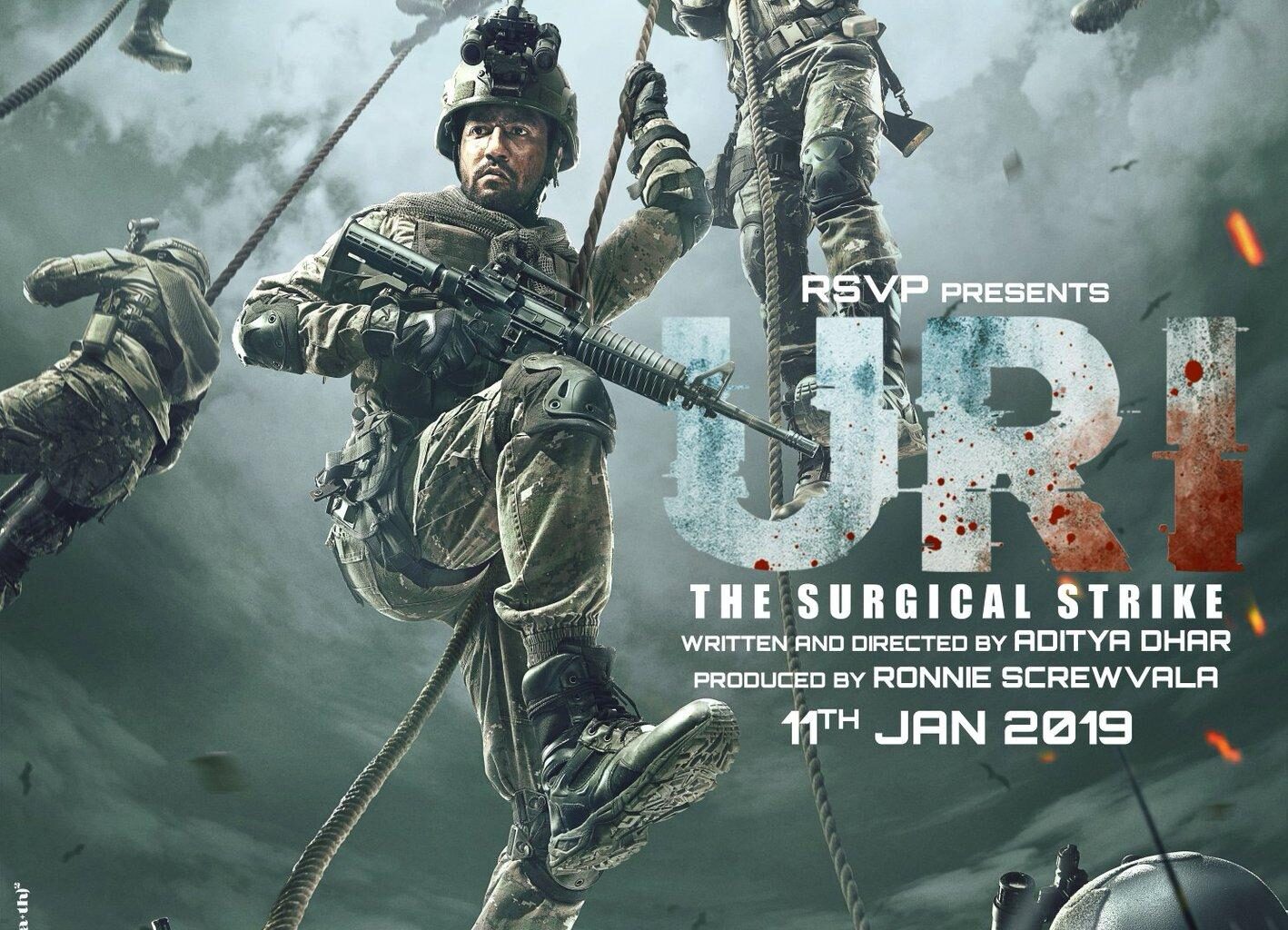
The turning point came with the movie Uri: The Surgical Strike (2019). While rooted in a real military operation, the film did something more profound, it reframed India’s strategic identity on screen.
The now-famous line, “Yeh naya Hindustan hai… ghar mein ghusega bhi aur marega bhi” (“This is a new India; it will enter your home and strike you”), became more than dialogue. It became a declaration.
What stands out is how closely this mindset mirrors the Israeli doctrine of pre-emption, acting before threats fully materialize, often beyond national borders. The film’s emphasis on surgical precision, advanced surveillance, and elite special forces echoes a global image long associated with Israel’s security apparatus.
This is where the parallels become particularly compelling. The film’s tactical imagination and its emphasis on surgical strikes, precision targeting, and relentless pursuit of adversaries, echoes strategies often associated with Mossad. The shadow of operations like “Operation Wrath of God” looms in the background of the movie, the idea that those responsible for terror can be tracked, targeted, and eliminated anywhere, regardless of borders or diplomatic constraints. These sequences showcased in the movie subtly evoke the growing India-Israel defense collaboration, particularly in unmanned aerial systems, where jointly developed drone technologies have become central to intelligence gathering and precision strikes. The message is clear, deterrence is no longer about restraint, but about calculated aggression.
The Rise of the Cold Operative: Dhurandhar
If Uri marked the shift toward retaliation, the Dhurandhar duology (2025–2026), directed by Aditya Dhar, pushes that transformation into darker, more complex territory. These films move beyond the battlefield and into the shadowy world of covert operations, where morality is blurred and outcomes matter more than methods.
At the center is Hamza Ali Mazari, played by Ranveer Singh, an undercover operative embedded deep within Karachi’s underworld. Unlike the emotionally driven spies of earlier Bollywood, Hamza is clinical, detached, and calculating. He does not simply eliminate targets. He orchestrates violence from a distance, at times masterminding anonymous, helmeted operatives to carry out assassinations. The effect is chilling. This is not heroism in the traditional sense, it is precision without visibility.
The character strongly evokes the idea of Kidon, the covert assassination unit of Mossad, often associated with some of Israel’s most secretive operations. The comparison is not accidental. The Kidon unit itself is widely believed to have played a role in “Operation Wrath of God”, a campaign defined by its relentless pursuit of those responsible for terror, across borders and over time.
In Dhurandhar: The Revenge, this Israeli connection becomes more explicit. At a key moment, Hamza’s handler, Ajay Sanyal, leverages sensitive intelligence about Pakistani agencies’ interactions with Israeli intelligence networks to pressure a prisoner release. The scene is less about geopolitics and more about narrative signaling, power lies in information and the ability to operate across invisible lines. The underlying logic is clear and deliberately provocative, if India is to counter an adversary like Pakistan, it must adopt the same ruthlessness and cross-border agility that global audiences associate with Mossad. This includes operating in hostile territory without pause, without acknowledgment, and often without accountability.
In doing so, Dhurandhar takes the Israeli “template” introduced in Uri and intensifies it. Where Uri showcased overt military precision, Dhurandhar dwells in deniability, secrecy, and psychological control. Violence becomes quieter, and arguably more unsettling.
 Photo courtesy: Jio Studios
Building the Template: Baby, Phantom, and Beyond
Even before Uri, films like Baby (2015) and Phantom (2015) laid the groundwork for this “Israeli standard.”
In Baby, covert intelligence operations unfold across borders with minimal political hesitation. At one point, when Indian agents propose an assassination abroad, a Indian minister responds incredulously: “What do you think you are, Mossad?” The line is brief, but revealing. Mossad is not just referenced; it is invoked as the ultimate benchmark of operational capability.
Similarly, Phantom, a movie inspired by the aftermath of the 26/11 Mumbai terror attacks, follows a protagonist tasked with eliminating terror masterminds beyond India’s borders. The narrative reinforces a key idea; justice is not confined by geography.
Both films subtly embed the belief that effective counter-terrorism requires speed, secrecy, and a willingness to cross traditional boundaries; traits commonly associated with Israel’s global security posture.
More recently, The Netflix series Saare Jahan Se Accha pushes Bollywood’s Israeli reference point into the realm of nuclear strategy. The plot follows Indian operatives working to disrupt Pakistan’s nuclear ambitions, not through open conflict, but by targeting supply chains and covert procurement networks across Europe. What sets the series apart is its explicit invocation of Mossad. Indian intelligence is shown collaborating with Mossad, receiving real-time intelligence and even operational support on foreign soil. Here, Israel is not just an inspiration but an active partner in the narrative, reinforcing the idea that modern security depends on global reach, secrecy, and pre-emptive action.
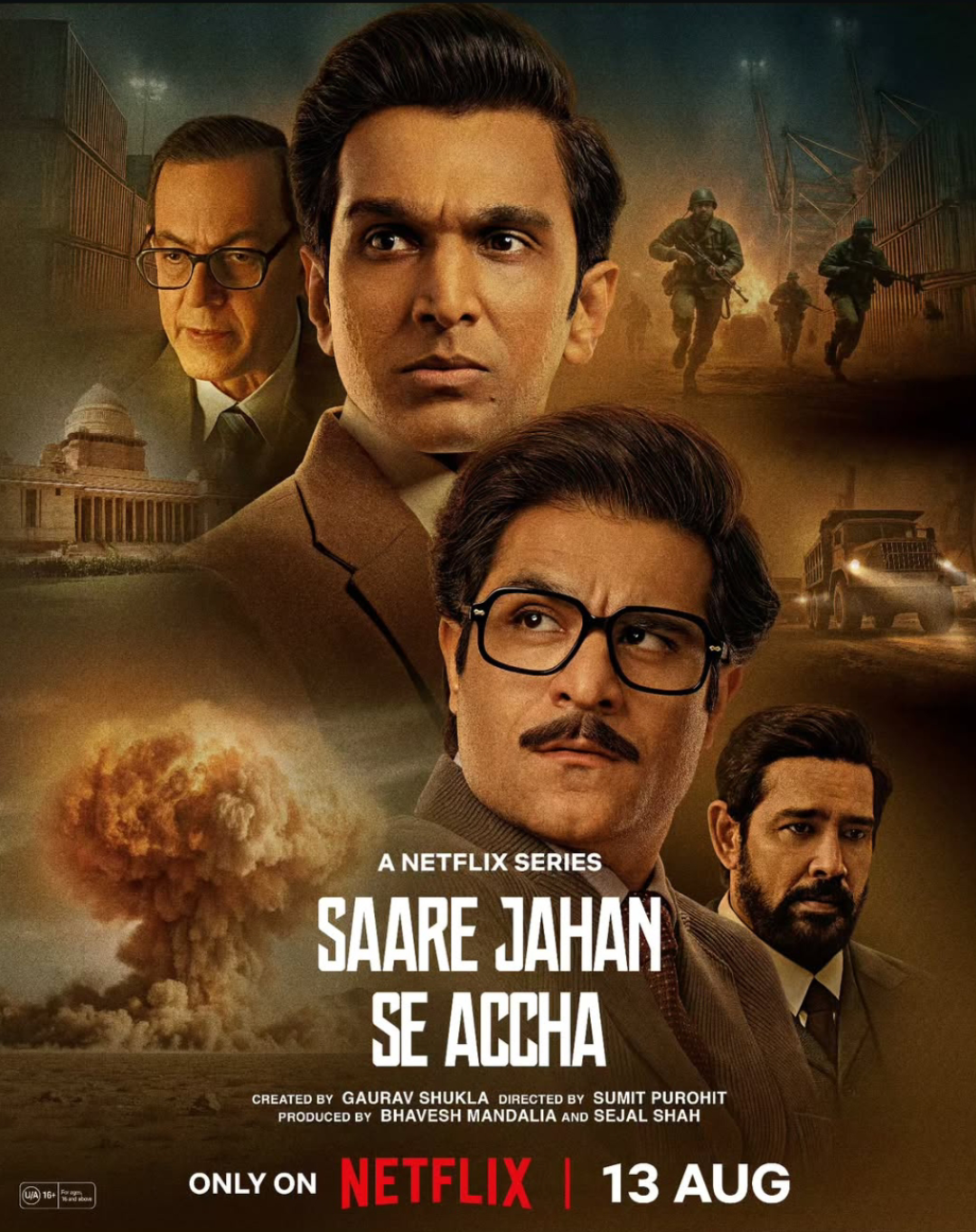 Photo courtesy: Netflix India
Israel as Symbol, Not Just State
What is striking is that Israel, in these films, functions less as a real country and more as an idea. It represents efficiency, it represents decisiveness and above all, it represents political will.
Bollywood’s fascination is not just with weapons, technology, or intelligence networks, it is with the perception that Israel acts without hesitation. In these narratives, India is portrayed as a nation that has finally “learned” a lesson, a lesson taught by terror.
For audiences, this is deeply satisfying. Watching Indian protagonists operate with such precision offers a sense of catharsis, a reversal of older narratives where India appeared restrained or reactive.
The Problem with the “Gold Standard”
But this cinematic borrowing raises important questions. Can the Israeli model truly be applied to India?
The two countries operate in vastly different contexts, geographically, politically, and demographically. Israel’s size, threat environment, and military structure are unique. What works in one context may not translate seamlessly to another. Bollywood, however, tends to flatten these complexities. It presents Israeli-style operations as universally effective solutions, rather than context-specific strategies.
There is also the question of ethics. By focusing heavily on action and retribution, these films often sideline debates about legality, accountability, and long-term consequences. Counter-terrorism is not just about eliminating threats it is also about preserving democratic values and international norms. Cinema, of course, is not policy. But it shapes perception and repeated exposure to these narratives can narrow how audiences understand security.
At the same time, this trend reflects real-world shifts. India-Israel relations have grown significantly stronger over the past decades, particularly in defence and intelligence cooperation. Bollywood, as a cultural mirror, is capturing this evolving partnership and translating it into stories that resonate with mass audiences. In doing so, it is also participating in a broader reimagining of India’s global identity. one that is more assertive, more confident, and less constrained by older diplomatic caution.
Conclusion: Cinema and the Idea of Power
Bollywood’s engagement with Israeli themes is ultimately about more than geopolitics. It is about how a nation sees itself and how it wants to be seen. In these films, Israel becomes a metaphor for survival through strength. A small nation that commands respect not through size, but through strategy and resolve.
For Indian audiences, this is compelling. It offers a vision of a country that refuses to be a victim, that acts decisively, and that takes control of its own security narrative. But as powerful as this cinematic imagination is, it remains just that, an imagination. Translating it into reality requires nuance, restraint, and an understanding that strength is not only measured by action, but also by judgment.
Bollywood may have found its “gold standard.” The real challenge lies in deciding how much of that standard can or should be applied beyond the screen.