
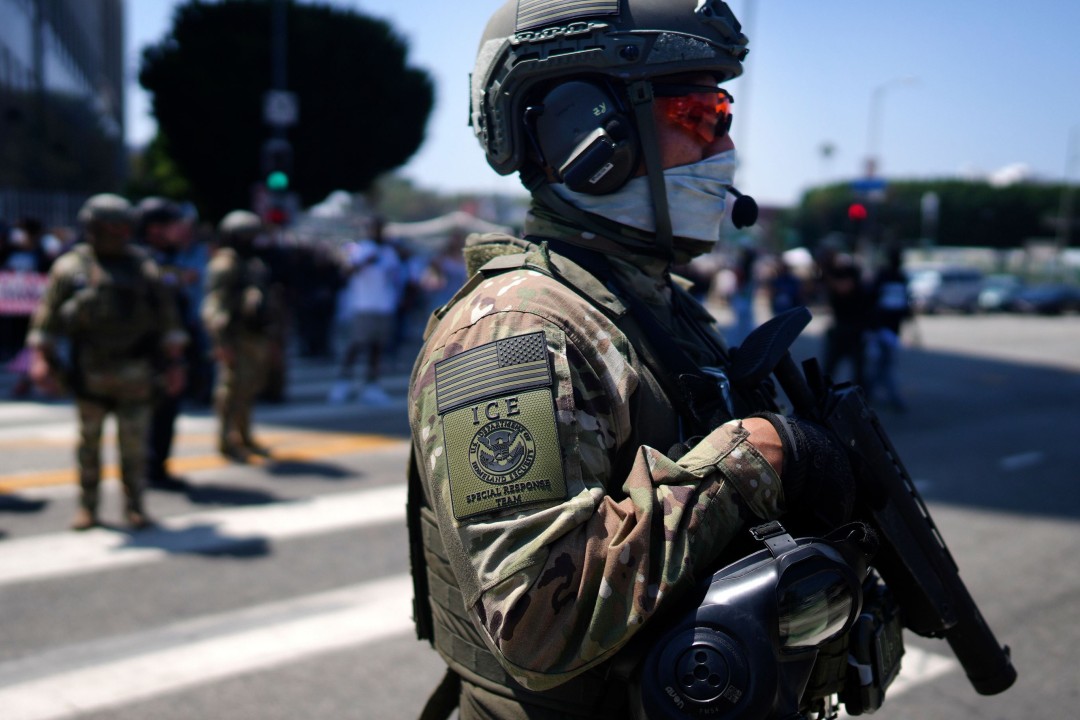
Immigration and Customs Enforcement is moving to equip officers with body cameras in the next two months, but the agency’s policy claims broad control over what footage will be made public by specifying that any releases must be in its “best interests.” After years of delays, ICE said its field officers nationwide will have body-worn cameras by the end of September, the AP reports. A push for greater accountability had followed fatal shootings by officers carrying out President Trump’s immigration enforcement operations. But the agency’s policy could mean taxpayers who are pitching in tens of millions of dollars to pay for the cameras may be kept in the dark about certain high-profile confrontations, at least in their immediate aftermath.
The policy says ICE will promptly release video of shootings and other encounters in which its agents cause death or serious injury only after determining “it is in the best interests of the agency” to do so. That gives its director discretion to release recordings that reflect well on the agency’s image while working to keep others secret, experts on body camera policies said. Such selective releases are routine in some law enforcement agencies but usually not so clearly contemplated in policy, according to professor Christopher Schneider of Brandon University in Canada, a co-author of the new book Police Body-Worn Cameras: Media and the New Discourse of Police Reform. “Body-worn cameras are being used as contemporary image-work tools to present the police to the public in the most favorable way possible,” Schneider said.
The policy requires officers to activate cameras during routine enforcement activities, including while making arrests, executing search warrants, and responding to emergencies. After shootings or other serious confrontations, a committee that includes top ICE officials and lawyers will review footage and recommend whether to release it promptly, according to the policy issued in February 2025. If the ICE director finds that “specific and compelling circumstances” justify withholding the video, they have the authority to block or indefinitely delay the release, the policy says.