
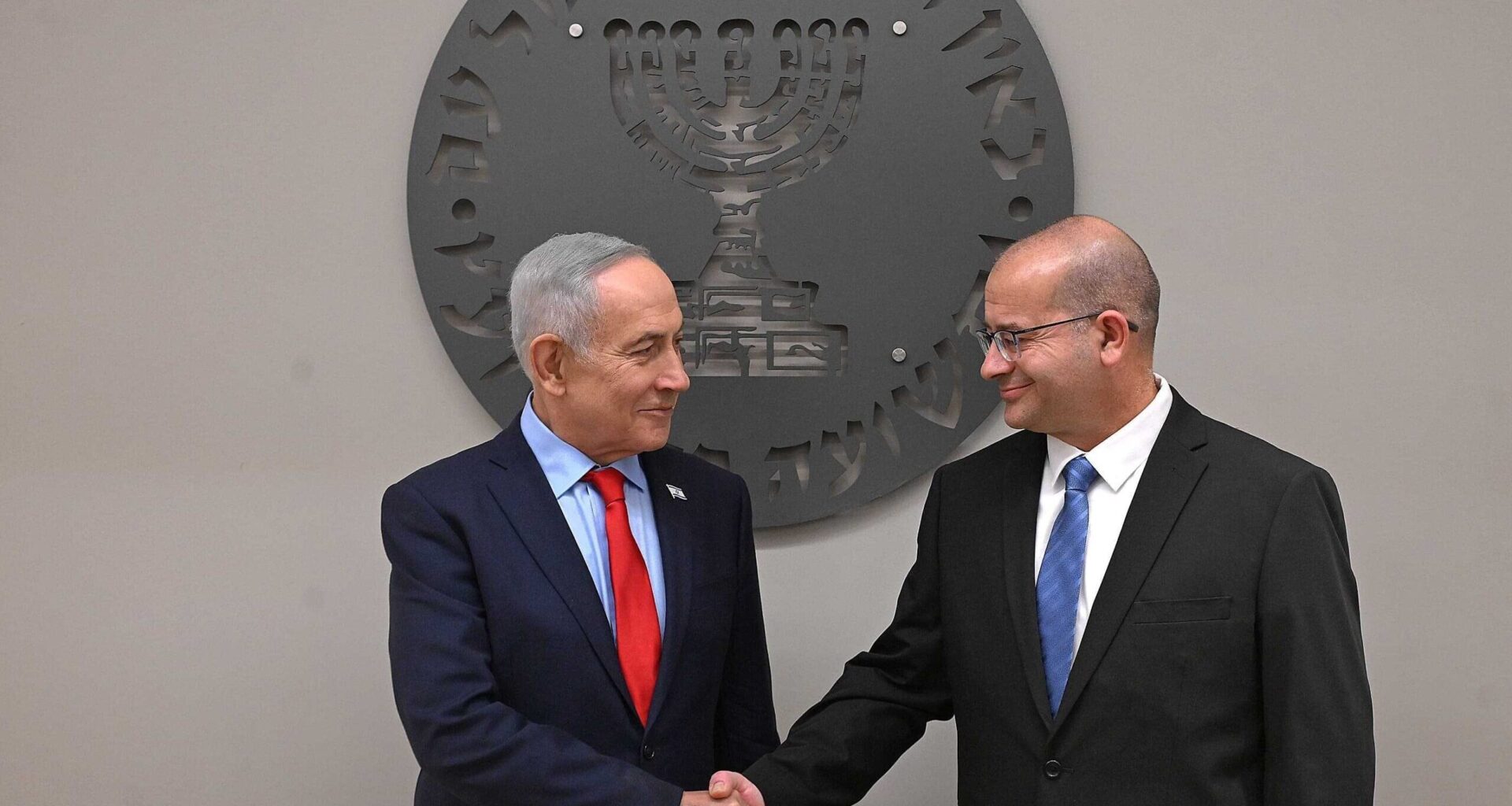
Mossad Director Roman Gofman has removed two of the spy agency’s most senior officials who were closely involved in developing an unsuccessful plan to topple the Iranian regime, Israeli television reported Thursday.
According to Channel 12 news, one of the officials had served since December as the head of the Mossad’s intelligence directorate, and the other was the head of the agency’s Iran division.
The network said the two were among the architects of a written operational plan to bring down the Islamic Republic with the help of Iran’s minority groups, encouraging revived mass protests to oust the regime.
Prime Minister Benjamin Netanyahu reportedly discussed the plan when persuading US President Donald Trump to go to war in February against the Islamic Republic.
Security sources cited by the network said the two officials and Gofman had clashed from the outset, but stressed their departures were being carried out by mutual agreement as part of a broader reorganization of the Mossad and that both were expected to remain at the agency in other roles.
Get The Times of Israel’s Daily Edition
by email and never miss our top stories
By signing up, you agree to the terms
The Mossad plan reportedly envisioned Israeli strikes on Islamic Revolutionary Guard Corps positions along Iran’s border with Iraq, in Iranian Kurdistan. The strikes were designed to open the door for Kurdish fighters to cross into Iran, according to The New York Times report, and push into Kurdish cities in the country’s northwest.
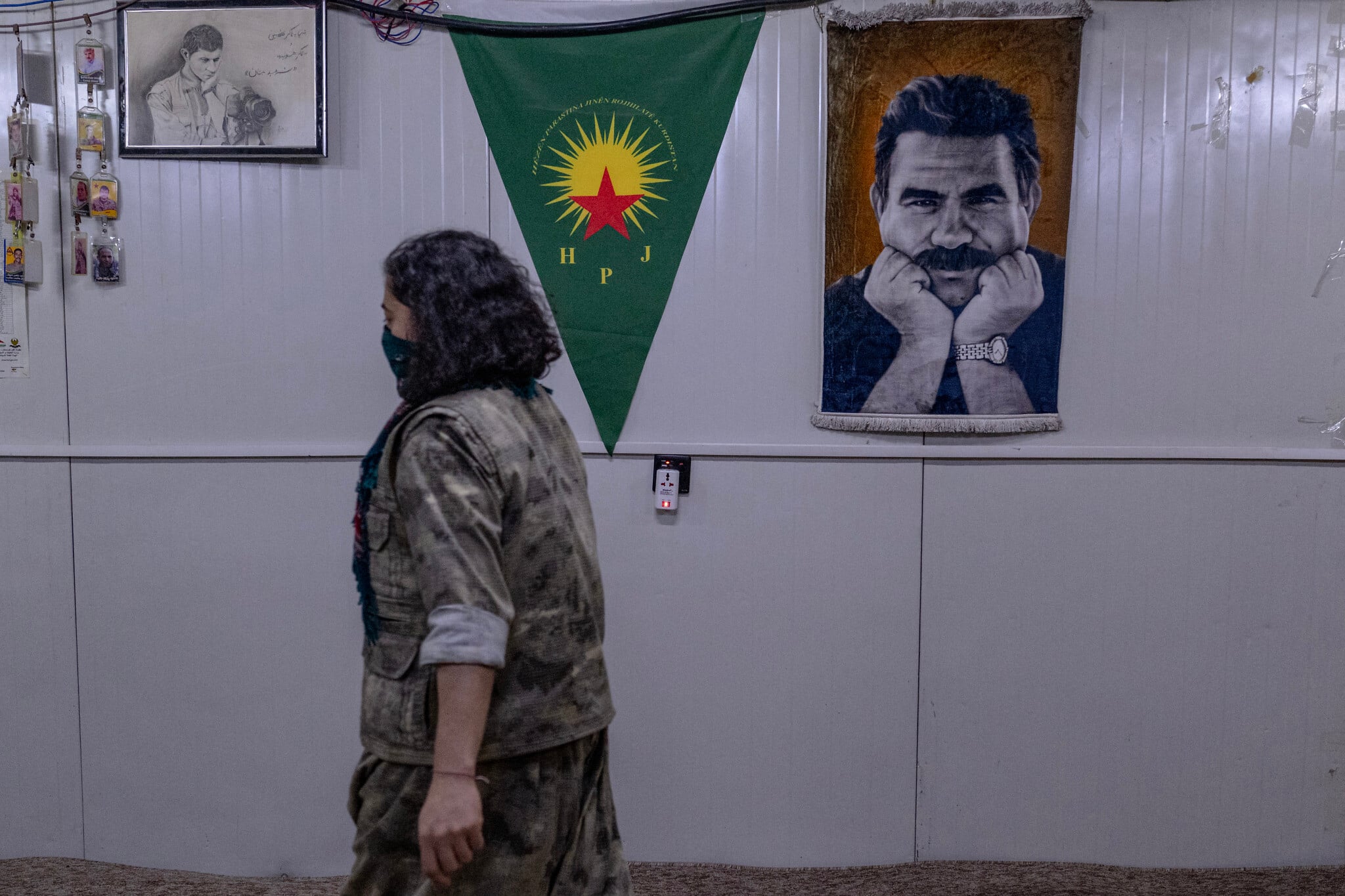
A female Kurdish fighter from the Iranian Kurdish armed faction Kurdistan Free Life Party (PJAK) passes a poster of Abdullah Ocalan, the jailed founder of the Kurdistan Workers’ Party (PKK), at a site near the Iraqi border with Iran in Iraq’s autonomous Kurdistan region, on March 8, 2026. (Photo by AFP)
The Mossad expected thousands of young Kurds to join the fighters, turning into a mass movement that could reach Tehran itself. It was further thought that this would help embolden a mass protest movement with millions of demonstrators to bring down the regime, according to multiple reports.
The Kurdish offensive was one of the key elements of the plan, which also reportedly envisaged installing former hardline president Mahmoud Ahmadinejad as the Iranian leader.
The New York Times also reported last month that Israel engaged in a multi-year effort to recruit Ahmadinejad, in a campaign that included a meeting with then-Mossad chief David Barnea on the sidelines of an academic conference in Hungary. Ahmadinejad’s office denied the story.
At the beginning of the war in February, Israel and the US did carry out heavy strikes against Iranian security forces — including regime officials, army bases, missile systems, police stations and Basij sites — in the country’s northwest in an effort to ease the Kurds’ path, but leaks to the media, lobbying by Turkey, and wariness among the Kurds themselves led Washington to pull the plug on the idea.
In addition to creating the conditions for regime change, Israel and the US sought to degrade the Iranian regime’s military capabilities and distance threats posed by Iran — including its nuclear and ballistic missile programs.
While Trump’s CIA chief and secretary of state would later characterize Netanyahu’s regime change prediction as “farcical” and “bullshit,” the president and many of his advisers were sold on the idea that Iran’s leadership could be taken out and that its military arsenal could be destroyed, according to a New York Times report in April.
Help us report truthfully on social media

As a multimedia journalist, my job is to take the quality, fact-based journalism produced by The Times of Israel newsroom and make it accessible across every platform — from Instagram posts to podcasts to short-form videos.
This is how many, especially young people, consume news these days. But misinformation is rampant on social media. Our team at ToI produces accurate, responsible short-form reporting on Israel and the Jewish world.
If you believe in the importance of factual social media journalism, please consider joining our reader support group, The Times of Israel Community. Your financial support is essential to sustain responsible multimedia reporting.
— Gabriella Jacobs, multimedia journalist
Already a member? Sign in to stop seeing this
You’re a dedicated reader

That’s why we started the Times of Israel – to provide discerning readers like you with must-read coverage of Israel and the Jewish world.
So now we have a request. Unlike other news outlets, we haven’t put up a paywall. But as the journalism we do is costly, we invite readers for whom The Times of Israel has become important to help support our work by joining The Times of Israel Community.
For as little as $6 a month you can help support our quality journalism while enjoying The Times of Israel AD-FREE, as well as accessing exclusive content available only to Times of Israel Community members.
Thank you,
David Horovitz, Founding Editor of The Times of Israel