
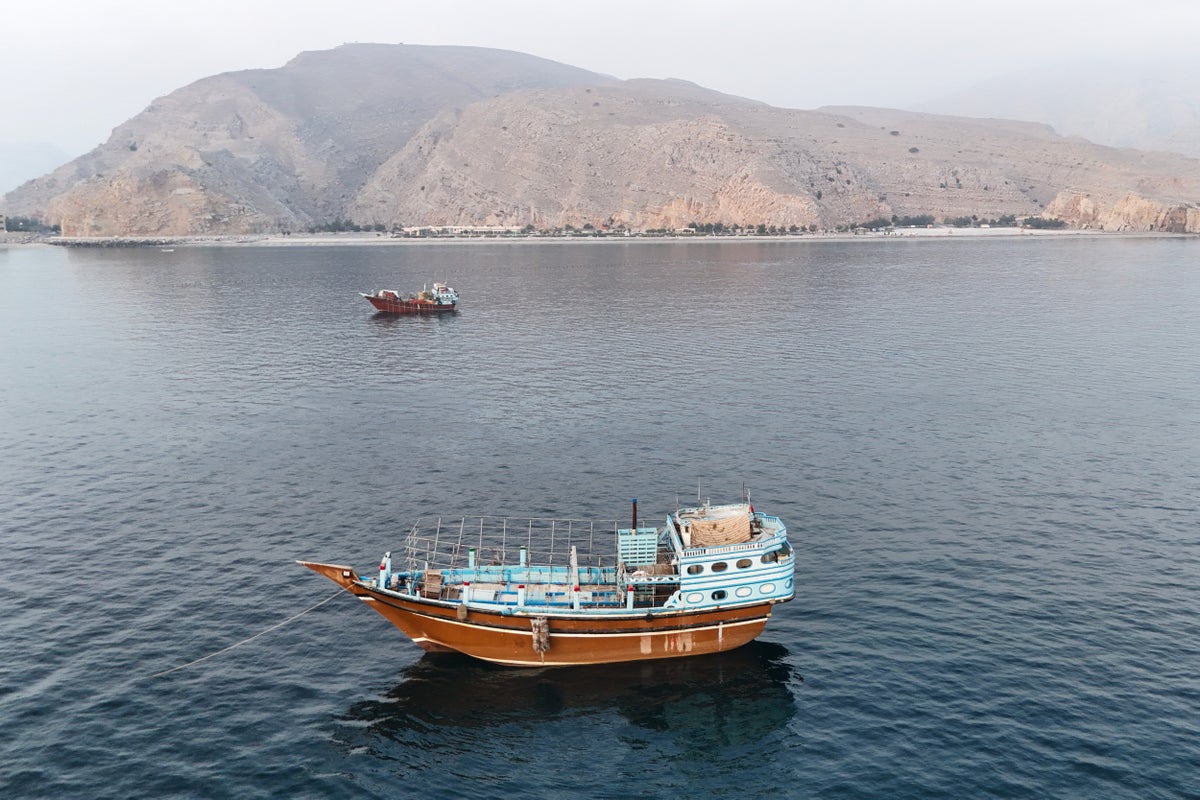
No one is holding their breath for a miracle as he US and Iran enter the final stages of negotiations over the future of the Strait of Hormuz.
Donald Trump says the Strait is “sort of open right now”, even as Iran remains firm on charging a toll as high as seven per cent of the cargo price.
Europeans are publicly opposing any extra charge but quietly contemplating whether it is better to pay Iran than endure a longer-term fluctuation to energy supply and prices – if a toll can be labeled a voluntary contribution and not a mandatory payment. The Gulf countries are looking for alternative routes, and Asian nations are seeking exemption from the toll Iran has demanded for safe passage of commercial vessels.
But a quiet fury against Donald Trump – for plunging the global economy into uncertainty and handing Iran the leverage it probably didn’t think it had – is palpable, and hard to underprice in future dealings with America.
“The world was a better place before February 28, [the day the US and Israel attacked Iran] and made it realise it had a stronger weapon than a nuclear bomb,” an Asian diplomat told me over the phone this week.
Trump has committed many diplomatic faux pas, insulted allies and embraced dictators, but he may have dug himself into a hole by attacking Iran and believing it would end just as swiftly as his special operation in Venezuela.
He cannot win without deploying troops on the ground and trying to decisively defeat Iran. He won’t concede whatever the costs.
Many governments in the world are livid at Iran for blackmailing them into paying for safe passage, but if anything they are even angrier at Trump for creating the conditions that made it possible. They can’t tell him off and risk higher tariffs or withdrawal of security assurances, so they have decided to mull their options.
How do you solve a problem like the Strait of Hormuz? The United Arab Emirates (UAE) has decided to reduce its use of the Strait to zero and announced a major expansion of its eastern ports on the Gulf of Oman. It has enhanced reliance on the Al Fujairah port, which bypasses the Strait of Hormuz.
Saudi Arabia has started to operate the East-West pipeline at its full capacity and divert crude exports to the Red Sea coast. It plans to boost trade through Egypt and build a bridge from the futuristic city of Neom to the Sinai peninsula, turning Egypt’s Mediterranean coast into a gateway to Europe.
Before the war, Iraq exported much of its crude through the Persian Gulf. It has lately started to transport some of that overland to the Syrian town of Baniyas on the Mediterranean. If an old Iraq-Syria pipeline is revived it could help Iraq expand exports through Syria.
India is hoping that the India-Middle East-Europe corridor (IMEC), an aspirational rail-and-port corridor through Israel, Jordan and the Gulf designed to link Europe to the Arabian Peninsula and India and billed as an alternative to the maritime chokepoints of the Strait of Hormuz and Bab al-Mandab, will secure its energy needs while China is speedily pivoting towards renewables.
But these workarounds are expensive and will take years if not decades to materialise. IMEC has already run into trouble because Riyadh is reticent to conduct trade via Israel, and the bridge to the Sinai is still just a plan on paper. Conceived for peacetime conditions, IMEC now looks ill-suited to an environment in which maritime chokepoints are routinely weaponised. It needs something of a redesign to function in this febrile new world.
A semantic workaround is the most probable path forward: let Iran charge a toll but call it a fee. And for the sake of the consumers who will eventually bear the costs imposed on shipping companies, keep the “fee” feasible. Oman, which also controls the Strait and is involved in the negotiations, has asked for 3 per cent of the cargo value.
New Delhi and Beijing are seeking further discounts and hoping long-term relations with Iran will pay off.
“We will definitely consider special treatment for the countries that were friendly to us and specially stood by us during the hard times,” Iran’s Ambassador to China, Abdolreza Rahmani Fazli said at the World Peace Forum in Beijing last month.
Yet solving the Hormuz issue without creating a dangerous precedent has become an impossible task. If Iran can blackmail the global community into paying for safe passage, what’s stopping the Houthis from blocking Bab al-Mandab, the vital 20-mile-wide“Gate of Tears” located between Yemen and the Horn of Africa, or anyone else?
Trump might still sing his own praises, but diplomats across the world are holding their heads in their hands, waiting for him to leave the White House and hoping for someone reasonable to come to power.
“He offered a better deal with Iran. Where is it?” a diplomatic source asked me. Trump picked a fight with geography, and he lost. Even if others foot the bill, the Iranian fee may yet become known as Trump’s toll.