
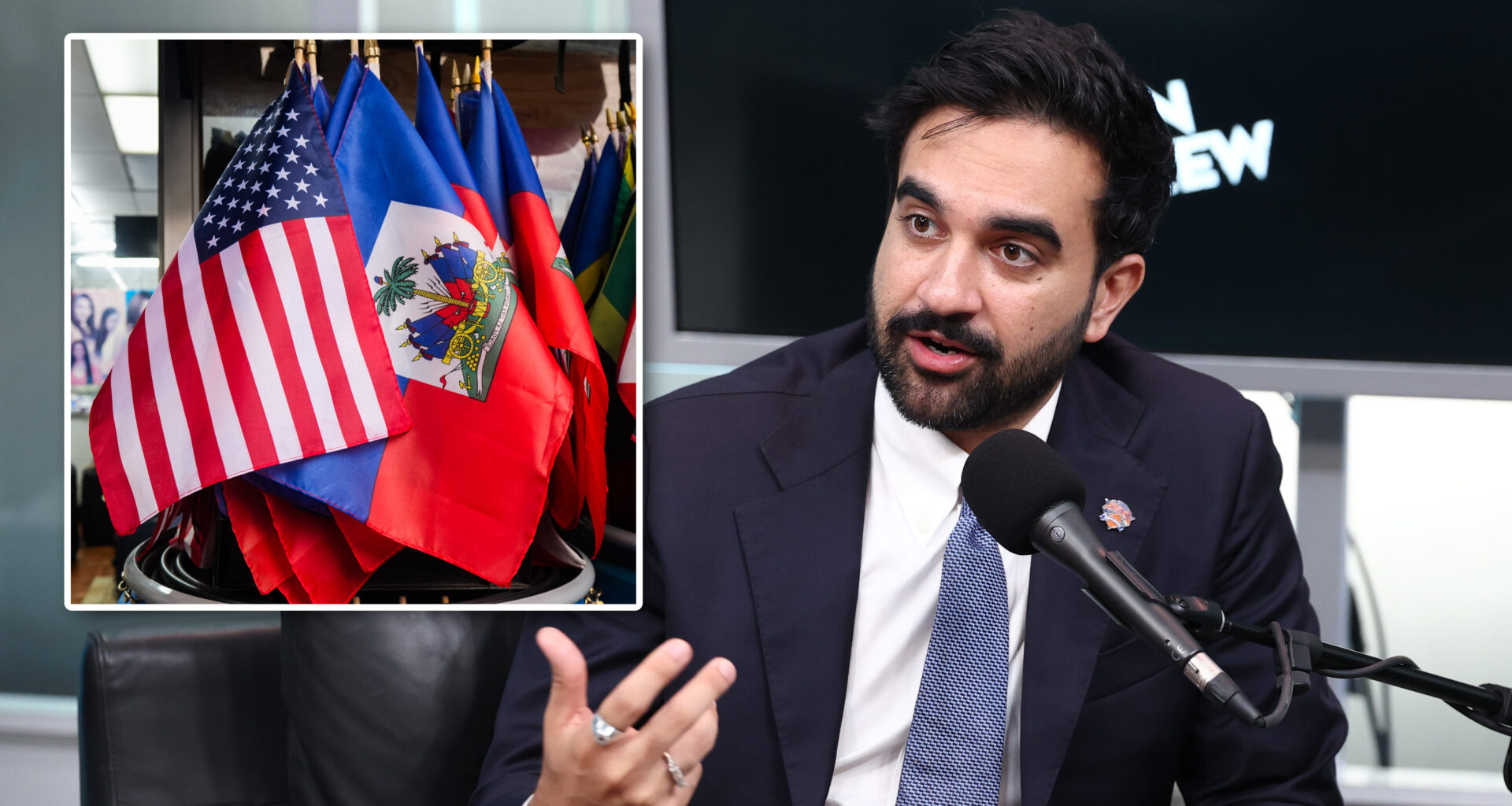
City Hall is identifying and terminating potentially hundreds of Haitian city employees living in the country under federal Temporary Protected Status, an immigration program that President Trump ended, Mayor Mamdani announced.
In a statement put out late Friday night, Mamdani said the White House has directed City Hall “to review the work authorization of Haitian TPS holders and separate from any employees who have not established alternative paths to legal work.”
City Hall on Saturday would not say how many workers are being fired under this federal directive, which was made after the courts on Wednesday lifted a stay on ending the program.
Officials told The New York Times that at least dozens of city workers are facing termination — a number they said could rise to the hundreds.
Asked about City Hall firing the TPS holders, one woman in Brooklyn’s Little Haiti didn’t hold any will against the mayor.
“Do Mayor Mamdani have to follow federal federal rules?” the 55-year-old Haitian immigrant, who lives in Flatbush, said. “Mamdani is a mayor. He’s not above the law. He has to follow the law. That’s what I say.”
“They are afraid because you’re going to pick them and send them home with nothing,” she said of those who will be affected. “They come here. They work. They give. They give their blood. They work. They got children, and then now we’re going to separate them from their children, from whatever they work for 15 years. Yes, we are afraid. But we are not afraid to go to our country if security was established in our country,” she added.
A manager at a Haitian restaurant in Flatbush said his workers won’t be impacted, but he does worry that he may start seeing the effects at other local eateries.
“If we see something happening where workers are not showing up, then it may be at a point where people start talking about it,” he said.
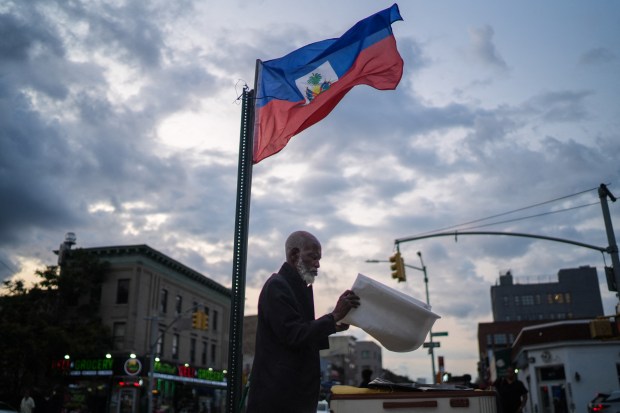 A man works at a table below a Haitian flag in the Little Haiti neighborhood of Brooklyn, New York, on July 29, 2026. (Photo by Ryan MURPHY / AFP via Getty Images)
More than 300,000 Haitians and roughly 3,000 Syrians nationwide are enrolled in TPS, which allowed them to work in the United States while their home countries faced humanitarian disasters.
The Supreme Court in June voted 6-3 along ideological lines to revoke the program, which would make these immigrants undocumented and unable to get work in the U.S.
While following Trump’s directive, Mamdani called on the president to reinstate TPS, which also affects city hospitals staffed by many Haitian immigrants who are TPS holders.
“Only President Trump has the power to restore TPS or grant ‘Deferred Enforced Departure’ (DED) to affected TPS holders,” Mamdani said. “Doing so would provide immediate protection while allowing families, employers and communities the certainty they need – and demonstrate the importance of an immigration policy that is both orderly and compassionate.”
“The President should exercise his authority to benefit all New Yorkers and protect our economy and provide certainty for employers and communities,” he added.
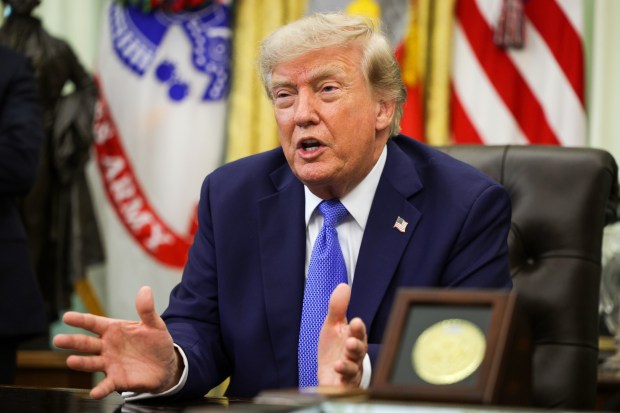 President Donald Trump speaks during an event in the Oval Office of the White House on Aug. 6, 2026 in Washington, DC. (Photo by Alex Wong/Getty Images)
Many city TPS holders have lived in New York City for decades, Mamdani said, adding that the “Haitian community is an indispensable part of New York City.”
“They fled earthquakes, famine, war and political violence. They arrived in New York and built lives, raised families and started small businesses,” he said. “Their contributions to the health care, construction and hospitality industries, among so many others, help drive our economic strength.”
While City Hall begins issuing pink slips to city employees living in the U.S. under TPS, Mamdani said his administration “will do everything in its power to support TPS recipients in this time of incredible instability” and give these immigrants free legal consultations, help find them other forms of work, health insurance, and other resources.
“Every affected employee is being connected with agency staff to understand their options, including non-disciplinary separation or resignation, pathways to reinstatement if work authorization is restored or another legal status is obtained, and support throughout this process,” he said.
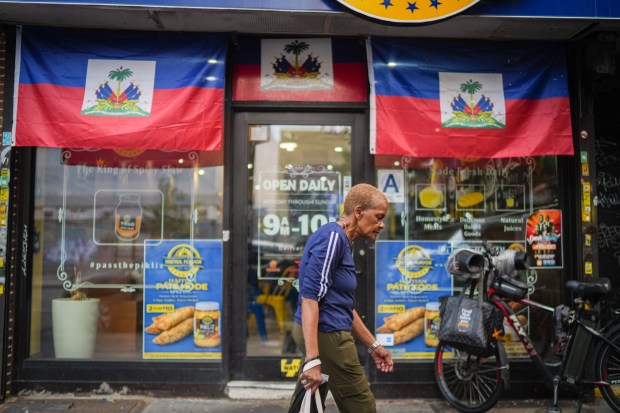 A woman walks past a restaurant displaying Haitian flags in the Little Haiti neighborhood of Brooklyn, New York, on July 29, 2026. (Photo by Ryan MURPHY / AFP via Getty Images)
Residents in Haitian communities throughout the city fear that, with TPS ending, ICE agents will swarm in and deport longtime TPS residents who suddenly found themselves illegal immigrants.
“Most people scared to go back to Haiti now, most people because it’s dangerous,” Marie, 78, who immigrated to the U.S. from Haiti in 2000, said. “When you live over here — it could be one year, 20 years, 50 years — when you go (back) to your own country, some people think you have money, money, money, and want to kill you, want to do something bad to you.”
Homeland Security would not say if ICE raids were being planned.
“Temporary Protected Status is exactly that—temporary. For too long, TPS has been allowed to function as a de facto amnesty program despite Congress never intending it to be permanent,” the Department of Homeland Security said in a statement. “What we would say now is it’s closing time, which means you don’t have to go home, but you can’t stay here. The good news is it’s not too late to get a $2,600 check and a free flight home.”