
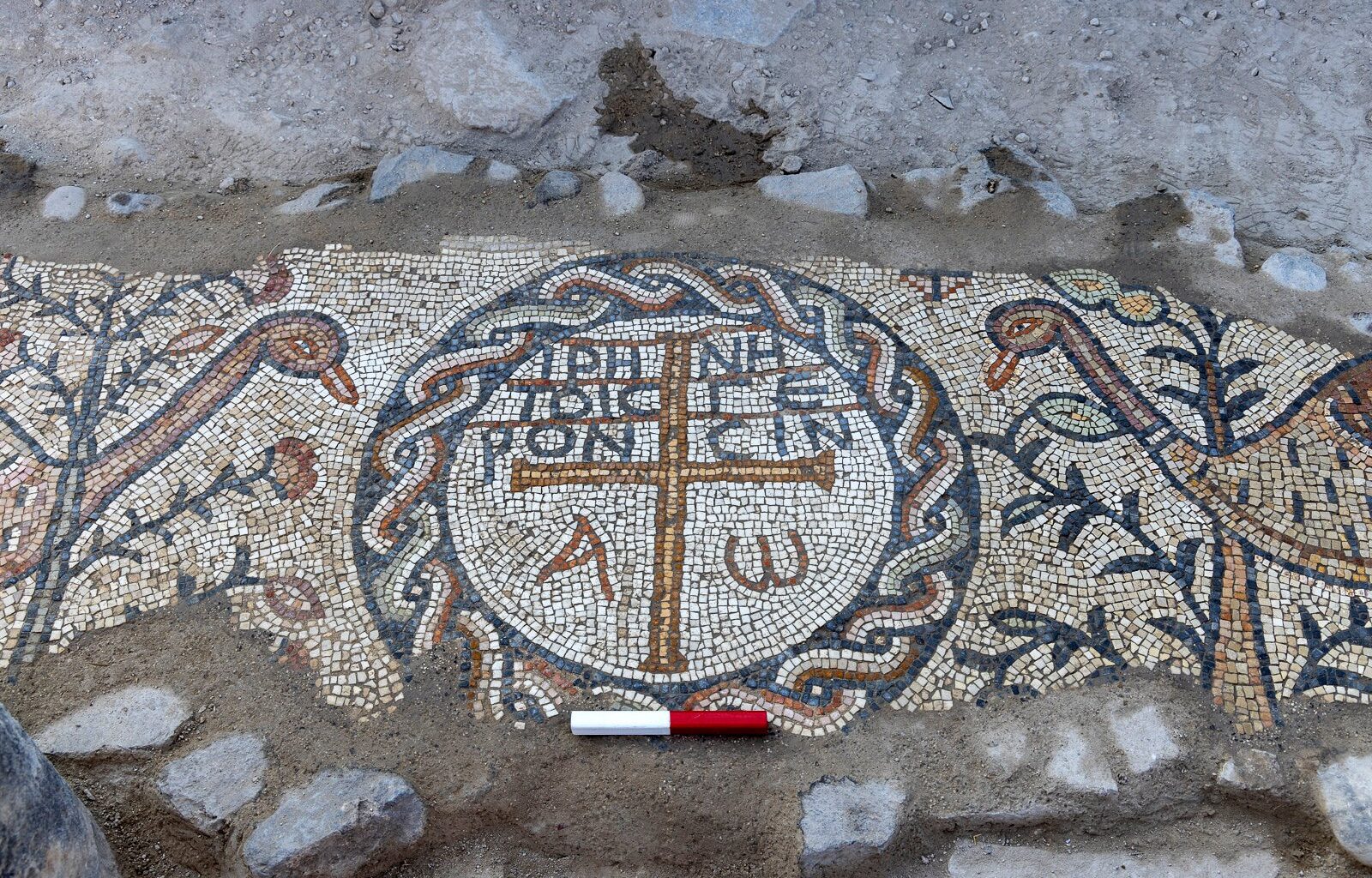
Israeli archaeologists believe they have found the world’s oldest home for the elderly to date during excavations at the Hippos National Park near the Sea of Galilee, the University of Haifa announced on Monday.
The discovery made by researchers from the university focused on an ornate mosaic medallion dated to the late fourth or early fifth century bearing the Greek inscription “Peace be with the elders,” which was found close to one of the most impressive mosaics at the site, the researchers said.
“This is living proof that care and concern for the elderly are not just a modern idea, but were part of social institutions and concepts as far back as about 1,600 years ago,” said Dr. Michael Eisenberg of the University of Haifa’s Zinman Institute of Archaeology, who co-directed the excavation project.
In a study published in Zeitschrift für Papyrologie und Epigraphik, Eisenberg, together with fellow researchers Dr. Arleta Kowalewska and Prof. Gregor Staab from the University of Cologne, argued that the inscribed medallion was evidence of the earliest excavated nursing home in the world, basing their claim on the inscription’s reference to the specific age group as well as its location within a residential area of the city.
Designated institutions for the elderly have been referenced in texts from the fifth and sixth centuries, but this was the first physical evidence of such a practice, the researchers said.
Get The Times of Israel’s Daily Edition
by email and never miss our top stories
By signing up, you agree to the terms
The find was uncovered near the intersection of two major streets in the residential area of the ancient Byzantine city of Hippos in the Galilee. The Christian city was the seat of the bishop, where archaeologists have also discovered seven churches, a temple, a basilica, a theater, and at least two theaters.
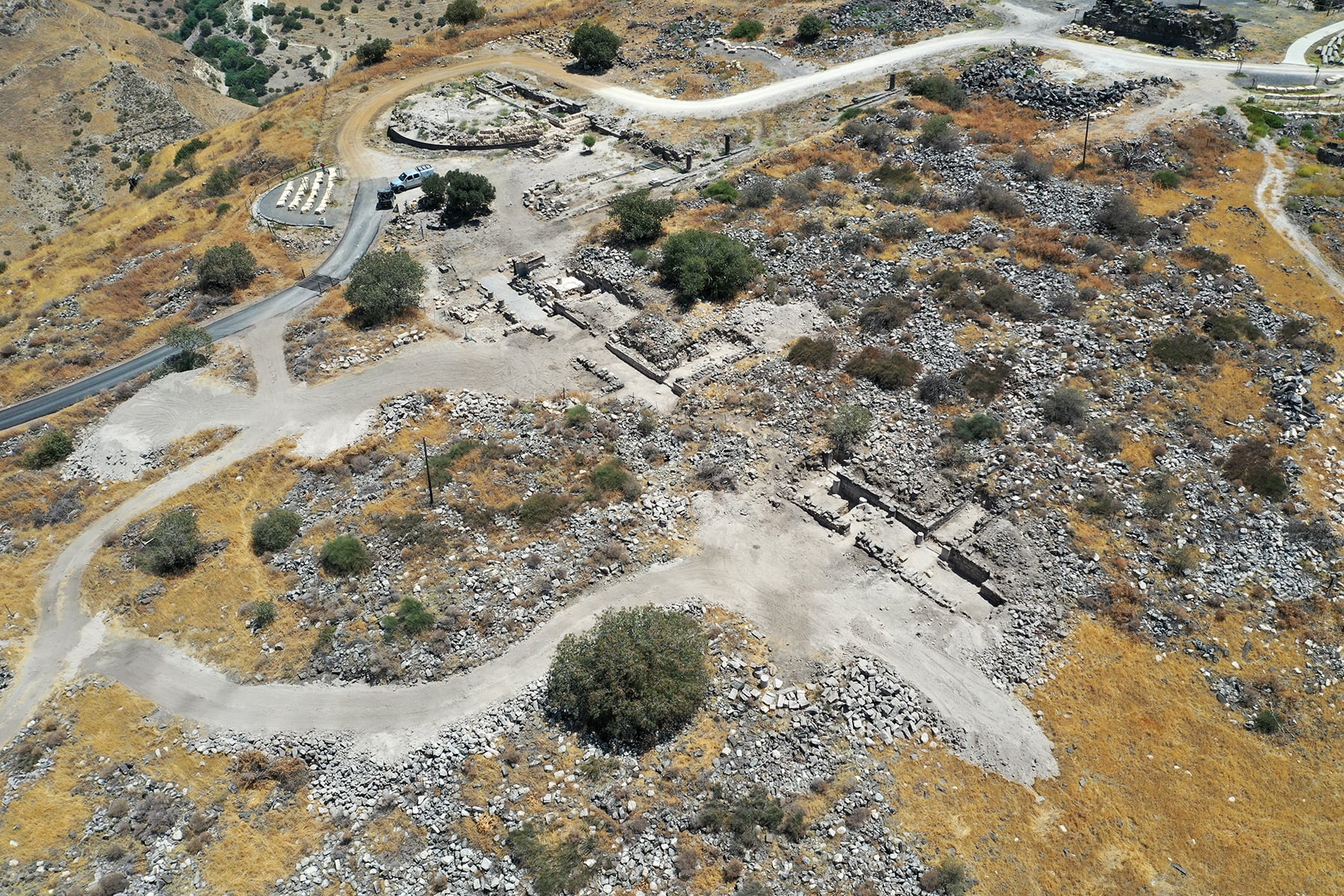
The mosaic of the elders’ excavation area within one of Hippos’ residential areas. (Dr. Michael Eisenberg)
The find was fully uncovered during the 2023-2024 excavation seasons, after which the team analyzed the inscription and the surrounding iconography, concluding that it had been prominently located at the entrance to the institution.
“This was a communal and spiritual institution integrated into the fabric of city life and reflecting the social values of the period. The inscription addresses a specific public directly, which is a rare glimpse into the daily lives of older people in antiquity,” the researchers wrote.
They added that the medallion “may provide one of the earliest material testimonies in the Holy Land, showing how the Christian community began assuming responsibilities for care that had previously been handled by family networks alone. This development likely reflects new Christian ways of life outside traditional family structures, such as monasticism.”
Is The Times of Israel important to you?
If so, we have a request.
Every day, even during war, our journalists keep you abreast of the most important developments that merit your attention. Millions of people rely on ToI for fast, fair and free coverage of Israel and the Jewish world.
We care about Israel – and we know you do too. So today, we have an ask: show your appreciation for our work by joining The Times of Israel Community, an exclusive group for readers like you who appreciate and financially support our work.
Already a member? Sign in to stop seeing this
You appreciate our journalism

You clearly find our careful reporting valuable, in a time when facts are often distorted and news coverage often lacks context.
Your support is essential to continue our work. We want to continue delivering the professional journalism you value, even as the demands on our newsroom have grown dramatically since October 7.
So today, please consider joining our reader support group, The Times of Israel Community. For as little as $6 a month you’ll become our partners while enjoying The Times of Israel AD-FREE, as well as accessing exclusive content available only to Times of Israel Community members.
Thank you,
David Horovitz, Founding Editor of The Times of Israel