
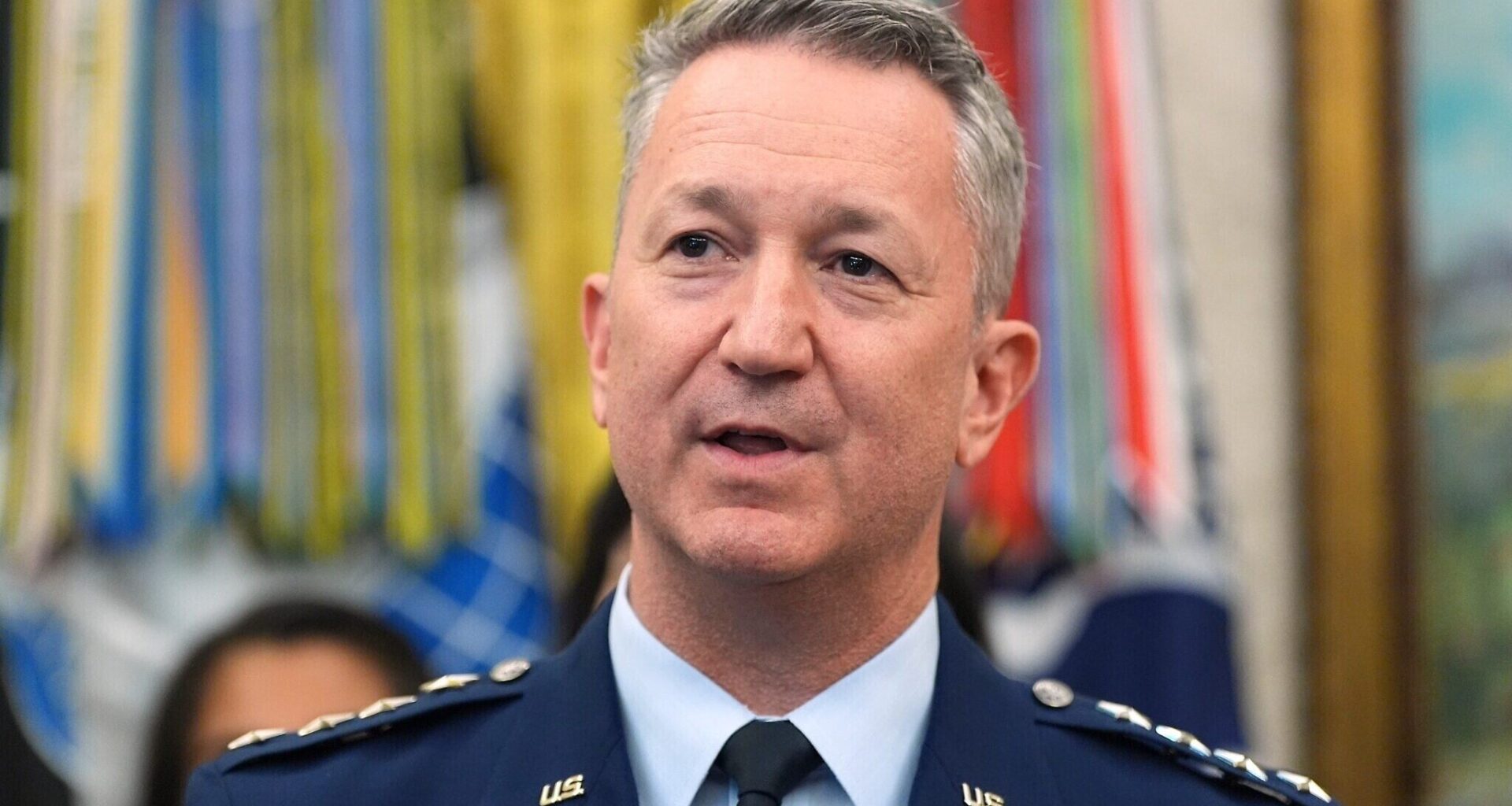
US Chairman of the Joint Chiefs Gen. Dan Caine has privately said in recent weeks that the United States needs “an off-ramp” from the war with Iran, believing that the military options currently being considered could backfire and that airstrikes alone are unlikely to accomplish the administration’s goals, CNN reported Friday, citing sources familiar with the matter.
According to the report, Caine is not the only administration official who believes the US is at a crossroads in the war. He reportedly discussed the possibility of an off-ramp with other top advisers to US President Donald Trump, including Vice President JD Vance, CIA chief John Ratcliffe and Secretary of State Marco Rubio.
Caine met with the officials to ensure they were in agreement on Iran ahead of planned meetings with Trump, aiming to outline the shortfalls of military action on that front, according to the report.
A source quoted by CNN lamented that the options now under consideration were not weighed sooner: “It is rough when you are looking at those options in the middle of the war instead of before it starts.”
Despite his reservations, the report said Caine told Trump that if he wanted to move ahead in escalating against Iran, “We could absolutely wreck them.”
Get The Times of Israel’s Daily Edition
by email and never miss our top stories
By signing up, you agree to the terms
In response to the report, a spokesperson for Caine told the cable network, “We do not discuss the Chairman’s confidential conversations with the President, the Secretary, or other senior leaders, nor do we comment on anonymous, agenda-driven characterizations of those conversations by sources who were not privy to them.”
Iran, Oman close in on Hormuz deal
The reported discussions came as Iran and Oman appeared to be nearing an agreement on arrangements for shipping through the Strait of Hormuz, which Tehran has effectively blockaded since the US and Israel launched the war on Iran on February 28.
Iranian Foreign Minister Abbas Araghchi said Saturday that Tehran and Muscat were “very close” to reaching an accord on a new shipping route through the strategic waterway.
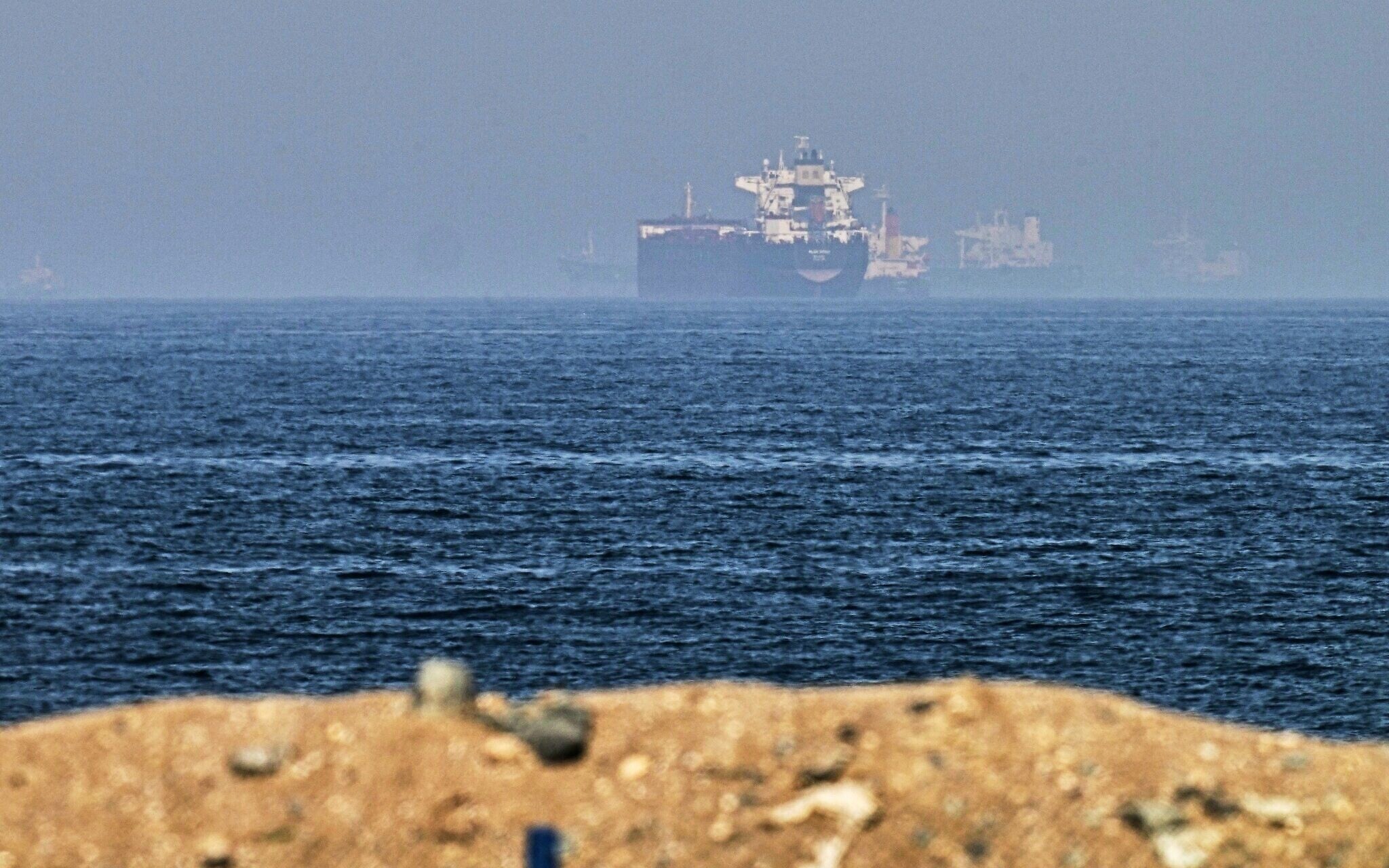
Cargo ships are seen at sea near the Strait of Hormuz, as viewed from a rocky shoreline near Khor Fakkan, United Arab Emirates, May 1, 2026. (AP Photo/Fatima Shbair)
He added that there would be conditions, including compensation for what Tehran said were US violations of the Islamabad memorandum of understanding, a June agreement between the US and Iran to set terms for peace talks.
Iran and Oman were discussing a temporary shipping route while technical and legal issues surrounding a permanent route were resolved, Araghchi added.
“The reopening of the Strait of Hormuz is subject to other conditions and compensation for the violation of the memorandum of understanding by the United States,” Araghchi said.
A US official similarly said Friday that progress had been made in the Iran-Oman talks and that “we expect a deal soon.”
Trump has been asserting a deal was imminent since last week, when he called off a major military strike against Iranian energy sites.
Iran’s Islamic Revolutionary Guard Corps, however, insisted Saturday that reopening the strait was unrelated to the negotiations with Oman and would depend on Washington accepting Tehran’s conditions.
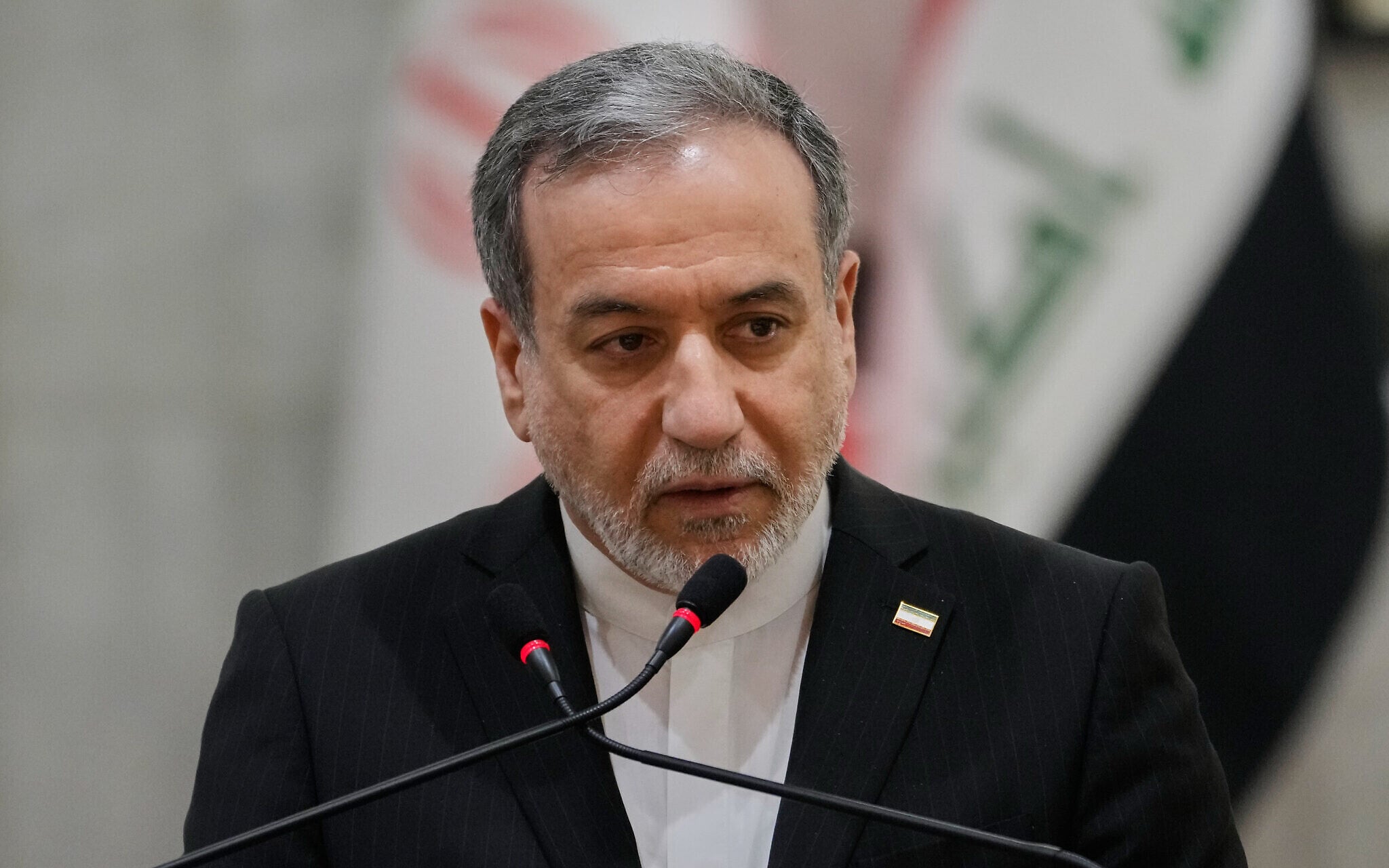
Iranian Foreign Minister Abbas Araghchi speaks during a news conference with his Iraqi counterpart Fouad Hussein after their meeting at the foreign ministry in Baghdad, Iraq, June 28, 2026. (AP/ Hadi Mizban)
“The reopening of the Strait of Hormuz is subject to the specific mechanisms and conditions of the Islamic Republic of Iran and is unrelated to the negotiations between Iran and Oman,” Iran’s Tasnim news agency cited IRGC spokesperson Hossein Mohebbi as saying.
Additionally, Araghchi said Saturday that talks with Oman were “approaching the final stages,” but cautioned that “this is not a sign of the reopening of the Strait of Hormuz.”
The IRGC, the ideological arm of the Iranian military, echoed that message.
“The opening of the Strait of Hormuz has its own mechanism and has nothing to do with the negotiations between Iran and Oman,” the force said.
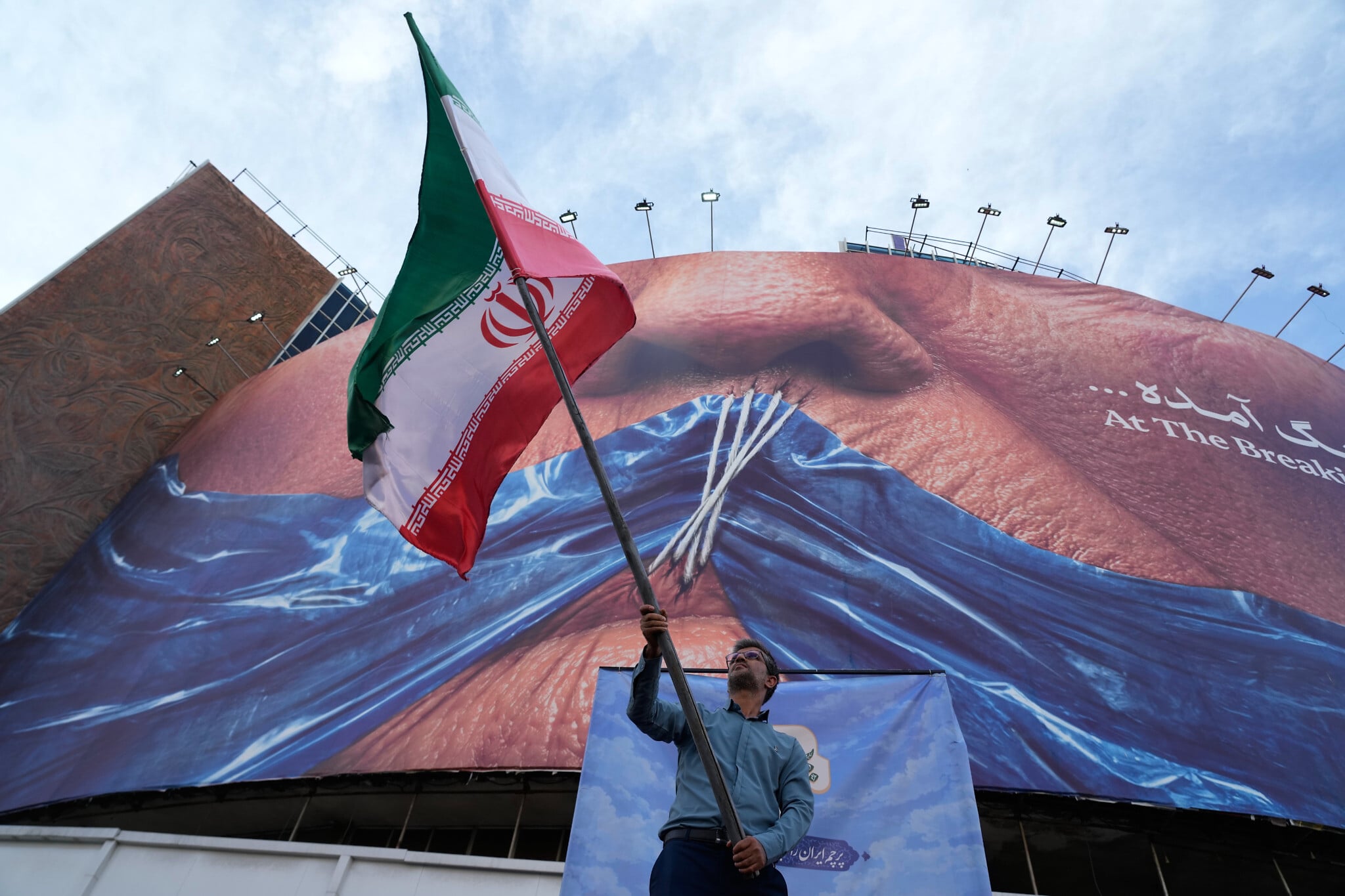
A man waves an Iranian flag for a pro-government campaign under a billboard with a graphic showing the Strait of Hormuz and sewn lips of US President Donald Trump in a square in downtown Tehran, May 6, 2026. (AP Photo/Vahid Salemi)
“The enemy is forced to accept Iran’s conditions for the opening of the strait and to refrain from the interference that it is currently making in the negotiations — which have almost reached their end — between Iran, Oman and other countries.”
Iran has imposed an effective blockade of the strait and wants to charge users for passage, a demand the US fiercely opposes, while negotiating with neighboring Oman over arrangements for the waterway’s future management.
Attacks on shipping continue amid talks
The diplomatic movement came alongside continued attacks on shipping in the strait.
The United Arab Emirates said Saturday that Iran had targeted a tanker belonging to the state-owned Abu Dhabi National Oil Company while it was transiting the Strait of Hormuz.
The UAE Foreign Ministry condemned what it called a “hostile Iranian attack that targeted a tanker belonging to ADNOC with a missile while it was transiting the Strait of Hormuz, without causing casualties.”

Small boats line the shore as cargo ships and other commercial vessels appear anchored in the Strait of Hormuz off Bandar Abbas, Iran, July 27, 2026. (Razieh Poudat/ISNA via AP)
Later Saturday, the United Kingdom Maritime Trade Operations said a ship had been hit by a projectile off Oman in the Strait of Hormuz, causing a fire that was extinguished without casualties.
It was unclear whether the two reports referred to the same vessel.
On Friday, ADNOC said that since the start of the war, 15 of its vessels had been attacked in Hormuz, “including three vessels this week alone.”
Before US-Israeli strikes in February kicked off what quickly became a regional war, the Strait of Hormuz carried around a fifth of the world’s oil and liquefied natural gas.
Help us report truthfully on social media

As a multimedia journalist, my job is to take the quality, fact-based journalism produced by The Times of Israel newsroom and make it accessible across every platform — from Instagram posts to podcasts to short-form videos.
This is how many, especially young people, consume news these days. But misinformation is rampant on social media. Our team at ToI produces accurate, responsible short-form reporting on Israel and the Jewish world.
If you believe in the importance of factual social media journalism, please consider joining our reader support group, The Times of Israel Community. Your financial support is essential to sustain responsible multimedia reporting.
— Gabriella Jacobs, multimedia journalist
Already a member? Sign in to stop seeing this
You’re a dedicated reader

That’s why we started the Times of Israel – to provide discerning readers like you with must-read coverage of Israel and the Jewish world.
So now we have a request. Unlike other news outlets, we haven’t put up a paywall. But as the journalism we do is costly, we invite readers for whom The Times of Israel has become important to help support our work by joining The Times of Israel Community.
For as little as $6 a month you can help support our quality journalism while enjoying The Times of Israel AD-FREE, as well as accessing exclusive content available only to Times of Israel Community members.
Thank you,
David Horovitz, Founding Editor of The Times of Israel