

 Close
Close
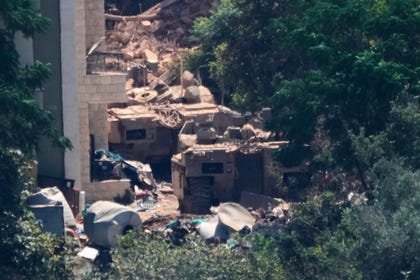
An Israeli tank in the Lebanese village of Zawtar al-Gharbiya, southern Lebanon, Wednesday. Credit: Mohammed Zaatari/AP
An Israeli tank in the Lebanese village of Zawtar al-Gharbiya, southern Lebanon, Wednesday. Credit: Mohammed Zaatari/AP
The implementation of the agreement signed between Israel and Lebanon in June, which calls for the disarming of Hezbollah and the gradual withdrawal of the IDF from southern Lebanon, is expected to continue very slowly.
Two areas were designated as pilots, with the Lebanese army slated to take over with the IDF’s assent. So far, the Lebanese army has taken over only one of the two areas, the northern one. It has not yet occupied the southern area, which includes the villages of Froun and Ghandouriya, close to the Litani and Saluki rivers.
The message the Lebanese have relayed in the talks with Israel, held in Rome and Washington, is that there is no rush. They estimate that it will take two more months until they can assume responsibility for other pilot areas.
Israel is also in no hurry to implement the agreement. It is politically inconvenient for Prime Minister Benjamin Netanyahu’s government to be identified with further withdrawals in the period before the Knesset election on October 27.
In any case, the Trump administration is imposing substantial military restraint on aggressive moves by Israel in the Gaza Strip, and may demand that some withdrawal by IDF forces commence, in keeping with the international Board of Peace’s 15-point plan.