
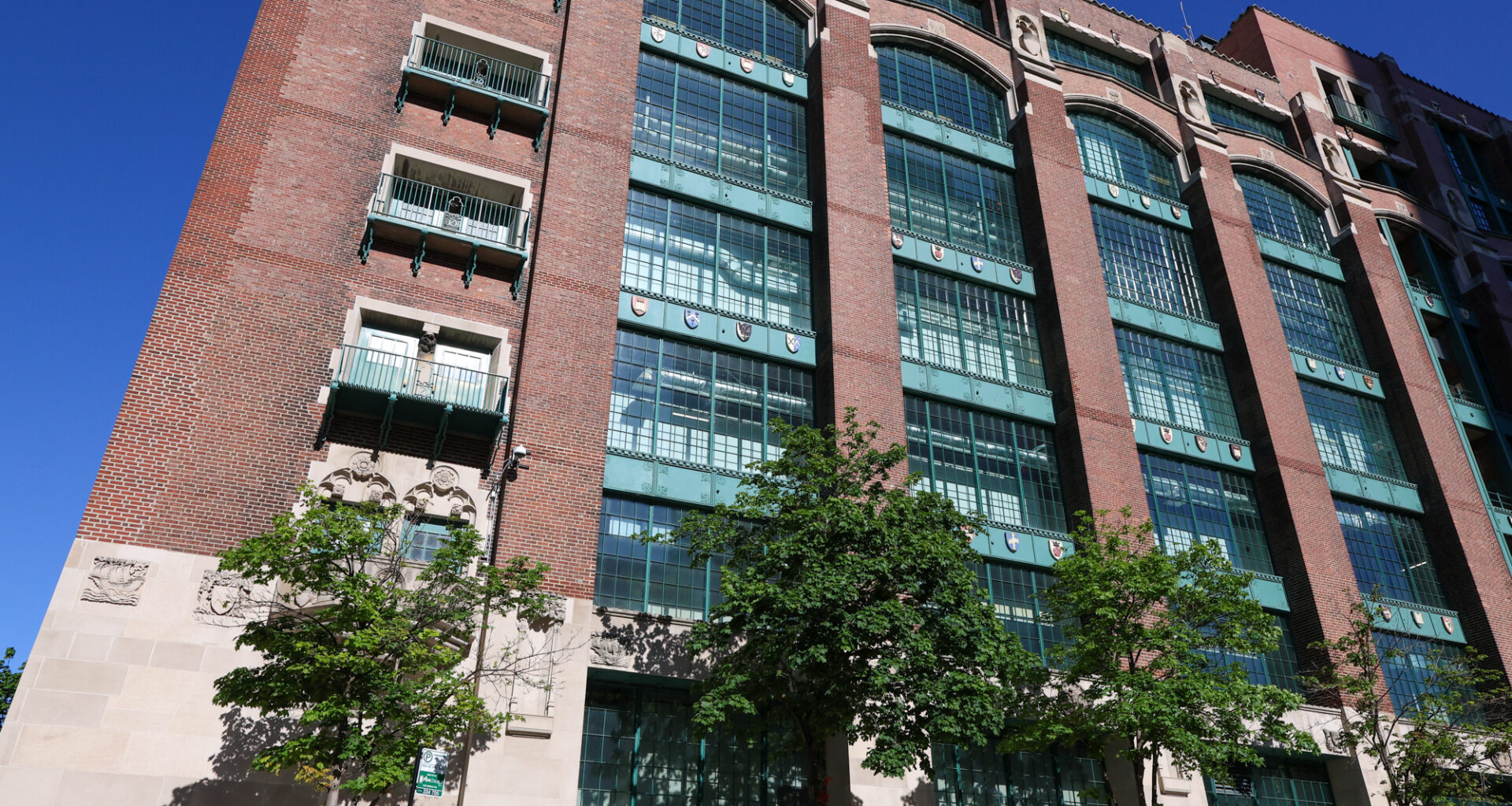
CHICAGO — Data centers are booming — and drawing wide-scale attention as tech developers seek to expand even further in the city and suburbs.
The large buildings filled with computers and networking equipment that store, process and deliver digital information largely operated out of sight for most of the internet era. But a surge in demand for artificial intelligence and cloud storage in recent years has made them one of the nation’s fastest-growing and most controversial pieces of infrastructure.
Data centers power the digital world. When someone streams a video, sends an email, stores a photo in the cloud, logs in to a bank account or asks an artificial intelligence tool a question, a data center is likely handling the background work.
But as they grow more and more prolific, the centers have come under fire for their large-scale consumption of electricity and water and growing brick-and-mortar presence. The tax breaks they’ve received, the noise they create and the relatively few people they employ once they’re running also add friction.
Chicago is quickly becoming a leading market for companies looking to build new data centers and computing facilities. The local market for the centers — which includes the suburbs — is the fourth largest in the country, after Northern Virginia, Atlanta and Dallas-Fort Worth, according to CBRE, which tracks data center trends.
With competing claims, technical jargon and a fast‑moving industry, it’s easy to lose the thread on what data centers actually mean for Chicago.
Here’s what you should know.
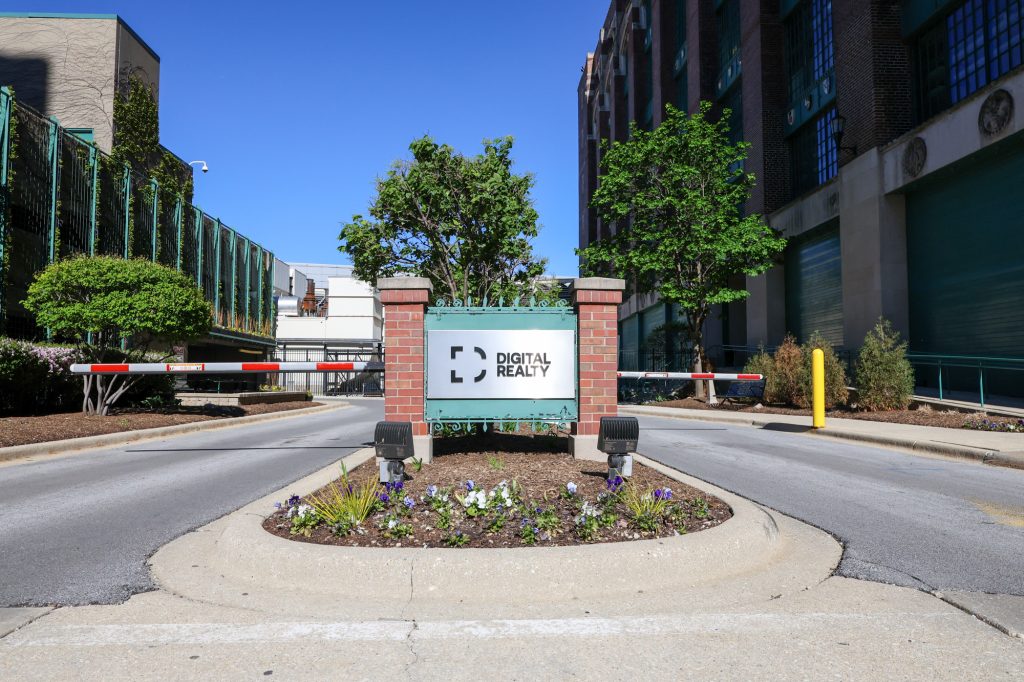 The sign for the Digital Realty Data Center sits at 350 E. Cermak on Monday, May 11, 2026. Credit: Zoey Duchene/Block Club Chicago
Where Are They?
Chicago is home to 39 data centers, most of which are in or near Downtown, according to a city report released last month. Cook County has 109 data centers, with 12 more planned, according to the Illinois Data Center Map.
Seven of Cook County’s 25 largest operational or planned facilities fall within the city of Chicago, including three centers that are open now:
• QTS Chicago’s at 2800 S. Ashland Ave.
• CoreSight’s CH1 data center at 427 S. LaSalle St.
• Menlo Digital’s at 601 W. Polk St.
The largest planned city facilities — which are in various stages of approval and development — include:
• Related Digital’s one-gigawatt facility at 8080 S. DuSable Lake Shore Drive
• Metro Edge’s 16-megawatt data center at 1951 W. Hastings St.
• Legacy Investing’s 33-megawatt Chicago Byte Exchange at 400 S. LaSalle St.
• HydraVault’s 20-megawatt facility at 2538 S. Wabash Ave.
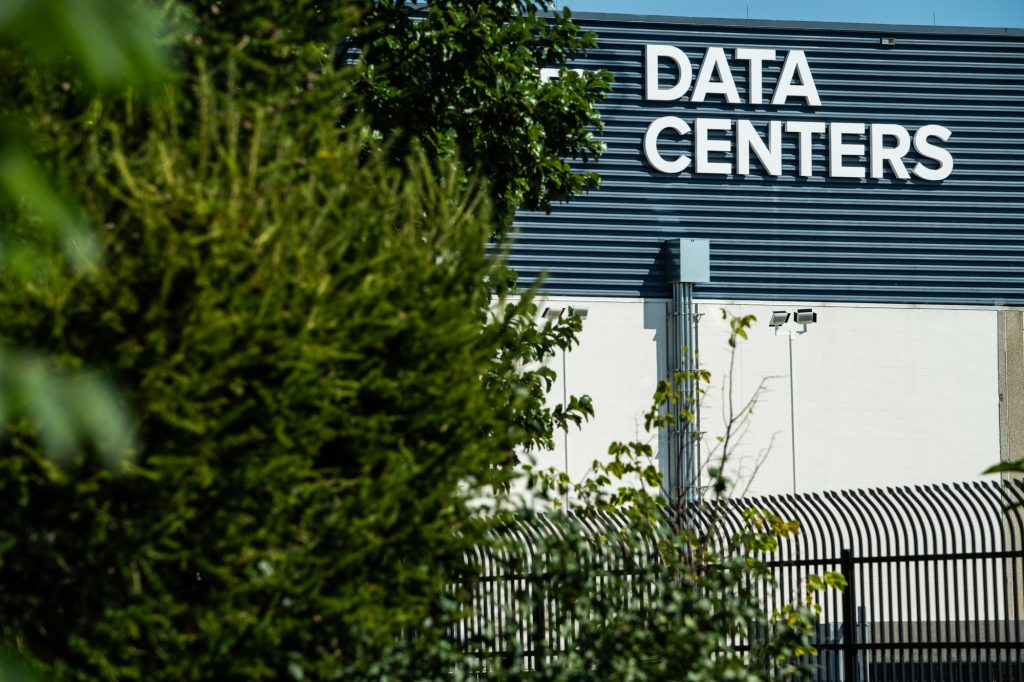 A data center in the Lower West Side on Aug. 28, 2025. Credit: Colin Boyle/Block Club Chicago
Why Chicago?
Cost, for one. David Lampert, an associate professor of engineering at the Illinois Institute of Technology, said the city has become an attractive spot because operating the facilities here is cheaper than in other parts of the country.
Commercial power rates charged by ComEd are far lower than those in East Coast markets like New York, he said, largely because Illinois hosts the nation’s biggest concentration of nuclear power, which provides a reliable baseline for heavy energy users.
Data centers also need extensive cooling because their thousands of tightly packed servers and processors convert nearly all the electricity they use into heat, which will damage hardware if it isn’t constantly dissipated. Chicago’s cooler climate also makes that heat easier — and cheaper — to manage. During many months from late fall to spring, data centers can rely on “free cooling,” he said, pulling in cold outdoor air instead of running energy‑hungry chillers.
And the city’s proximity to an abundance of water from the Great Lakes, which also tends to be less costly than other areas, is useful for companies that use evaporative cooling during humid summer months or run heat-intensive AI and high-performance computing. Evaporative cooling is a ventilation method that pulls hot air through wet pads, where the natural evaporation of water cools the air before it’s circulated back inside.
“The Great Lakes are one of the largest in the country,” Lampert said of regions seeing growth in data centers. “Compared with other places, we have cheaper electricity and water and a cooler climate.”
Our geography also helps. Chicago’s location in the middle of the country, where many of the country’s major internet routes cross, make it an efficient place for companies seeking to serve the East and West coasts.
The Great Lakes region is flat and easy to build on, and it sees fewer major natural disasters, like hurricanes or earthquakes, than much of the country. Lampert said Chicago’s legacy as a manufacturing hub has also left former industrial sites that can be retrofitted for digital infrastructure more quickly and at lower cost.
How Much Power Do Data Centers Use?
Data centers in operation in Chicago and the suburbs currently use about 1.2 gigawatts worth of power, which Lampert said is forecast to increase to about 4.1 gigawatts, based on planned projects.
One gigawatt of power serves about 750,000 to 1 million homes, experts said.
Data centers currently make up 7.2 percent of energy consumption in Illinois, according to a January report by the University of Virginia’s Weldon Cooper Center for Public Service. The report projects that number could increase to 15.6 percent by 2030 and 37.3 percent by 2040.
 A ComEd truck. Credit: ComEd
Do They Raise My Electric Bills?
Yes. ComEd electric consumers started seeing about a 12 percent jump in monthly charges in June, following double-digit increases that began the previous summer.
Bob Johnson — a vice president analyst at Gartner, a technology research and advisory firm — said Chicagoans could see higher electric bills for two reasons: the cost of new utility infrastructure that gets spread across all customers, and rising wholesale energy prices as demand outpaces supply.
First, under Illinois’ utility model, companies like ComEd recover the cost of building and upgrading the electric grid through customer rates approved by the Illinois Commerce Commission. That applies to both routine work and major projects. When a storm knocks down a power line, ComEd repairs it and folds the cost into rates paid by all customers, not just the people in that area.
That same cost‑sharing structure applies when large new electric loads come online. If power companies need to build new power lines, substations or other infrastructure to serve data centers, those expenses can be included in the utility’s rate filings and ultimately show up on customer bills.
“Be skeptical and recognize that the data center builders really don’t care. They want to get it as cheap as possible, and they want their operating costs to be as cheap as possible, and power is one of their largest operating costs,” Johnson said. “So they want to share the extra cost amongst everybody else.”
The second pressure point comes from the wholesale energy market. Northern Illinois, including the Chicago area, is served by the PJM interconnection, which manages wholesale electricity for more than 65 million people across 13 states and Washington, D.C., in the Midwest and Mid‑Atlantic region.
PJM’s markets are designed to ensure there is enough electricity available to meet demand. Power from lower-cost sources is generally used first, but as demand rises, the system may need to rely on more expensive sources. Because new power plants can take years to build, rapid growth in electricity use from data centers — not just in Chicago, but across the region, including in Northern Virginia’s “Data Center Alley” — could put upward pressure on electricity costs for customers.
Bloomberg reported last month that White House officials are growing increasingly concerned that PJM can’t ensure adequate electricity supplies at reasonable prices amid a boom in demand from new data centers.
“If the rates go up because of their demand on the grid, then the data center should pay for that,” Johnson said. “They should have absolutely zero impact on the power costs of other users.”
 Clouds linger over Lake Michigan as seen from Montrose Beach in Uptown on June 25, 2026. Credit: Colin Boyle/Block Club Chicago
How Do They Impact Our Water Supply And Infrastructure?
Lampert said data centers could opt to cool their servers and processors using fans, but companies often favor evaporative cooling because water is less expensive than electricity.
A one-gigawatt data center — the size of what Related Digital announced in March 2025 it intended to build — would use about 5 to 10 million gallons of water per day if it uses evaporative cooling, Lampert said, the equivalent of what 50,000 people use daily.
But he said data centers’ water use isn’t directly comparable to residential use, which goes down your drain and into the city sewer system and gets treated in a wastewater plant before being returned to local waterways. Water evaporated for cooling is removed from the local supply.
Evaporative cooling also requires water that’s already been cleaned, he said, because any residue left behind would clog the data center’s cooling tower. Chicago doesn’t face a shortage of water because of the Great Lakes, unlike other areas of the country, Lampert said, but the city may currently lack the infrastructure to process the water that data-center growth could require.
He said city officials might ultimately need to build infrastructure for processing and supplying the water to keep up, like new clarifiers, corrosion plants, pump stations or pipes, which could strain the city’s budget and indirectly raise property taxes.
As an example, he pointed to southwest suburban Joliet, where a 1.8-gigawatt data center campus has been proposed and which already faces groundwater shortages. The city is constructing a more than $1 billion pipeline to transport treated water from Lake Michigan.
He said the Metropolitan Water Reclamation District could colocate data centers with a wastewater treatment plant to ease the infrastructure burdens and potentially reduce data centers’ water use.
“It’s a question worth asking,” Lampert said. “How are they going to get the water?”
Do Data Centers Pollute? How Noisy Are They?
Because data centers require massive amounts of electricity that run 24/7, Lampert said, they’ll likely use power from natural gas turbines, which release greenhouse gases. About 40 percent of the Chicago market’s fuel mix in 2025 was natural gas, according to ComEd.
Johnson said fans at data centers create a constant background noise, comparable to living near a busy freeway. Some data centers will have diesel backup generators in case of power outages or shortages, which also emit air pollution and are noisy.
How Is This Regulated In Illinois?
 Gov. JB Pritzker responds to reporters’ questions at a morning news conference on June 1. Credit: Capitol News Illinois photo by Jenna Schweikert
In June, Gov. JB Pritzker announced a pause on all new state tax incentives for data centers that started on July 1. Pritzker previously signed legislation in 2019, his first year in office, establishing the incentives that aimed to attract large-scale investment in the state.
Between 2020 and 2024, 27 data centers benefited from more than $983 million in tax incentives, according to a state report. In 2025, Illinois committed an additional $666.6 million in estimated tax credits spanning periods up to 20 years, according to an annual Department of Commerce and Economic Opportunity report.
In March, the Illinois Commerce Commission approved a change that allows ComEd to recover certain costs tied to large‑load projects like data centers only if those projects later cancel, move or end up using far less power than expected. The Illinois Commerce Commission called it an “important first step.”
Illinois lawmakers have floated new regulations for data centers through the POWER Act, a proposal that stalled in the General Assembly last session but could be revived. The measure would require data centers to pay for their own energy and grid infrastructure, use renewable power, disclose water use, undergo an environmental impact review by the Illinois EPA and negotiate community benefits agreements with local residents.
What About In Chicago?
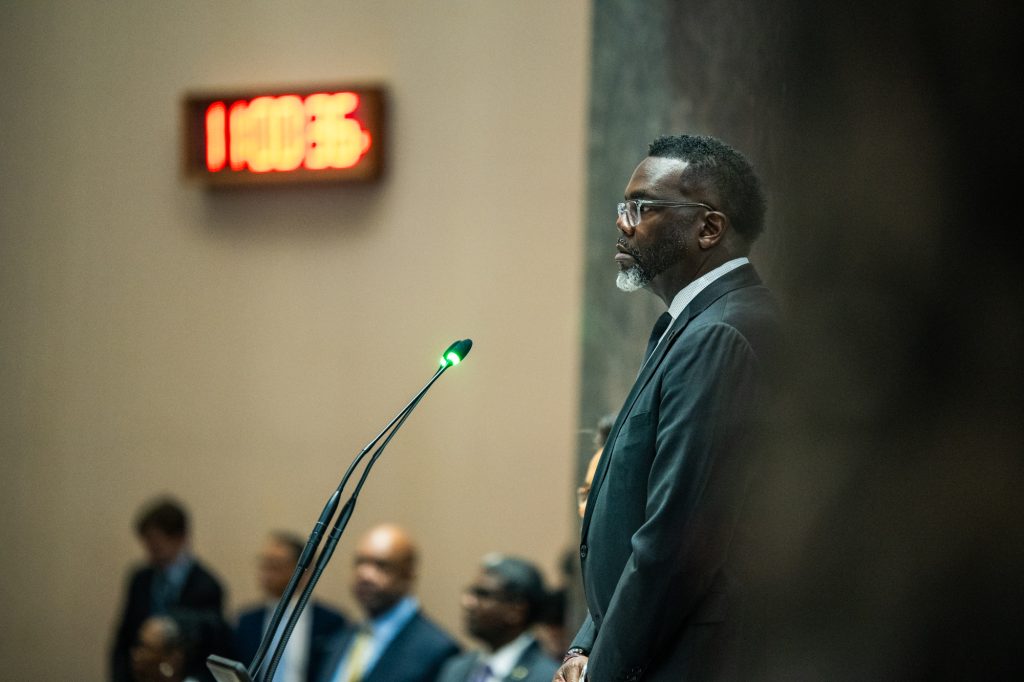 Mayor Brandon Johnson during a City Council meeting on June 17, 2026. Credit: Colin Boyle/Block Club Chicago
Chicago Mayor Brandon Johnson signed an executive order on Tuesday placing new rules and reviews on data centers, including enhanced evaluations of air pollution control permits to reduce emissions from diesel generators and noise regulations on generators, cooling equipment and other mechanical systems. The order also established a review process for planned developments, including data centers, to assess their power demand, water use, noise and air emissions as well as their effects on and existing environmental burdens in the nearby neighborhood.
The order creates a task force charged with implementing a long-term strategy for regulating data centers, and Johnson’s administration is pushing for a moratorium on new or expanded data centers, although that would require full City Council approval.
Johnson’s order comes after the city of Chicago last month released a Sustainable Data Centers Report urging Chicago to create a dedicated permitting program for data centers that would require environmental impact studies, ongoing air and noise monitoring, and fines for violating permit rules. The report also recommends putting most data centers through a zoning review that would also require City Council approval.
It also calls for ending a restriction that blocks the city’s chief sustainability officer from publicly releasing energy and water‑use data for buildings with data centers. Two days after the report was discussed in a Council committee, Ald. Maria Hadden (49th) introduced an ordinance to lift that ban.
Read more about the report here.
 Southeast Side residents hold a rally against the PsiQuantum Data Facility development before a City Council on May 20, 2026. Credit: Colin Boyle/Block Club Chicago
What Do Chicagoans Say About This?
Americans largely oppose data centers in their area, a Gallup survey earlier this year found, and some neighbors and activists in Chicago have spoken out against them.
Plans for a massive quantum computing development on the former U.S. Steel South Works site in South Chicago — where a proposed data center would sit adjacent — have sparked some backlash from local leaders and residents.
A mid-March statewide poll by those who back more regulations for data centers found that 68 percent of likely Illinois voters would support legislation regulating data centers to minimize their impact on utility bills, climate and water while still allowing them to be built. More than half of the 21 percent who would oppose such legislation said they did so because they object to allowing data centers to be built in the state at all, meaning 80 percent of respondents want guardrails or oppose new construction.
The survey of 800 likely voters was conducted by Global Strategy Group on behalf of the Illinois Clean Jobs Coalition, which is pushing for the passage of the POWER Act.
Have questions we didn’t answer? Email them to roryquealy@gmail.com.